
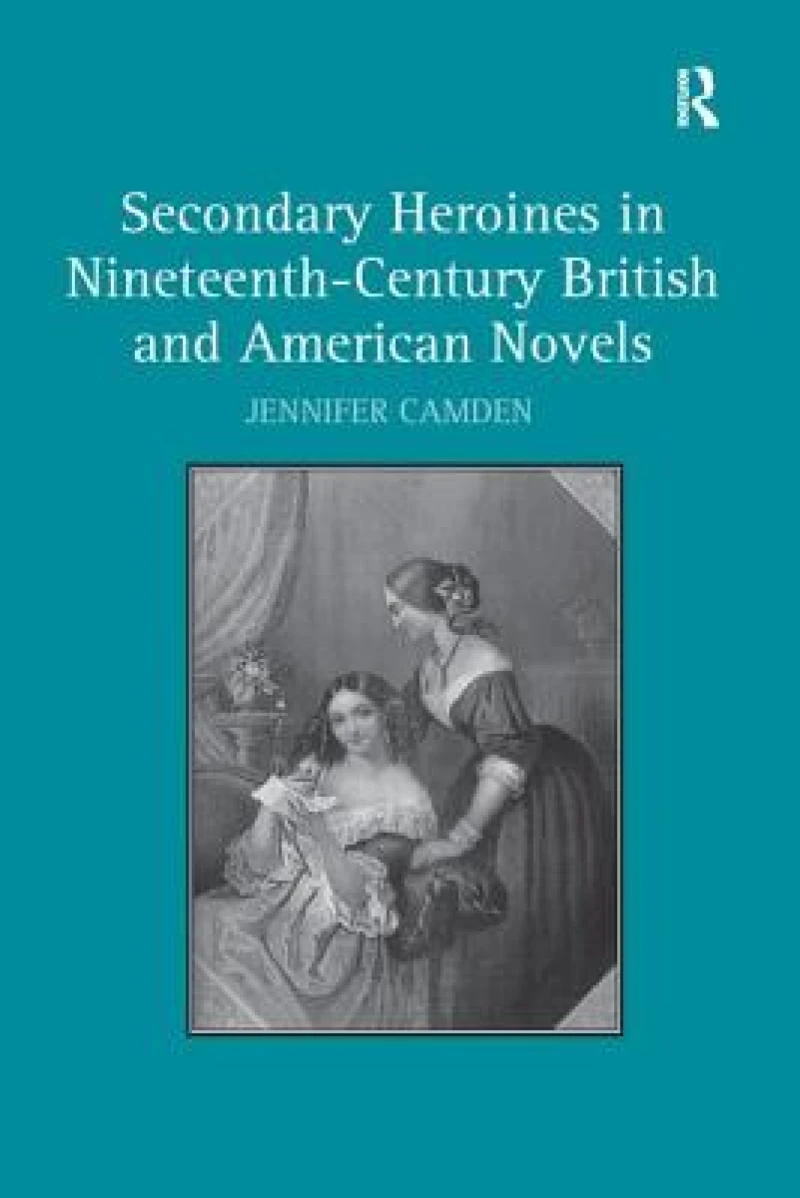
Secondary Heroines in Nineteenth-Century British and American Novels
Book Details
Format
Paperback / Softback
ISBN-10
1138279137
ISBN-13
9781138279131
Publisher
Taylor & Francis Ltd
Imprint
Routledge
Country of Manufacture
GB
Country of Publication
GB
Publication Date
Nov 16th, 2016
Print length
190 Pages
Weight
350 grams
Product Classification:
Literature: history & criticismLiterary studies: c 1800 to c 1900
Ksh 10,800.00
Werezi Extended Catalogue
0 in stock
Delivery Location
Delivery fee: Select location
Secure
Quality
Fast
Taking up works by Samuel Richardson, James Fenimore Cooper, Sir Walter Scott, and Catharine Maria Sedgwick, among others, Jennifer B. Camden examines the role of "secondary heroines" in early British and American novels. By showing that they are a site for the displaced anxieties produced by the national ideals proffered in the novel, Camden offers an important intervention into the ways in which early novels use character to further ideologies of race, class, sex, and gender.
Taking up works by Samuel Richardson, James Fenimore Cooper, Sir Walter Scott, and Catharine Maria Sedgwick, among others, Jennifer B. Camden examines the role of female characters who, while embodying the qualities associated with heroines, fail to achieve this status in the story. These "secondary heroines," often the friend or sister of the primary heroine, typically disappear from the action of the novel as the courtship plot progresses, only to return near the conclusion of the action with renewed demands on the reader''s attention. Accounting for this persistent pattern, Camden suggests, reveals the cultural work performed by these unusual figures in the early history of the novel. Because she is often a far more vivid character than the heroine of the marriage plot, the secondary heroine inevitably engages the reader''s interest in her plight. That the narrative apparently seeks to suppress her creates tension and points to the secondary heroine as a site of contested identity who represents an ideology of womanhood and nationhood at odds with the national ideals represented by the primary heroine, whom the reader is asked to embrace. In showing how the anxiety produced by these ideals is displaced onto the secondary heroine, Camden''s study represents an important intervention into the ways in which early novels use character to further ideologies of race, class, sex, and gender.
Get Secondary Heroines in Nineteenth-Century British and American Novels by at the best price and quality guaranteed only at Werezi Africa's largest book ecommerce store. The book was published by Taylor & Francis Ltd and it has pages.

