
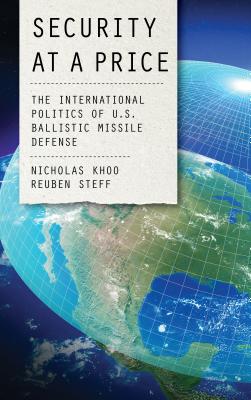
Security at a Price : The International Politics of U.S. Ballistic Missile Defense
Book Details
Format
Hardback
ISBN-10
1442254572
ISBN-13
9781442254572
Publisher
Bloomsbury Publishing Plc
Imprint
Rowman & Littlefield
Country of Manufacture
GB
Country of Publication
GB
Publication Date
Oct 26th, 2017
Print length
174 Pages
Weight
414 grams
Dimensions
16.10 x 23.70 x 1.90 cms
KSh 14,550.00
Currently unavailable
0 in stock
Delivery Location
Delivery fee: Select location
Secure
Quality
Fast
This text analyzes why some states have chosen to cooperate with the U.S. on Ballistic Missile Defense (BMD) while others have adopted a non-cooperative posture, evidenced by diverse levels of balancing. It discusses the politics of unipolarity, deterrence policies of the U.S. and key states, WMD proliferation, balancing, and the security dilemma.
This volume in the Weapons of Mass Destruction series makes the case that the United States’ expansive missile defence policy has eroded both its own security and that of its allies. These findings are based on an examination of the response of a number of key states to U.S. policy, including Russia, China, North Korea and Iran. Situating their argument in the theoretical debate on balancing in unipolarity, the authors contrast their view to influential perspectives that see little evidence of hard balancing against the U.S. in the post-Cold War era. Adopting a neorealist perspective, the authors demonstrate the clear presence of this inter-state practice, providing insight into the international politics of unipolarity, showing how hard balancing and security dilemma-related dynamics operate in the contemporary strategic environment.
Get Security at a Price by Nicholas Khoo, Reuben Steff at the best price and quality guaranteed only at Werezi Africa's largest book ecommerce store. The book was published by Bloomsbury Publishing Plc and it has 174 pages.
Customers Who Bought This Also Bought

Forensic Psychology, Crime and Policing – Key Conc epts and Practical Debates
KSh 7,000.00

The Dryslwyn Castle Killings
KSh 1,900.00

Enough
KSh 2,350.00
The SAGE Handbook of Global Policing
KSh 30,800.00
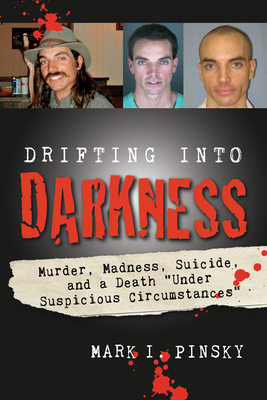
Drifting Into Darkness
KSh 4,650.00

In the Name of the Law
KSh 3,950.00

The State Police in Italy since 1946
KSh 30,950.00

The Worthy Way
KSh 3,050.00

Care Detained
KSh 30,950.00

Police Social Work
KSh 30,950.00

Care Detained
KSh 7,900.00

Police Social Work
KSh 7,900.00
More by Nicholas Khoo, Reuben Steff

New Zealand''s Geopolitics and the Us-china Competition
KSh 19,800.00

Us Foreign Policy in the Age of Trump
KSh 4,700.00
Collateral Damage
KSh 11,150.00
US Foreign Policy in the Age of Trump
KSh 9,900.00

China’s Foreign Policy
KSh 29,300.00
Strategic Thinking, Deterrence and the US Ballistic Missile Defense Project
KSh 11,150.00
Strategic Thinking, Deterrence and the US Ballistic Missile Defense Project
KSh 30,950.00

China''s Foreign Policy
KSh 8,750.00
