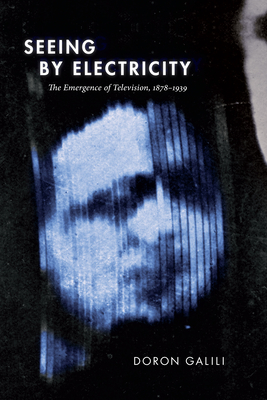
Seeing by Electricity : The Emergence of Television, 1878-1939
by
Doron Galili
Book Details
Format
Hardback
Book Series
Sign, Storage, Transmission
ISBN-10
1478007729
ISBN-13
9781478007722
Publisher
Duke University Press
Imprint
Duke University Press
Country of Manufacture
GB
Country of Publication
GB
Publication Date
Feb 28th, 2020
Print length
277 Pages
Weight
522 grams
Product Classification:
TelevisionTV & society
KSh 15,300.00
Currently unavailable
0 in stock
Delivery Location
Delivery fee: Select location
Secure
Quality
Fast
Already in the late nineteenth century, electricians, physicists, and telegraph technicians dreamed of inventing televisual communication apparatuses that would “see” by electricity as a means of extending human perception. In Seeing by Electricity Doron Galili traces the early history of television, from fantastical image transmission devices initially imagined in the 1870s such as the Telectroscope, the Phantoscope, and the Distant Seer to the emergence of broadcast television in the 1930s. Galili examines how televisual technologies were understood in relation to film at different cultural moments-whether as a perfection of cinema, a threat to the Hollywood industry, or an alternative medium for avant-garde experimentation. Highlighting points of overlap and divergence in the histories of television and cinema, Galili demonstrates that the intermedial relationship between the two media did not start with their economic and institutional rivalry of the late 1940s but rather goes back to their very origins. In so doing, he brings film studies and television studies together in ways that advance contemporary debates in media theory.
Get Seeing by Electricity by Doron Galili at the best price and quality guaranteed only at Werezi Africa's largest book ecommerce store. The book was published by Duke University Press and it has 277 pages.
Customers Who Bought This Also Bought

Inside Bridgerton
KSh 4,800.00

When Gavin Met Stacey and Everything in Between
KSh 4,500.00

You''re Never Weird on the Internet (Almost)
KSh 1,600.00

Disaster Mon Amour
KSh 3,400.00

Sleeping with Strangers
KSh 2,500.00

The Making of Pride and Prejudice
KSh 2,700.00

David Mitchell Back Story
KSh 2,000.00
Netflix at the Nexus
KSh 13,950.00

Screening a Lynching – The Leo Frank Case on Film and Television
KSh 5,750.00

Black and Blue TV
KSh 17,300.00
Television History, the Peabody Archive, and Cultural Memory
KSh 22,600.00

Fools Rush In
KSh 3,550.00