
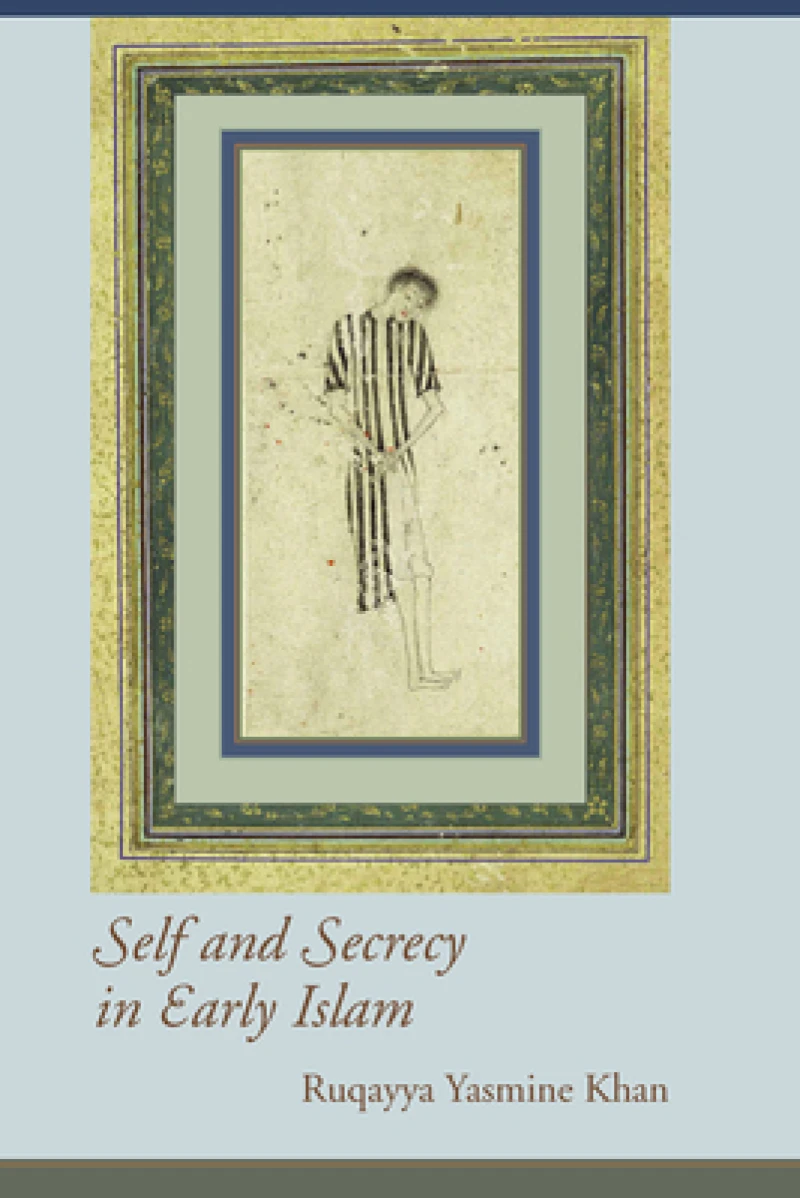
Self and Secrecy in Early Islam
Book Details
Format
Hardback or Cased Book
Book Series
Studies in Comparative Religion
ISBN-10
157003754X
ISBN-13
9781570037542
Publisher
University of South Carolina Press
Imprint
University of South Carolina Press
Country of Manufacture
US
Country of Publication
GB
Publication Date
Sep 25th, 2008
Print length
200 Pages
Weight
430 grams
Dimensions
23.50 x 15.50 x 1.80 cms
Ksh 6,500.00
Werezi Extended Catalogue
0 in stock
Delivery Location
Delivery fee: Select location
Secure
Quality
Fast
Presents an inquiry into the meanings of concealment and revelation in early Arabo-Islamic texts. This book presents a comparative analysis of the significance of keeping and revealing secrets in early Islamic culture. It draws from a broad range of Arabo-Islamic texts to map interconnections between concepts of secrecy and identity.
This book presents an original inquiry into the meanings of concealment and revelation in early Arabo-Islamic texts. In this comparative analysis of the significance of keeping and revealing secrets in early Islamic culture, Ruqayya Yasmine Khan draws from a broad range of Arabo-Islamic texts to map interconnections between concepts of secrecy and identity. In early Islamic discourse, Khan maintains, individual identity is integrally linked to a psychology of secrecy and revelation - a connection of even greater importance than what is being concealed or displayed. Khan further maintains that secrecy and identity demarcate boundaries for interpersonal relations when governed by the cultural norms of discretion espoused in these texts.As evidence for her study, Khan explores religious and literary representations of secrecy in classical texts as diverse as the Qur''an, the ""Book of Concealing the Secret and Holding the Tongue"" by al-Jahiz, and courtly love poems, including the story of Majnun and Layla. These works represent divergent approaches to spiritual, ethical, and romantic life in early Islam; yet Khan extrapolates from each a shared construction of secrecy and revelation.In advancing our understanding of the dynamic tensions between secrecy and revelation as depicted in these early Arabo-Islamic discourses, Khan illustrates that the creation of individual identity and subjectivity was inherently tied to these same tensions. The resulting analysis opens new vistas for understanding the meanings of secrecy in Islamic studies, Qur''anic studies, Islamic philosophy and mysticism, and Arabic literary studies as well as European intellectual history.
Get Self and Secrecy in Early Islam by at the best price and quality guaranteed only at Werezi Africa's largest book ecommerce store. The book was published by University of South Carolina Press and it has pages.

