
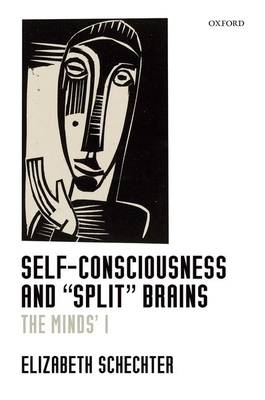
Self-Consciousness and "Split" Brains : The Minds' I
Book Details
Format
Hardback
ISBN-10
0198809654
ISBN-13
9780198809654
Publisher
Oxford University Press
Imprint
Oxford University Press
Country of Manufacture
GB
Country of Publication
GB
Publication Date
Jun 14th, 2018
Print length
312 Pages
Weight
646 grams
Dimensions
16.60 x 24.10 x 2.50 cms
KSh 18,250.00
Temporarily out of stock, due soon
0 in stock
Delivery Location
Delivery fee: Select location
Secure
Quality
Fast
Elizabeth Schechter explores the implications of the experience of people who have had the pathway between the two hemispheres of their brain severed, and argues that there are in fact two minds, subjects of experience, and intentional agents inside each split-brain human being: right and left. But each split-brain subject is still one of us.
Could a single human being ever have multiple conscious minds? Some human beings do. The corpus callosum is a large pathway connecting the two hemispheres of the brain. In the second half of the twentieth century a number of people had this pathway cut through as a treatment for epilepsy. They became colloquially known as split-brain subjects. After the two hemispheres of the brain are cortically separated in this way, they begin to operate unusually independently of each other in the realm of thought, action, and conscious experience, almost as if each hemisphere now had a mind of its own. Philosophical discussion of the split-brain cases has overwhelmingly focused on questions of psychological identity in split-brain subjects, questions like: how many subjects of experience is a split-brain subject? How many intentional agents? How many persons? On the one hand, under experimental conditions, split-brain subjects often act in ways difficult to understand except in terms of each of them having two distinct streams or centers of consciousness. Split-brain subjects thus evoke the duality intuition: that a single split-brain human being is somehow composed of two thinking, experiencing, and acting things. On the other hand, a split-brain subject nonetheless seems like one of us, at the end of the day, rather than like two people sharing one body. In other words, split-brain subjects also evoke the unity intuition: that a split-brain subject is one person.Elizabeth Schechter argues that there are in fact two minds, subjects of experience, and intentional agents inside each split-brain human being: right and left. On the other hand, each split-brain subject is nonetheless one of us. The key to reconciling these two claims is to understand the ways in which each of us is transformed by self-consciousness.
Get Self-Consciousness and "Split" Brains by Elizabeth Schechter at the best price and quality guaranteed only at Werezi Africa's largest book ecommerce store. The book was published by Oxford University Press and it has 312 pages.
Customers Who Bought This Also Bought
Xmeditations
KSh 700.00
Order of Time
KSh 2,350.00
Being and Nothingness
KSh 7,300.00
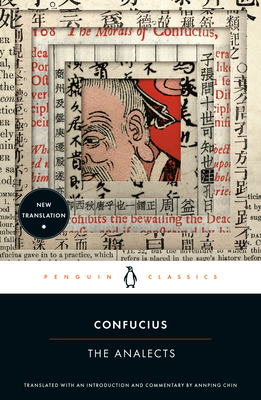
The Analects
KSh 2,350.00
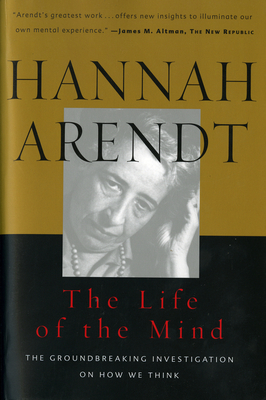
The Life Of The Mind
KSh 3,950.00
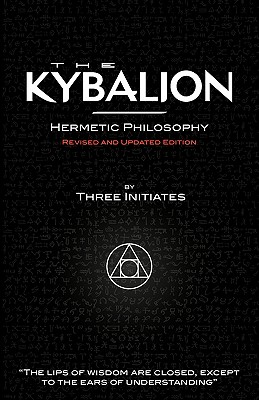
The Kybalion - Hermetic Philosophy - Revised and Updated Edition
KSh 2,000.00
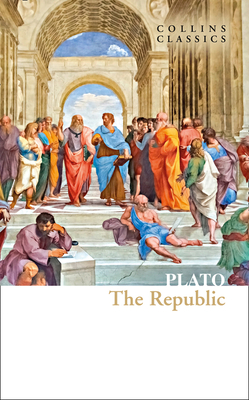
Xrepublic
KSh 850.00

Aristotle''s De Anima
KSh 3,550.00
Xrepublic
KSh 1,450.00
Sharing Thoughts
KSh 17,000.00

Vocation of Man
KSh 2,500.00

Treatise Concerning the Principles of Human Knowledge
KSh 2,000.00
