
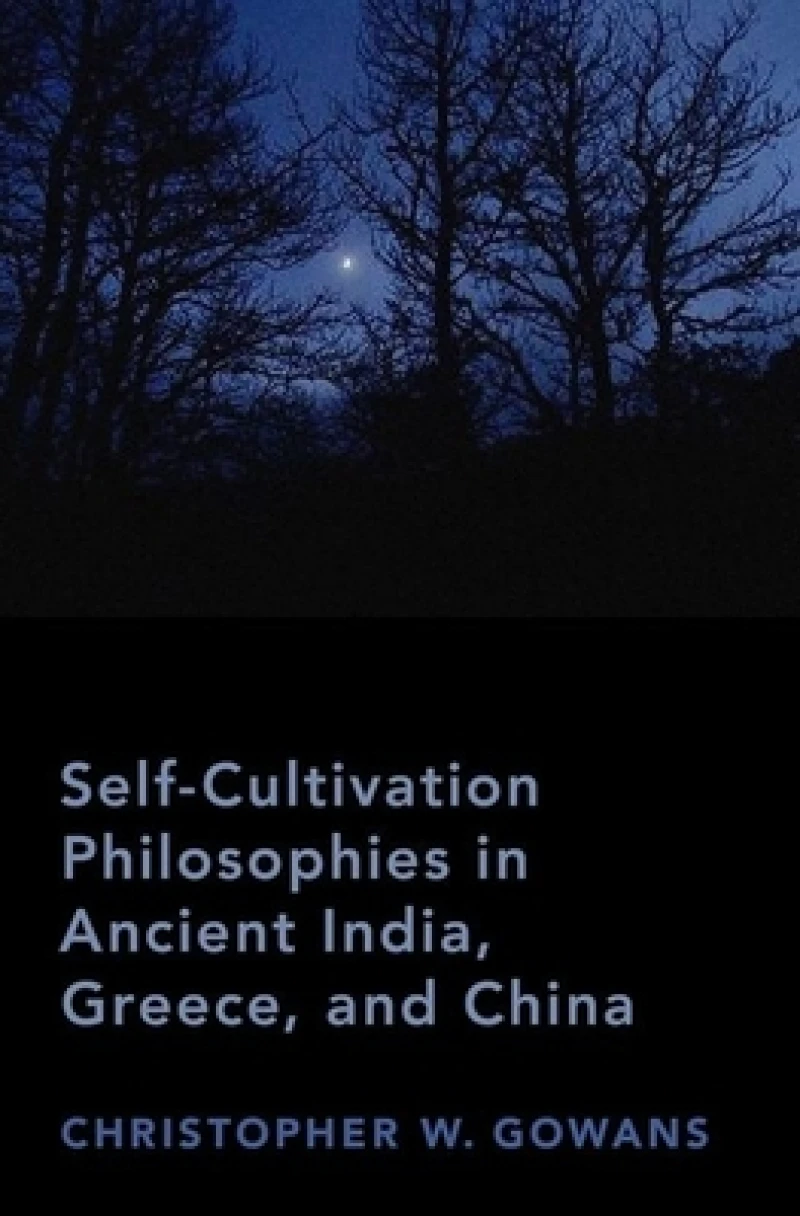
Self-Cultivation Philosophies in Ancient India, Greece, and China
Book Details
Format
Hardback or Cased Book
ISBN-10
0190941022
ISBN-13
9780190941024
Publisher
Oxford University Press Inc
Imprint
Oxford University Press Inc
Country of Manufacture
US
Country of Publication
GB
Publication Date
Nov 23rd, 2021
Print length
344 Pages
Weight
642 grams
Dimensions
16.40 x 24.30 x 2.70 cms
Product Classification:
Western philosophy: Ancient, to c 500Oriental & Indian philosophy
Ksh 15,900.00
Werezi Extended Catalogue
0 in stock
Delivery Location
Delivery fee: Select location
Secure
Quality
Fast
Christopher W. Gowans shows how philosophy played a central role in self-cultivation programs in three ancient cultures. On the basis of a philosophical understanding of human nature, self-cultivation philosophies give an analysis of what is problematic in human life, propose an ideal state of being we can hope to attain, and provide a set of practices (philosophical, moral, therapeutic, or spiritual) we can undertake to achieve this end. This book explains the importance of self-cultivation philosophies in three ancient traditions: India (the Bhagavad Gita, Samkhya and Yoga, and Buddhism), Greece and Rome (Epicureanism, Stoicism, and Pyrrhonian Skepticism) and China (Confucianism, Daoism, and Chan Buddhism).
Philosophies in several ancient traditions aimed to alleviate people''s anxieties and improve their lives. In contrast to the contemporay world, in which philosophy is mostly an academic subject and personal concerns are commonly addressed by psychological therapies, philosophy in these traditions often played a central role in programs that aspired to enable people to achieve a good life. In this volume, Christopher W. Gowans argues that the idea of self-cultivation philosophy provides a valuable approach for comprehending and reflecting on several philosophies in ancient India, Greece and China. Self-cultivation philosophies put forward a program of development for ameliorating the lives of human beings. On the basis of an account of human nature and the place of human beings in the world, they claim that our lives can be substantially transformed from what is thought to be a problematic condition into what purports to be an ideal state of being. Self-cultivation philosophies are preeminently practical in their aspirations: their purpose is to change human life in fundamental ways. Yet, in pursuing these practical ends, these philosophies typically make significant theoretical as well as empirical claims about human nature and the world.The book shows how the concept of self-cultivation philosophy provides an interpretive framework for understanding, comparing, assessing and learning from several philosophical outlooks in India, the Greco-Roman world, and China. The self-cultivation philosophies in India are those expressed in: the Bhagavad Gita; the Samkhya and Yoga philosophies of Isvarakrsna and Patanjali; and the teaching of the Buddha and his followers Buddhaghosa and Santideva. The philosophies originating in Greece, with subsequent development in the Roman world, are the most prominent Hellenistic approaches: the Epicureanism of Epicurus, Lucretius, and Philodemus; the Stoicism of Chrysippus, Epictetus, and Seneca; and Pyrrho and the Pyrrhonism of Sextus Empiricus. The self-cultivation philosophies from China are the early Confucian outlooks of Confucius, Mencius, and Xunzi; the classical Daoist perspectives of the Daodejing and the Zhuangzi; and the Chan tradition of Bodhidharma, Huineng and Linji. Though these philosophies developed in very different traditions, Gowans shows the connections between them in this compelling work of comparative philosophy.
Get Self-Cultivation Philosophies in Ancient India, Greece, and China by at the best price and quality guaranteed only at Werezi Africa's largest book ecommerce store. The book was published by Oxford University Press Inc and it has pages.

