
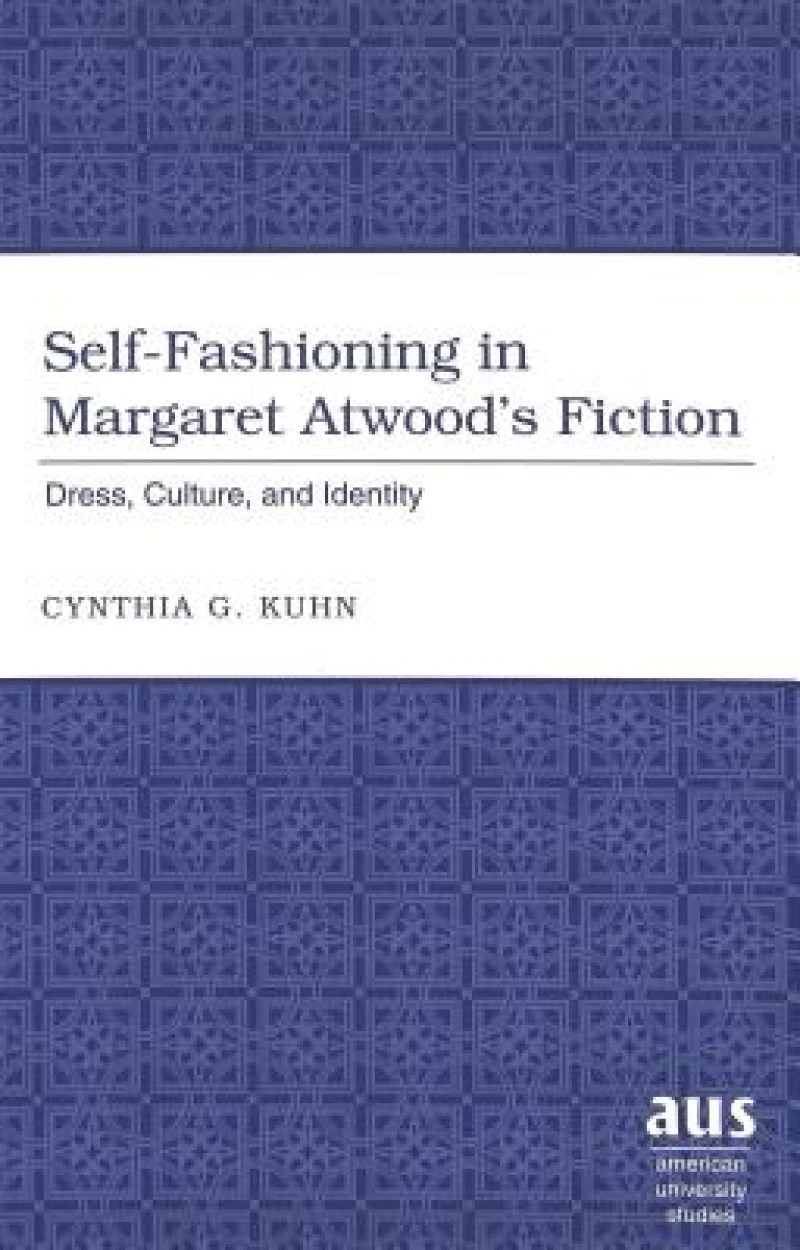
Self-fashioning in Margaret Atwood's Fiction : Dress, Culture, and Identity
Book Details
Format
Hardback or Cased Book
ISBN-10
0820467642
ISBN-13
9780820467641
Publisher
Peter Lang Publishing Inc
Imprint
Peter Lang Publishing Inc
Country of Manufacture
US
Country of Publication
GB
Publication Date
Jan 14th, 2005
Print length
144 Pages
Weight
358 grams
Dimensions
16.10 x 23.70 x 1.40 cms
Product Classification:
Literary studies: generalCultural studies
Ksh 10,400.00
Manufactured on Demand
0 in stock
Delivery Location
Delivery fee: Select location
Secure
Quality
Fast
This study examines the associations between dressing and storytelling in Margaret Atwood's fiction. As cultural representations operating within a network of codes, clothed bodies are often discussed by theorists as constructed performances or as fabricated texts, inextricably bound up with ideology and power. The clothed body often becomes a battleground in Atwood's fiction as female protagonists respond to divisive cultural scripts through self-fashioning. Furthermore, Atwood seems to collapse the opposition between the material and the spiritual through clothing, to consider dress a fitting metaphor for the space between the natural and the supernatural. While the connections among dress, body, and story are visible from Atwood's earliest novel forward, they achieve their most unified and powerful effect in The Robber Bride (1993) and Alias Grace (1996). In these novels, Atwood draws upon the classical idea that the body clothes the soul to create a postmodern frame for the complex relationships among subjectivity, representation, voice, gender, and culture.
This study examines the associations between dressing and storytelling in Margaret Atwood’s fiction. As cultural representations operating within a network of codes, clothed bodies are often discussed by theorists as constructed performances or as fabricated texts, inextricably bound up with ideology and power. The clothed body often becomes a battleground in Atwood’s fiction as female protagonists respond to divisive cultural scripts through self-fashioning. Furthermore, Atwood seems to collapse the opposition between the material and the spiritual through clothing, to consider dress a fitting metaphor for the space between the natural and the supernatural. While the connections among dress, body, and story are visible from Atwood’s earliest novel forward, they achieve their most unified and powerful effect in The Robber Bride (1993) and Alias Grace (1996). In these novels, Atwood draws upon the classical idea that the body clothes the soul to create a postmodern frame for the complex relationships among subjectivity, representation, voice, gender, and culture.
Get Self-fashioning in Margaret Atwood's Fiction by at the best price and quality guaranteed only at Werezi Africa's largest book ecommerce store. The book was published by Peter Lang Publishing Inc and it has pages.

