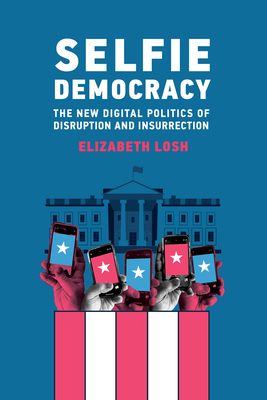
Selfie Democracy : The New Digital Politics of Disruption and Insurrection
Book Details
Format
Paperback / softback
ISBN-10
0262047055
ISBN-13
9780262047050
Publisher
MIT Press Ltd
Imprint
MIT Press
Country of Manufacture
GB
Country of Publication
GB
Publication Date
Sep 6th, 2022
Print length
304 Pages
Weight
500 grams
Dimensions
15.30 x 23.00 x 2.70 cms
Product Classification:
Political science & theoryPolitical science and theory
KSh 4,500.00
Werezi Extended Catalogue
Delivery in 4 days
4 copies in stock
Delivery Location
Delivery fee: Select location
Delivery in 4 days
Secure
Quality
Fast
How politicians’ digital strategies appeal to the same fantasies of digital connection, access, and participation peddled by Silicon Valley.
Smartphones and other digital devices seem to give us a direct line to politicians. But is interacting with presidential tweets really a manifestation of digital democracy? In Selfie Democracy, Elizabeth Losh examines the unintended consequences of politicians’ digital strategies, from the Obama campaign’s pioneering construction of an online community to Trump’s Twitter dominance. She finds that politicians who use digital media appeal to the same fantasies of digital connection, access, and participation peddled by Silicon Valley. Meanwhile, smartphones and social media don’t enable participatory democracy so much as they incentivize citizens to perform attention-getting acts of political expression.
Losh explores presidential rhetoric casting digital media as tools of democracy, describes the conflation of gender and technology that contributed to Hillary Clinton’s defeat in 2016, chronicles the Biden campaign’s early digital stumbles in 2020, and recounts the TikTok campaign that may have spoiled a Trump rally. She shows that although Obama and Trump may seem diametrically opposed in both style and substance, they both used mobile digital media in ways that reshaped the presidency and promised a new kind of digital democracy. Obama used data and digital media to connect to citizens without intermediaries; Trump followed this strategy to its most extreme conclusion. What were the January 6 insurrectionists doing, as they livestreamed themselves and their cohorts attacking the Capitol, but practicing their own brand of selfie democracy?
Smartphones and other digital devices seem to give us a direct line to politicians. But is interacting with presidential tweets really a manifestation of digital democracy? In Selfie Democracy, Elizabeth Losh examines the unintended consequences of politicians’ digital strategies, from the Obama campaign’s pioneering construction of an online community to Trump’s Twitter dominance. She finds that politicians who use digital media appeal to the same fantasies of digital connection, access, and participation peddled by Silicon Valley. Meanwhile, smartphones and social media don’t enable participatory democracy so much as they incentivize citizens to perform attention-getting acts of political expression.
Losh explores presidential rhetoric casting digital media as tools of democracy, describes the conflation of gender and technology that contributed to Hillary Clinton’s defeat in 2016, chronicles the Biden campaign’s early digital stumbles in 2020, and recounts the TikTok campaign that may have spoiled a Trump rally. She shows that although Obama and Trump may seem diametrically opposed in both style and substance, they both used mobile digital media in ways that reshaped the presidency and promised a new kind of digital democracy. Obama used data and digital media to connect to citizens without intermediaries; Trump followed this strategy to its most extreme conclusion. What were the January 6 insurrectionists doing, as they livestreamed themselves and their cohorts attacking the Capitol, but practicing their own brand of selfie democracy?
Get Selfie Democracy by Elizabeth Losh at the best price and quality guaranteed only at Werezi Africa's largest book ecommerce store. The book was published by MIT Press Ltd and it has 304 pages.
Customers Who Bought This Also Bought
Message
KSh 3,400.00
Corruptible
KSh 2,350.00

On War
KSh 1,200.00

Abundance
KSh 2,150.00
The Republic
KSh 2,350.00
What Happened to Liberal Democracy?
KSh 3,050.00

Pedagogy of the Oppressed
KSh 2,000.00

Great Ideas Social Contract
KSh 1,450.00

Fire Next Time; Nobody Knows My Name ; No Name In The Street; The Devil Finds Work
KSh 3,400.00

The Body Politic
KSh 700.00

The Prince The Original Classic
KSh 2,150.00
The Fourth Turning Is Here
KSh 2,600.00