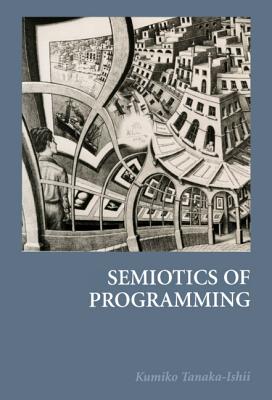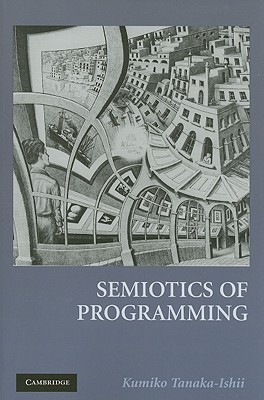
Semiotics of Programming
Book Details
Format
Paperback / softback
ISBN-10
0521736277
ISBN-13
9780521736275
Publisher
Cambridge University Press
Imprint
Cambridge University Press
Country of Manufacture
GB
Country of Publication
GB
Publication Date
Mar 22nd, 2010
Print length
228 Pages
Weight
316 grams
Dimensions
22.80 x 15.30 x 1.30 cms
KSh 6,850.00
Currently unavailable
0 in stock
Delivery Location
Delivery fee: Select location
Secure
Quality
Fast
Tanaka-Ishii presents a semiotic analysis of computer programs along three axes: models of signs, kinds of signs, and systems of signs. This book considers the question of what computers can and cannot do, by analysing how computer sign systems compare to those of humans through a key concept of reflexivity.
Tanaka-Ishii presents a semiotic analysis of computer programs along three axes: models of signs, kinds of signs, and systems of signs. Because computer programs are well defined and rigid, applying semiotic theories to them will help to reorganise the semiotic theories themselves. Semiotic discussion of programming theory can provide possible explanations for why programming has developed as it has and how computation is fundamentally related to human semiosis. This book considers the question of what computers can and cannot do, by analysing how computer sign systems compare to those of humans. A key concept throughout is reflexivity – the capability of a system or function to reinterpret what it has produced by itself. Sign systems are reflexive by nature, and humans know how to take advantage of this characteristic but have not yet fully implemented it into computer systems. The limitations, therefore, of current computers can be ascribed to insufficient reflexivity.
Get Semiotics of Programming by Kumiko Tanaka-Ishii at the best price and quality guaranteed only at Werezi Africa's largest book ecommerce store. The book was published by Cambridge University Press and it has 228 pages.
Customers Who Bought This Also Bought
Python Crash Course, 3rd Edition
KSh 8,650.00

Managing Construction Technology
KSh 11,700.00

Machine Learning with Python
KSh 14,750.00

Programming Language Pragmatics
KSh 14,650.00
Constraint Processing
KSh 13,850.00
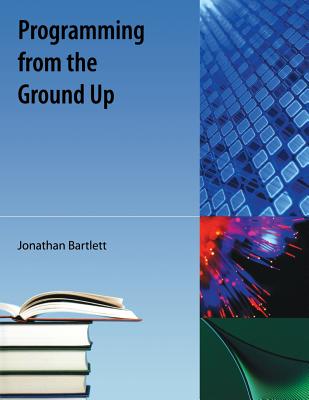
Programming from the Ground Up
KSh 5,150.00

Arduino Internals
KSh 9,900.00
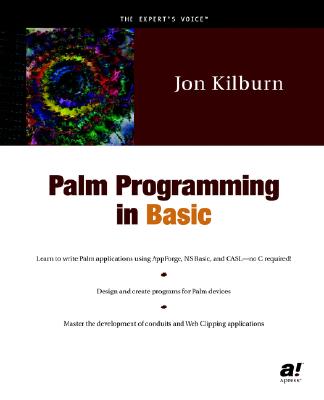
Palm Programming in Basic
KSh 5,150.00
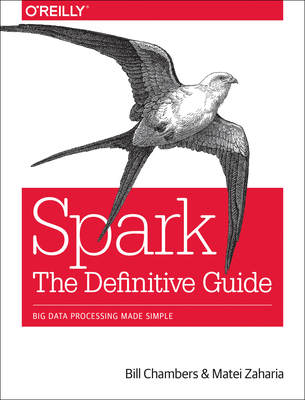
Spark – The Definitive Guide
KSh 10,100.00
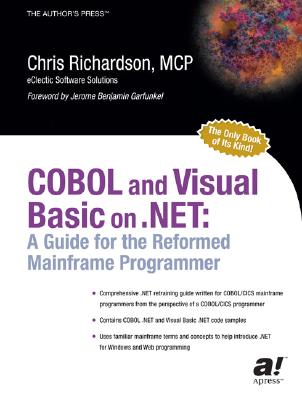
COBOL and Visual Basic on .NET
KSh 9,000.00

Android Application Development All–in–One For Dummies, 3rd Edition
KSh 5,950.00

Choose your WoW - Second Edition (FRENCH)
KSh 3,450.00