
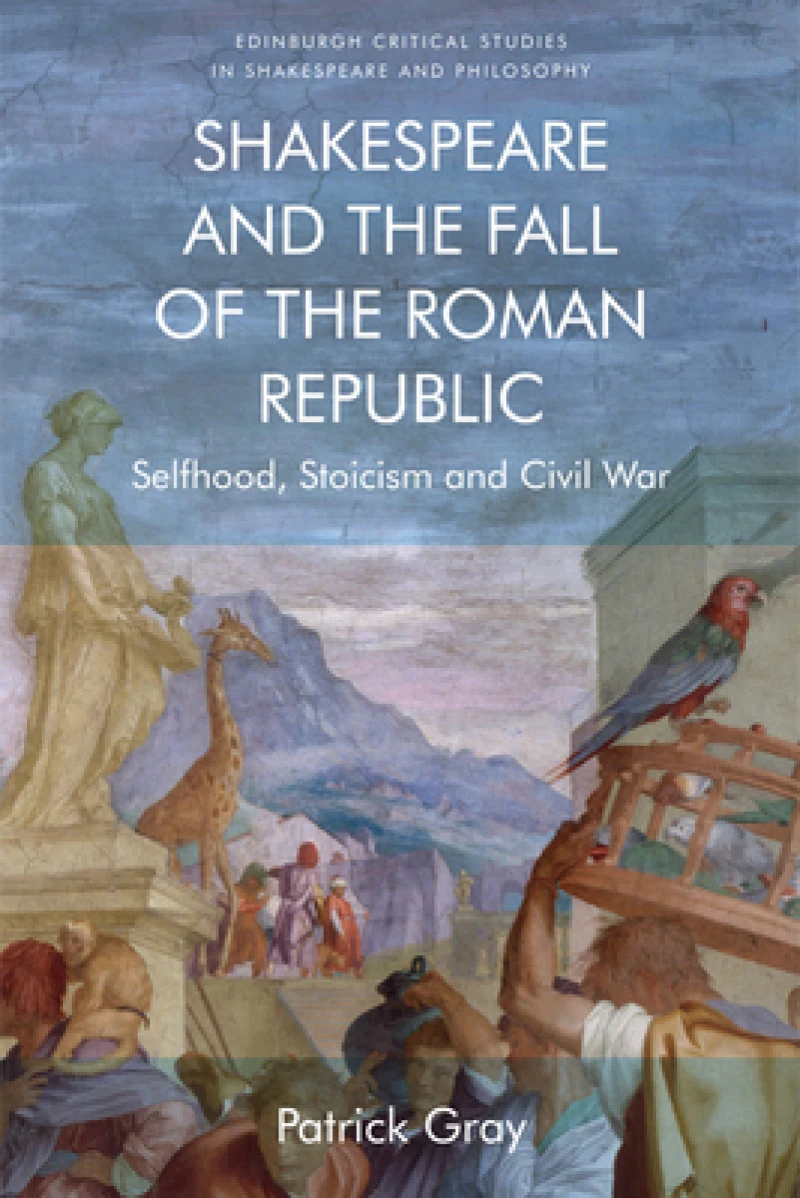
Shakespeare and the Fall of the Roman Republic : Selfhood, Stoicism and Civil War
Book Details
Delivery Location
Delivery fee: Select location
Explores Shakespeare''s representation of the failure of democracy in ancient Rome Shakespeare and the Fall of the Roman Republic introduces Shakespeare as a historian of ancient Rome alongside figures such as Sallust, Cicero, St Augustine, Machiavelli, Gibbon, Hegel and Nietzsche. In Julius Caesar and Antony and Cleopatra, Shakespeare shows Romes transition from Republic to Empire. Why did Rome degenerate into an autocracy? Alternating between ruthless competition, Stoicism, Epicureanism and self-indulgent fantasies, Rome as Shakespeare sees it is inevitably bound for civil war. Shakespeare and the Fall of the Roman Republic considers Shakespeares place in the history of concepts of selfhood and reflects on his sympathy for Christianity, in light of his reception of medieval Biblical drama, as well as his allusions to the New Testament. Shakespeares critique of Romanitas anticipates concerns about secularisation, individualism and liberalism shared by philosophers such as Hannah Arendt, Alasdair MacIntyre, Charles Taylor, Michael Sandel and Patrick Deneen.
Key Features:
Explains Shakespeares interpretation of the underlying causes of the Roman Republican civil warsShows how Shakespeare uses Roman history as a testing-ground to arbitrate between competing claims about human natureArticulates Shakespeares distinctive, compromise position on selfhoodSituates Shakespeare within the intellectual history of individualism, Christianity, Romanticism, secularization, and political liberalism
Get Shakespeare and the Fall of the Roman Republic by at the best price and quality guaranteed only at Werezi Africa's largest book ecommerce store. The book was published by Edinburgh University Press and it has pages.

