
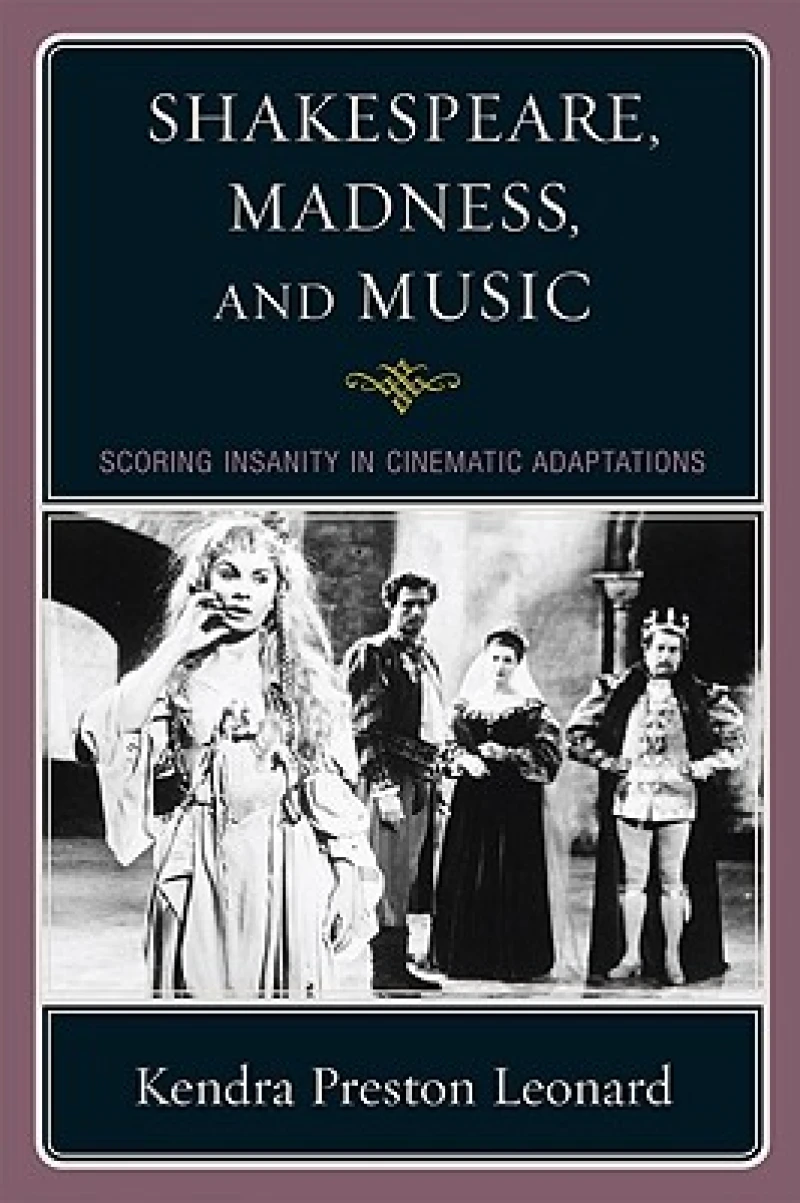
Shakespeare, Madness, and Music : Scoring Insanity in Cinematic Adaptations
Book Details
Format
Paperback / Softback
ISBN-10
0810869462
ISBN-13
9780810869462
Publisher
Scarecrow Press
Imprint
Scarecrow Press
Country of Manufacture
GB
Country of Publication
GB
Publication Date
Jul 9th, 2009
Print length
164 Pages
Weight
254 grams
Dimensions
23.00 x 15.40 x 1.20 cms
Product Classification:
Film theory & criticismMusic reviews & criticism
Ksh 10,600.00
Manufactured on Demand
Delivery in 29 days
Delivery Location
Delivery fee: Select location
Delivery in 29 days
Secure
Quality
Fast
Shakespeare's three political tragedies—Hamlet, Macbeth, and King Lear—have numerously been presented or adapted on film. These three plays all involve the recurring trope of madness, which, as constructed by Shakespeare, provided a wider canvas on which to detail those materials that could not be otherwise expressed: sexual desire and expectation, political unrest, and, ultimately, truth, as excavated by characters so afflicted. Music has long been associated with madness, and was often used as an audible symptom of a victim's disassociation from their surroundings and societal rules, as well as their loss of self-control. In Shakespeare, Madness, and Music: Scoring Insanity in Cinematic Adaptations, Kendra Preston Leonard examines the use of music in Hamlet, Macbeth, and King Lear. Whether discussing contemporary source materials, such as songs, verses, or rhymes specified by Shakespeare in his plays, or music composed specifically for a film and original to the director's or composer's interpretations, Leonard shows how the changing social and scholarly attitudes towards the plays, their characters, and the conditions that fall under the general catch-all of "madness" have led to a wide range of musical accompaniments, signifiers, and incarnations of the afflictions displayed by Shakespeare's characters. Focusing on the most widely distributed and viewed adaptations of these plays for the cinema, each chapter presents the musical treatment of individual Shakespearean characters afflicted with or feigning madness: Hamlet, Ophelia, Lady Macbeth, King Lear, and Edgar. The book offers analysis and interpretation of the music used to underscore, belie, or otherwise inform or invoke the characters' states of mind, providing a fascinating indication of culture and society, as well as the thoughts and ideas of individual directors, composers, and actors. A bibliography, index, and appendix listing Shakespeare's film adaptations help complete this fascinating volume.
Shakespeare''s three political tragedies—Hamlet, Macbeth, and King Lear—have numerously been presented or adapted on film. These three plays all involve the recurring trope of madness, which, as constructed by Shakespeare, provided a wider canvas on which to detail those materials that could not be otherwise expressed: sexual desire and expectation, political unrest, and, ultimately, truth, as excavated by characters so afflicted. Music has long been associated with madness, and was often used as an audible symptom of a victim''s disassociation from their surroundings and societal rules, as well as their loss of self-control. In Shakespeare, Madness, and Music: Scoring Insanity in Cinematic Adaptations, Kendra Preston Leonard examines the use of music in Hamlet, Macbeth, and King Lear. Whether discussing contemporary source materials, such as songs, verses, or rhymes specified by Shakespeare in his plays, or music composed specifically for a film and original to the director''s or composer''s interpretations, Leonard shows how the changing social and scholarly attitudes towards the plays, their characters, and the conditions that fall under the general catch-all of "madness" have led to a wide range of musical accompaniments, signifiers, and incarnations of the afflictions displayed by Shakespeare''s characters. Focusing on the most widely distributed and viewed adaptations of these plays for the cinema, each chapter presents the musical treatment of individual Shakespearean characters afflicted with or feigning madness: Hamlet, Ophelia, Lady Macbeth, King Lear, and Edgar. The book offers analysis and interpretation of the music used to underscore, belie, or otherwise inform or invoke the characters'' states of mind, providing a fascinating indication of culture and society, as well as the thoughts and ideas of individual directors, composers, and actors. A bibliography, index, and appendix listing Shakespeare''s film adaptations help complete this fascinating volume.
Get Shakespeare, Madness, and Music by at the best price and quality guaranteed only at Werezi Africa's largest book ecommerce store. The book was published by Scarecrow Press and it has pages.

