
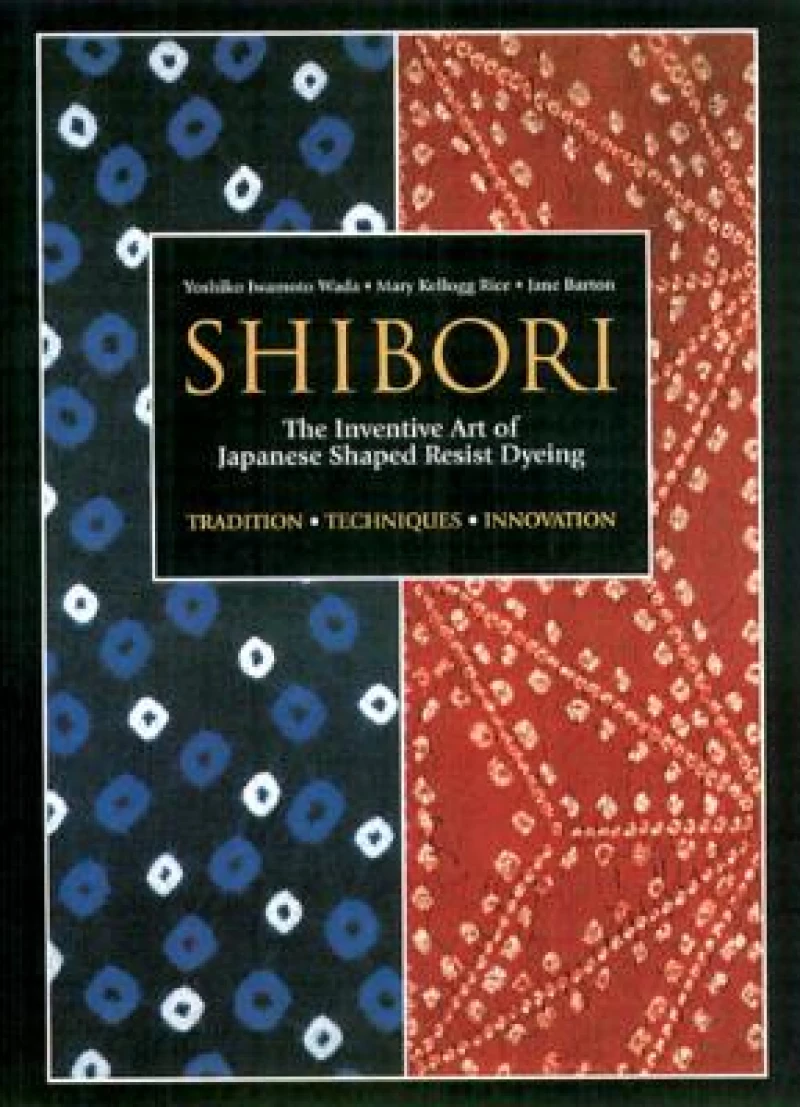
Shibori
Book Details
Format
Paperback / Softback
ISBN-10
1568363966
ISBN-13
9781568363967
Publisher
Kodansha America, Inc
Imprint
Kodansha America, Inc
Country of Manufacture
CN
Country of Publication
GB
Publication Date
Feb 21st, 2012
Print length
304 Pages
Weight
1,308 grams
Dimensions
29.70 x 21.20 x 2.30 cms
Product Classification:
Handicrafts, decorative arts & craftsHandicrafts, decorative arts and crafts
Ksh 8,300.00
Werezi Extended Catalogue
Delivery in 14 days
1 copies in stock
Delivery Location
Delivery fee: Select location
Delivery in 14 days
Secure
Quality
Fast
Potential for creating designs in textiles can be seen even in the physical properties of cloth. The simple fact that cloth tightly compressed into wrinkles or folds resists the penetration of dye is an opportunity—an opportunity to let the pliancy of textiles speak in making designs and patterns.
People around the world have recognized this opportunity, producing resist designs in textiles by shaping and then securing cloth in various ways before dyeing. Yet in no other country has the creative potential of this basic principle been understood and applied as it has in Japan. Here, in fact, it has been expanded into a whole family of traditional resist techniques, involving first shaping the cloth by plucking, pinching, twisting, stitching, folding, pleating, and wrapping it, and then securing the shapes thus made by binding, looping, knotting, clamping, and the like. This entire family of techniques is called shibori.
Designs created with shibori processes all share a softness of outline and spontaneity of effect. Spontaneity is shibori''s special magic, made possible by exploiting the beauty of the fortuitous things that happen when dye enters shaped cloth.
Usually it is in response to the fact that a craft is being lost that the need for preserving and documenting it arises. The motivation behind this book is no exception, but the authors have gone far beyond simple documentation. Extensive research and experimentation have led to the revival here of shibori techniques that were once well known but have now been largely forgotten in Japan. In addition to more conventional techniques, the work of contemporary fiber artists in Japan and abroad in shibori textile art and wearable art is presented, to suggest the extent of the creative innovation possible.
The 104 color and 298 black-and-white plates include a photographic Gallery of Shibori Examples, based on Japan''s largest collection of traditional shibori fabrics. Included also are a detailed guide to basic natural dyes used in Japan, the making and care of an indigo vat, and a list of suppliers in North America, as well as a glossary and bibliography. Now available in paperback, this full documentation of one of the world''s most inventive and exciting dyeing techniques continues as a classic in the textile field.
People around the world have recognized this opportunity, producing resist designs in textiles by shaping and then securing cloth in various ways before dyeing. Yet in no other country has the creative potential of this basic principle been understood and applied as it has in Japan. Here, in fact, it has been expanded into a whole family of traditional resist techniques, involving first shaping the cloth by plucking, pinching, twisting, stitching, folding, pleating, and wrapping it, and then securing the shapes thus made by binding, looping, knotting, clamping, and the like. This entire family of techniques is called shibori.
Designs created with shibori processes all share a softness of outline and spontaneity of effect. Spontaneity is shibori''s special magic, made possible by exploiting the beauty of the fortuitous things that happen when dye enters shaped cloth.
Usually it is in response to the fact that a craft is being lost that the need for preserving and documenting it arises. The motivation behind this book is no exception, but the authors have gone far beyond simple documentation. Extensive research and experimentation have led to the revival here of shibori techniques that were once well known but have now been largely forgotten in Japan. In addition to more conventional techniques, the work of contemporary fiber artists in Japan and abroad in shibori textile art and wearable art is presented, to suggest the extent of the creative innovation possible.
The 104 color and 298 black-and-white plates include a photographic Gallery of Shibori Examples, based on Japan''s largest collection of traditional shibori fabrics. Included also are a detailed guide to basic natural dyes used in Japan, the making and care of an indigo vat, and a list of suppliers in North America, as well as a glossary and bibliography. Now available in paperback, this full documentation of one of the world''s most inventive and exciting dyeing techniques continues as a classic in the textile field.
Get Shibori by at the best price and quality guaranteed only at Werezi Africa's largest book ecommerce store. The book was published by Kodansha America, Inc and it has pages.

