
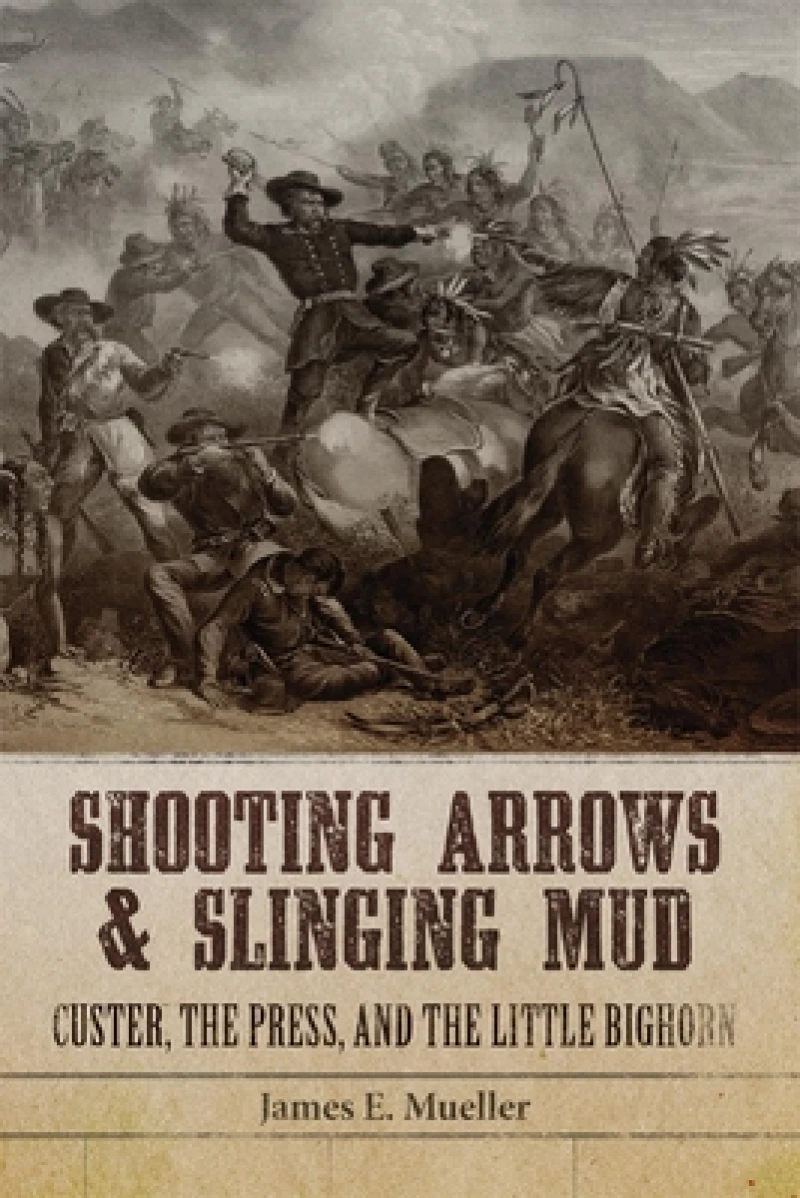
Shooting Arrows and Slinging Mud : Custer, the Press, and the Little Bighorn
Book Details
Format
Hardback or Cased Book
ISBN-10
0806143983
ISBN-13
9780806143989
Publisher
University of Oklahoma Press
Imprint
University of Oklahoma Press
Country of Manufacture
US
Country of Publication
GB
Publication Date
Sep 26th, 2013
Print length
272 Pages
Weight
572 grams
Dimensions
22.90 x 15.20 x 2.50 cms
Product Classification:
History of the AmericasModern history to 20th century: c 1700 to c 1900Social & cultural historyMilitary historyMedia studiesIndigenous peoples / IndigeneityMedia studiesIndigenous peoplesPress & journalismNews media and journalismHistoryHistory of the AmericasSocial and cultural historyMilitary history
Ksh 4,400.00
Werezi Extended Catalogue
0 in stock
Delivery Location
Delivery fee: Select location
Secure
Quality
Fast
The defeat of George Armstrong Custer and the Seventh Cavalry at the Battle of the Little Bighorn was big news in 1876. James Mueller draws on exhaustive research of period newspapers to explore press coverage of the famous battle to offer a unique take on the dramatic events that so shook the American public.
The defeat of George Armstrong Custer and the Seventh Cavalry at the Battle of the Little Bighorn was big news in 1876. Newspaper coverage of the battle initiated hot debates about whether the U.S. government should change its policy toward American Indians and who was to blame for the army''s loss - the latter, an argument that ignites passion to this day. In Shooting Arrows and Slinging Mud, James E. Mueller draws on exhaustive research of period newspapers to explore press coverage of the famous battle. As he analyzes a wide range of accounts - some grim, some circumspect, some even laced with humor - Mueller offers a unique take on the dramatic events that so shook the American public.
Among the many myths surrounding the Little Bighorn is that journalists of that time were incompetent hacks who, in response to the stunning news of Custer''s defeat, called for bloodthirsty revenge against the Indians and portrayed the ""boy general"" as a glamorous hero who had suffered a martyr''s death. Mueller argues otherwise, explaining that the journalists of 1876 were not uniformly biased against the Indians, and they did a credible job of describing the battle. They reported facts as they knew them, wrote thoughtful editorials, and asked important questions.
Although not without their biases, journalists reporting on the Battle of the Little Bighorn cannot be credited - or faulted - for creating the legend of Custer''s Last Stand. Indeed, as Mueller reveals, after the initial burst of attention, these journalists quickly moved on to other stories of their day. It would be art and popular culture - biographies, paintings, Wild West shows, novels, and movies - that would forever embed the Last Stand in the American psyche.
Among the many myths surrounding the Little Bighorn is that journalists of that time were incompetent hacks who, in response to the stunning news of Custer''s defeat, called for bloodthirsty revenge against the Indians and portrayed the ""boy general"" as a glamorous hero who had suffered a martyr''s death. Mueller argues otherwise, explaining that the journalists of 1876 were not uniformly biased against the Indians, and they did a credible job of describing the battle. They reported facts as they knew them, wrote thoughtful editorials, and asked important questions.
Although not without their biases, journalists reporting on the Battle of the Little Bighorn cannot be credited - or faulted - for creating the legend of Custer''s Last Stand. Indeed, as Mueller reveals, after the initial burst of attention, these journalists quickly moved on to other stories of their day. It would be art and popular culture - biographies, paintings, Wild West shows, novels, and movies - that would forever embed the Last Stand in the American psyche.
Get Shooting Arrows and Slinging Mud by at the best price and quality guaranteed only at Werezi Africa's largest book ecommerce store. The book was published by University of Oklahoma Press and it has pages.

