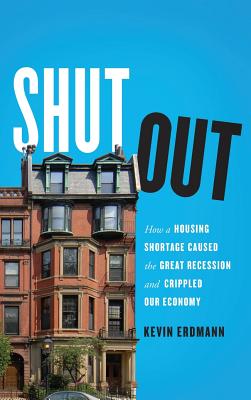
Shut Out : How a Housing Shortage Caused the Great Recession and Crippled Our Economy
Book Details
Format
Paperback / softback
Book Series
Mercatus Center at George Mason University
ISBN-10
1538163004
ISBN-13
9781538163009
Publisher
Bloomsbury Publishing Plc
Imprint
Rowman & Littlefield Publishers
Country of Manufacture
GB
Country of Publication
GB
Publication Date
Sep 15th, 2021
Print length
322 Pages
Weight
466 grams
Dimensions
15.10 x 22.80 x 2.20 cms
Product Classification:
Society & culture: generalCentral government policiesRegional & area planning
KSh 4,750.00
Currently unavailable
0 in stock
Delivery Location
Delivery fee: Select location
Secure
Quality
Fast
Shut Out provides a much-needed correction to the causes and consequences of financial crises and secular stagnation.
The United States suffers from a shortage of well-placed homes. This was true even at the peak of the housing boom in 2005. Using a broad array of evidence on housing inflation, income, migration, homeownership trends, and international comparisons, Shut Out demonstrates that high home prices have been largely caused by the constrained housing supply in a handful of magnet cities leading the new economy.
The same phenomenon is occurring in leading countries across the globe. Gentrifying cities have become exclusionary bastions in the new postindustrial economy. The US housing bubble that peaked in 2005 is more accurately described as a refugee crisis than a credit bubble. Surging demand for limited urban housing triggered a spike of migration away from the magnet cities among households with moderate and lower incomes who could no longer afford to remain, causing a brief contagion of high prices in the cities where the migrants moved.
In this book, author Kevin Erdmann observes that the housing bubble has been broadly and incorrectly attributed to various “excesses.” Policymakers and economists concluded that our key challenge was that we had built too many homes. This misdiagnosis of the problem, according to Erdmann, led to misguided public polices, which were the primary cause of the subsequent financial crisis. A sort of moral panic about supposed excesses in home lending and construction led to destabilizing monetary and regulatory decisions. As the economy slumped, a sense of fatalism prevented the government from responding appropriately to the worsening situation.
Shut Out provides a much-needed correction to the causes and consequences of financial crises and secular stagnation.
The same phenomenon is occurring in leading countries across the globe. Gentrifying cities have become exclusionary bastions in the new postindustrial economy. The US housing bubble that peaked in 2005 is more accurately described as a refugee crisis than a credit bubble. Surging demand for limited urban housing triggered a spike of migration away from the magnet cities among households with moderate and lower incomes who could no longer afford to remain, causing a brief contagion of high prices in the cities where the migrants moved.
In this book, author Kevin Erdmann observes that the housing bubble has been broadly and incorrectly attributed to various “excesses.” Policymakers and economists concluded that our key challenge was that we had built too many homes. This misdiagnosis of the problem, according to Erdmann, led to misguided public polices, which were the primary cause of the subsequent financial crisis. A sort of moral panic about supposed excesses in home lending and construction led to destabilizing monetary and regulatory decisions. As the economy slumped, a sense of fatalism prevented the government from responding appropriately to the worsening situation.
Shut Out provides a much-needed correction to the causes and consequences of financial crises and secular stagnation.
Get Shut Out by Kevin Erdmann at the best price and quality guaranteed only at Werezi Africa's largest book ecommerce store. The book was published by Bloomsbury Publishing Plc and it has 322 pages.
Customers Who Bought This Also Bought

Africa Dances
KSh 2,700.00

Its Our Turn to Eat
KSh 2,350.00

Stranger Faces
KSh 2,500.00

The 48 Laws Of Power
KSh 3,600.00

Wild Seed
KSh 2,350.00

Patternmaster
KSh 2,350.00

Clay's Ark
KSh 2,350.00

Mind of My Mind
KSh 2,350.00

The Anxious Generation
KSh 2,000.00

Clay''s Ark
KSh 2,000.00

Mind of My Mind
KSh 2,000.00

Patternmaster
KSh 2,000.00