
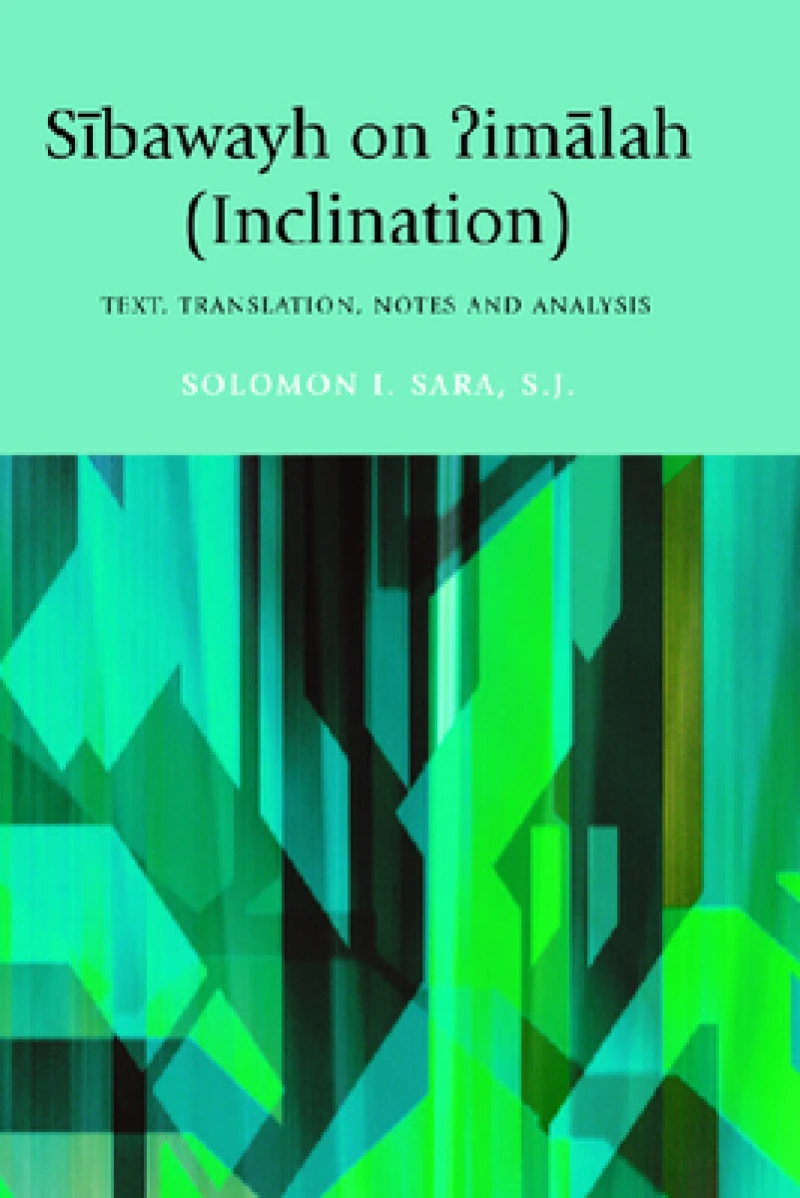
Sibawayh on ?imalah (Inclination) : Text, Translation, Notes and Analysis
Book Details
Format
Hardback or Cased Book
ISBN-10
0748627952
ISBN-13
9780748627950
Publisher
Edinburgh University Press
Imprint
Edinburgh University Press
Country of Manufacture
GB
Country of Publication
GB
Publication Date
Jul 13th, 2007
Print length
200 Pages
Weight
382 grams
Product Classification:
linguistics
Ksh 27,900.00
Werezi Extended Catalogue
0 in stock
Delivery Location
Delivery fee: Select location
Secure
Quality
Fast
A translation and analysis of Sibawayh's comprehensive and insightful work on Inclination (or Umlauting) in classical Arabic.
An eighth-century scholar and linguist born in Persia, Sibawayh is to Arabic linguistics what Panini is to Indian linguistics. He departed from the traditional methods of doing analysis to launch a more objective, descriptive and formal paradigm of linguistic analysis. Sibawayh wrote only one book called Ýactual symbol not reproducible¨al-Kitab ''the book'', considered to be the most thorough grammar of Classical Arabic ever written. His grammar established the foundations of Arabic linguistics as it became a statement of the new paradigm, and the book has become the model for all subsequent grammarians of Arabic.
The treatise on Ýactual symbol not reproducible¨imalah ''inclination'' is part of this grammar. It brings together the disparate mechanisms of ''inclination'' by stating the conditions for its occurrence. This is not a purely abstract treatise, but a study that looks over the various dialects of Arabic and formulates the conditions under which ''inclination'' takes place. Though the triggers for ''inclination'' are the presence of an Ýi¨ or a Ýy¨, either expressed or implied, in contexts where an Ýa¨ changes to an Ýe¨, the consonantal constraints to prevent these changes are also carefully detailed. As a characteristic of Sibawayh''s work, he also accounts for all the exceptional cases in a comprehensive manner.
The treatise shows the systematic nature of ''inclination'', with a rich display of data from actual occurrences in the language. It also displays the optional nature of ''inclination'' as different dialects make use of some triggers but not of others. The six chapters take up the topic of inclination from its most basic contexts like the occurrence of the Ýi¨ trigger, and the occurrence of the Ýy¨ trigger to the exceptional cases, the consonantal segments that prevent inclination, the influence of Ýr¨ on inclination, and the effect of inclination on the Ýactual symbol not reproducible¨arakat ''motions/short vowel''.
The treatise on Ýactual symbol not reproducible¨imalah ''inclination'' is part of this grammar. It brings together the disparate mechanisms of ''inclination'' by stating the conditions for its occurrence. This is not a purely abstract treatise, but a study that looks over the various dialects of Arabic and formulates the conditions under which ''inclination'' takes place. Though the triggers for ''inclination'' are the presence of an Ýi¨ or a Ýy¨, either expressed or implied, in contexts where an Ýa¨ changes to an Ýe¨, the consonantal constraints to prevent these changes are also carefully detailed. As a characteristic of Sibawayh''s work, he also accounts for all the exceptional cases in a comprehensive manner.
The treatise shows the systematic nature of ''inclination'', with a rich display of data from actual occurrences in the language. It also displays the optional nature of ''inclination'' as different dialects make use of some triggers but not of others. The six chapters take up the topic of inclination from its most basic contexts like the occurrence of the Ýi¨ trigger, and the occurrence of the Ýy¨ trigger to the exceptional cases, the consonantal segments that prevent inclination, the influence of Ýr¨ on inclination, and the effect of inclination on the Ýactual symbol not reproducible¨arakat ''motions/short vowel''.
Get Sibawayh on ?imalah (Inclination) by at the best price and quality guaranteed only at Werezi Africa's largest book ecommerce store. The book was published by Edinburgh University Press and it has pages.

