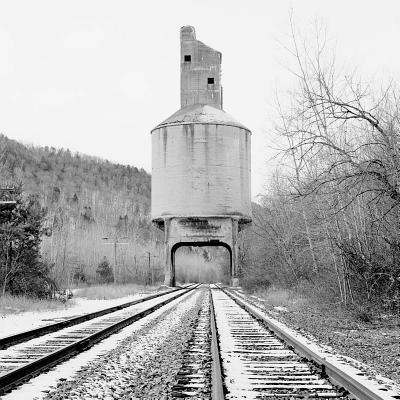
Silent Monoliths : The Coaling Tower Project
by
Jeff Brouws
Book Details
Format
Hardback
ISBN-10
0262051753
ISBN-13
9780262051750
Publisher
MIT Press Ltd
Imprint
MIT Press
Country of Manufacture
GB
Country of Publication
GB
Publication Date
Feb 17th, 2026
Print length
216 Pages
Weight
1,154 grams
Dimensions
26.20 x 21.10 x 2.40 cms
Product Classification:
Special kinds of photographyPhotography: subject-specific techniques and principles
KSh 6,500.00
Werezi Extended Catalogue
Delivery in 12 days
1 copies in stock
Delivery Location
Delivery fee: Select location
Delivery in 12 days
Secure
Quality
Fast
A beautifully arresting photographic record of North American coaling towers, which once fueled steam locomotives and powered the country.
A fine art photography must-have for railroad enthusiasts and anyone interested in the industrial golden era.
In 1906, America commenced a major railroad modernization project, driven by massive industrial era investment and development. A lasting symbol of this time in history remains today: the imposing coaling towers that pepper the country and which once held the coal that powered steam locomotives. Over the course of five years and 20,000 miles, photographer Jeff Brouws documented these towers. Silent Monoliths tells their story.
The towers, built of concrete, a modern material with historical roots traceable to the Roman aqueducts, were constructed to replace aging (and less fire-retardant and less efficient) wooden coaling wharves and chutes. As the railroads transitioned from steam to diesel in the late 1940s and throughout the 1950s, most of these coaling towers slipped into obsolescence—some demolished, others “retired-in-place” and left standing. As a result of the latter, many examples of these sculptural, architectonic remnants of industrial brawn stand in silence across North America—from Flomaton, Alabama, to the northernmost reaches of Ontario, Canada; as far west as Glenns Ferry, Idaho, to the eastern seaboard in New Haven, Connecticut.
Essays from industrial and railroad historian John Hankey and art historian Marcella Hackbardt illuminate the significance of these otherworldly relics. In the spirit of Hilla and Bernd Becher, Brouws’ photographic portfolio presents over 105 examples of these austere monoliths, conveying their unique place in cultural history.
A fine art photography must-have for railroad enthusiasts and anyone interested in the industrial golden era.
In 1906, America commenced a major railroad modernization project, driven by massive industrial era investment and development. A lasting symbol of this time in history remains today: the imposing coaling towers that pepper the country and which once held the coal that powered steam locomotives. Over the course of five years and 20,000 miles, photographer Jeff Brouws documented these towers. Silent Monoliths tells their story.
The towers, built of concrete, a modern material with historical roots traceable to the Roman aqueducts, were constructed to replace aging (and less fire-retardant and less efficient) wooden coaling wharves and chutes. As the railroads transitioned from steam to diesel in the late 1940s and throughout the 1950s, most of these coaling towers slipped into obsolescence—some demolished, others “retired-in-place” and left standing. As a result of the latter, many examples of these sculptural, architectonic remnants of industrial brawn stand in silence across North America—from Flomaton, Alabama, to the northernmost reaches of Ontario, Canada; as far west as Glenns Ferry, Idaho, to the eastern seaboard in New Haven, Connecticut.
Essays from industrial and railroad historian John Hankey and art historian Marcella Hackbardt illuminate the significance of these otherworldly relics. In the spirit of Hilla and Bernd Becher, Brouws’ photographic portfolio presents over 105 examples of these austere monoliths, conveying their unique place in cultural history.
Get Silent Monoliths by Jeff Brouws at the best price and quality guaranteed only at Werezi Africa's largest book ecommerce store. The book was published by MIT Press Ltd and it has 216 pages.
Customers Who Bought This Also Bought

Peter Beard
KSh 14,400.00

Photography
KSh 7,350.00

Paul Mpagi Sepuya: Dark Room A–Z
KSh 12,500.00

Patti Smith – Camera Solo
KSh 4,150.00

Philip''s 2027 Stargazing Month-by-Month Guide to the Night Sky Britain & Ireland
KSh 1,250.00
Photomontage
KSh 2,700.00

A Field Guide to the Mushrooms of Georgia
KSh 7,900.00

North Mississippi Homeplace
KSh 10,450.00

Murmur Trestle
KSh 7,250.00

Still Hungry in America
KSh 7,000.00

An Unflinching Look
KSh 7,650.00

Social Roots
KSh 8,250.00