
Cart 0
Sinking Force Z 1941
Click to zoom

Share this book

Sinking Force Z 1941 : The day the Imperial Japanese Navy killed the battleship

Book Details

Format Paperback / Softback
Book Series Air Campaign
ISBN-10 1472846605
ISBN-13 9781472846600
Publisher Bloomsbury Publishing PLC
Imprint Osprey Publishing
Country of Manufacture IN
Country of Publication GB
Publication Date Jan 21st, 2021
Print length 96 Pages
Weight 312 grams
Dimensions 18.50 x 24.60 x 1.60 cms
Ksh 2,700.00
Werezi Extended Catalogue Delivery in 14 days

Delivery Location

Delivery fee: Select location

Delivery in 14 days

Secure
Quality
Fast
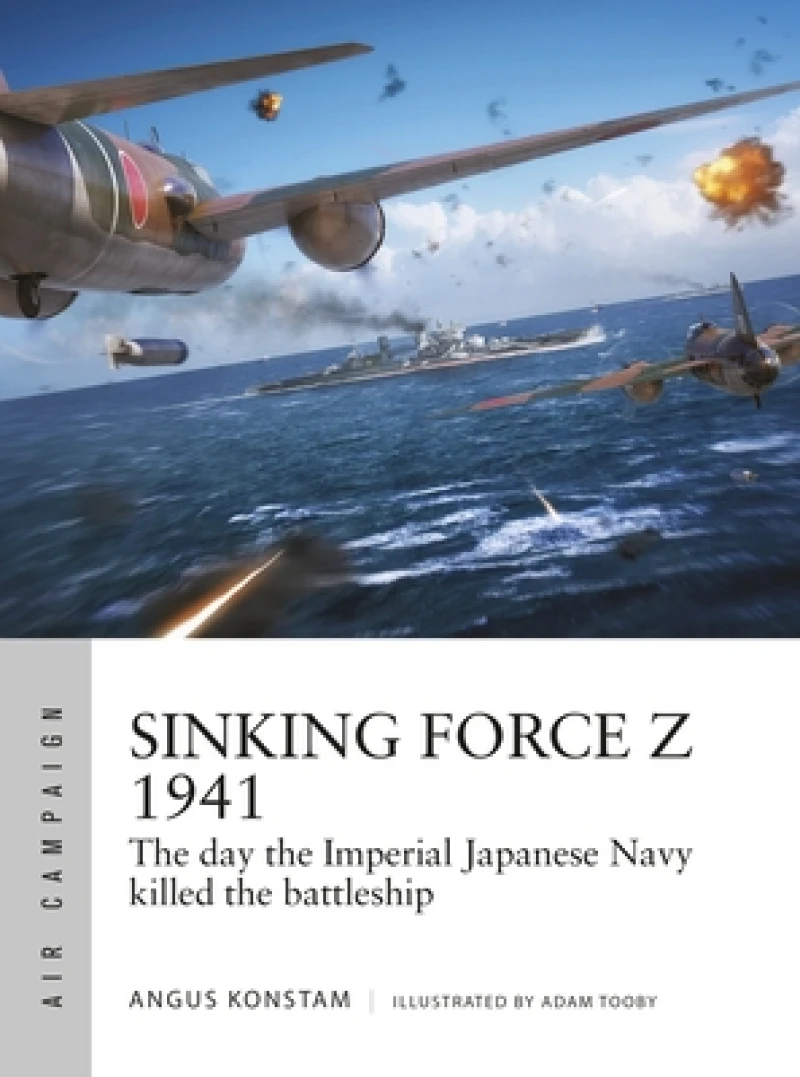
A history and analysis of one of the most dramatic moments in both air power and naval history. With the sinking of HMS Prince of Wales and Repulse, no battleship was safe on the open ocean, and the aircraft took its crown as the most powerful maritime weaponIn late 1941, war was looming with Japan, and Britain's empire in southeast Asia was at risk. The British government decided to send Force Z, which included the state-of-the-art battleship Prince of Wales and the battlecruiser Repulse, to bolster the naval defences of Singapore, and provide a mighty naval deterrent to Japanese aggression. These two powerful ships arrived in Singapore on 2 December - five days before the Japanese attack on Pearl Harbor. But crucially, they lacked air cover. On 9 December Japanese scout planes detected Force Z's approach in the Gulf of Thailand. Unlike at Pearl Harbor, battleships at sea could manoeuvre, and their anti-aircraft defences were ready. But it did no good. The Japanese dive-bombers and torpedo-bombers were the most advanced in the world, and the battle was one-sided. Strategically, the loss of Force Z was a colossal disaster for the British, and one that effectively marked the end of its empire in the East. But even more importantly, the sinking marked the last time that battleships were considered to be the masters of the ocean. From that day on, air power rather than big guns would be the deciding factor in naval warfare.

A history and analysis of one of the most dramatic moments in both air power and naval history. With the sinking of HMS Prince of Wales and Repulse, no battleship was safe on the open ocean, and the aircraft took its crown as the most powerful maritime weapon

In late 1941, war was looming with Japan, and Britain''s empire in southeast Asia was at risk. The British government decided to send Force Z, which included the state-of-the-art battleship Prince of Wales and the battlecruiser Repulse, to bolster the naval defences of Singapore, and provide a mighty naval deterrent to Japanese aggression. These two powerful ships arrived in Singapore on 2 December - five days before the Japanese attack on Pearl Harbor. But crucially, they lacked air cover. On 9 December Japanese scout planes detected Force Z''s approach in the Gulf of Thailand. Unlike at Pearl Harbor, battleships at sea could manoeuvre, and their anti-aircraft defences were ready. But it did no good. The Japanese dive-bombers and torpedo-bombers were the most advanced in the world, and the battle was one-sided.

Strategically, the loss of Force Z was a colossal disaster for the British, and one that effectively marked the end of its empire in the East. But even more importantly, the sinking marked the last time that battleships were considered to be the masters of the ocean. From that day on, air power rather than big guns would be the deciding factor in naval warfare.


Get Sinking Force Z 1941 by at the best price and quality guaranteed only at Werezi Africa's largest book ecommerce store. The book was published by Bloomsbury Publishing PLC and it has pages.


Mind, Body, & Spirit

Price

Ksh 2,700.00

Shopping Cart

Africa largest book store

Sub Total:
Ebooks

Digital Library
Coming Soon

Our digital collection is currently being curated to ensure the best possible reading experience on Werezi. We'll be launching our Ebooks platform shortly.