
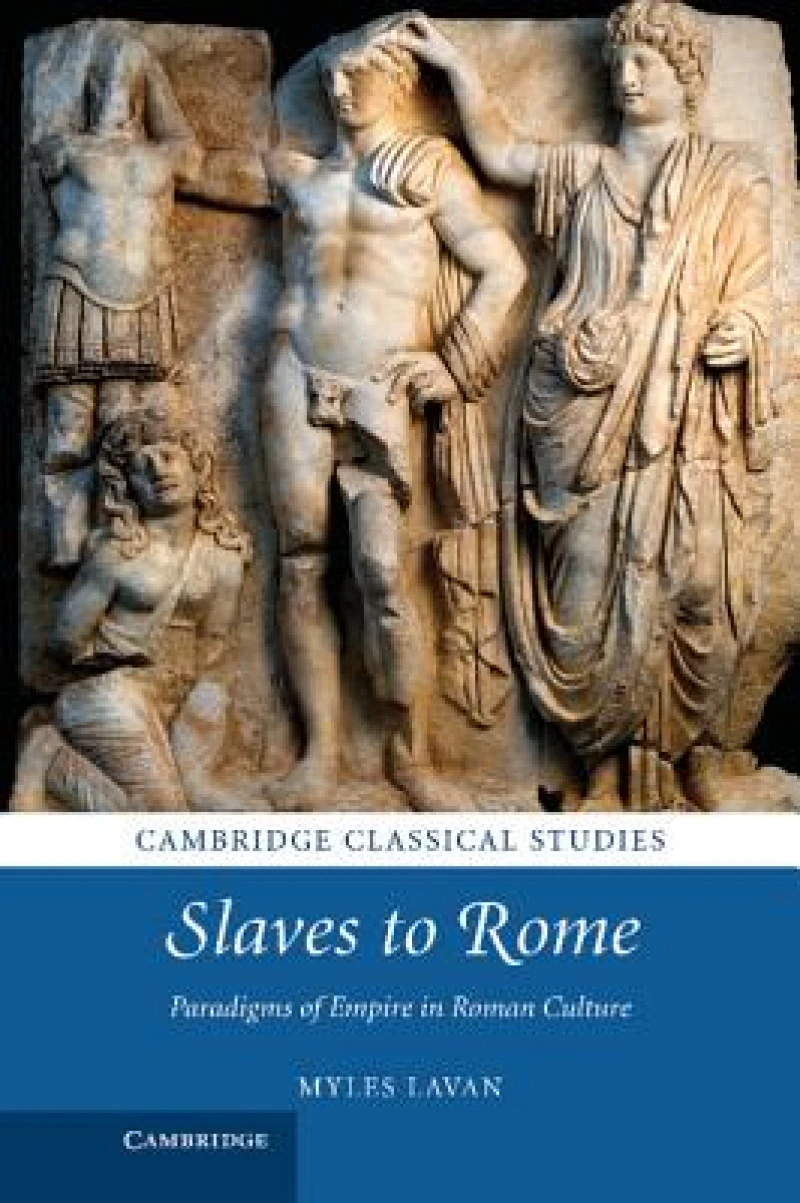
Slaves to Rome : Paradigms of Empire in Roman Culture
by
Myles Lavan
Book Details
Format
Hardback or Cased Book
Book Series
Cambridge Classical Studies
ISBN-10
1107026016
ISBN-13
9781107026018
Publisher
Cambridge University Press
Imprint
Cambridge University Press
Country of Manufacture
GB
Country of Publication
GB
Publication Date
Feb 14th, 2013
Print length
304 Pages
Weight
502 grams
Dimensions
14.80 x 22.30 x 2.10 cms
Product Classification:
Literary studies: ancient, classical and medievalLiterary studies: classical, early & medievalEuropean historyAncient history: to c 500 CEClassical history / classical civilisationSocial & cultural historyHistory of ideasHistory of ideasAncient historyEuropean historySocial and cultural history
Ksh 17,100.00
Manufactured on Demand
0 in stock
Delivery Location
Delivery fee: Select location
Secure
Quality
Fast
This book provides a provocative new perspective on the ideology of Roman imperialism. The analysis of metaphors drawn from the domains of slavery and patronage makes this an important work of reference for researchers and students working on both the history of Roman imperialism and the politics of Latin literature.
This study in the language of Roman imperialism provides a provocative new perspective on the Roman imperial project. It highlights the prominence of the language of mastery and slavery in Roman descriptions of the conquest and subjection of the provinces. More broadly, it explores how Roman writers turn to paradigmatic modes of dependency familiar from everyday life - not just slavery but also clientage and childhood - in order to describe their authority over, and responsibilities to, the subject population of the provinces. It traces the relative importance of these different models for the imperial project across almost three centuries of Latin literature, from the middle of the first century BCE to the beginning of the third century CE.
Get Slaves to Rome by at the best price and quality guaranteed only at Werezi Africa's largest book ecommerce store. The book was published by Cambridge University Press and it has pages.

