
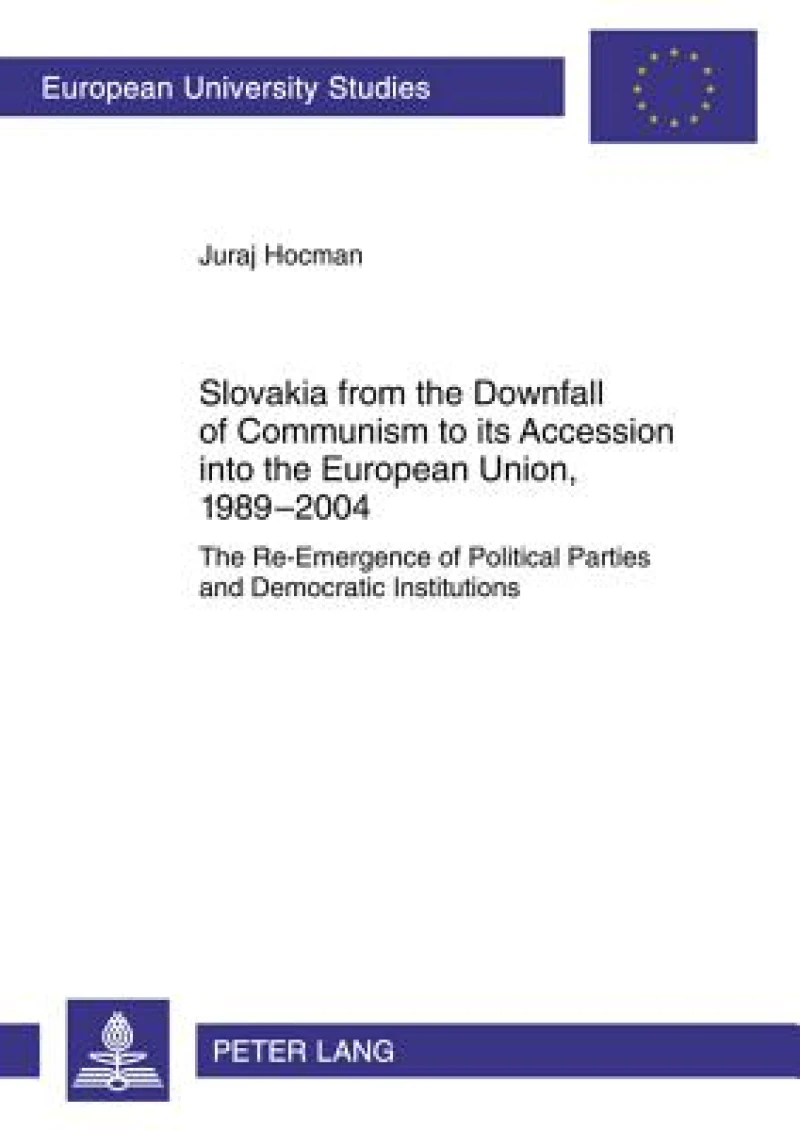
Slovakia from the Downfall of Communism to its Accession into the European Union, 1989-2004 : The Re-Emergence of Political Parties and Democratic Institutions
New
by
Juraj Hocman
Book Details
Format
Paperback / Softback
Book Series
Europaeische Hochschulschriften / European University Studies / Publications Universitaires Europeennes
ISBN-10
3631611536
ISBN-13
9783631611531
Edition
New
Publisher
Peter Lang AG
Imprint
Peter Lang AG
Country of Manufacture
DE
Country of Publication
GB
Publication Date
May 13th, 2011
Print length
305 Pages
Weight
426 grams
Dimensions
15.00 x 21.00 x 2.00 cms
Product Classification:
European historySocial & cultural historyPolitical science & theory
Ksh 9,700.00
Manufactured on Demand
0 in stock
Delivery Location
Delivery fee: Select location
Secure
Quality
Fast
Throughout 1990s, several observers of post-communist transformation in East Central Europe viewed Slovaks as a non-historic nation hastily modernized during the communist era. This study examines Slovakia's evolution from downfall of Communism to accession of independent Slovak Republic into European Union from a broader historical perspective.
Throughout the 1990s, several observers of the post-communist transformation in East Central Europe viewed the Slovaks as a non-historic nation hastily modernized during the communist era. Following the fall of the communist regime and the creation of the independent Slovak Republic, the country’s image was associated with radical nationalism and an unstable domestic political scene. This study examines Slovakia’s evolution from the downfall of Communism to the accession of the independent Slovak Republic into the European Union from a broader historical perspective. It challenges the assumptions of political immaturity and passivity of Slovak society as major hindrances in the more recent phase of its evolution. The author argues that the building of the Slovak political nation had started in Austria-Hungary and continued in Czechoslovakia under all its regimes. As a result, Slovak political parties and institutions as the main carriers of democratic transformation did not emerge in the early 1990s in a political and institutional vacuum and Slovakia’s road to democracy can be better understood in continuity with the processes that had begun in the 1960s.
Get Slovakia from the Downfall of Communism to its Accession into the European Union, 1989-2004 by at the best price and quality guaranteed only at Werezi Africa's largest book ecommerce store. The book was published by Peter Lang AG and it has pages.

