
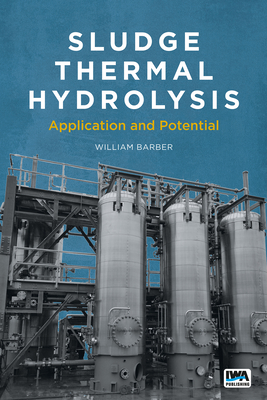
Sludge Thermal Hydrolysis : Application and Potential
Book Details
Format
Paperback / softback
ISBN-10
1789060273
ISBN-13
9781789060270
Publisher
IWA Publishing
Imprint
IWA Publishing
Country of Manufacture
GB
Country of Publication
GB
Publication Date
May 15th, 2020
Print length
160 Pages
Weight
394 grams
Dimensions
23.30 x 15.70 x 1.70 cms
Product Classification:
Water supply & treatmentWater supply and treatment
KSh 20,700.00
Werezi Extended Catalogue
Delivery in 12 days
8 copies in stock
Delivery Location
Delivery fee: Select location
Delivery in 12 days
Secure
Quality
Fast
Around the world, the production of sewage sludge is increasing. This is due to numerous factors including growing population, increasing urbanization and investments in wastewater infrastructure. In addition, the composition of sewage sludge is evolving because of stricter environmental regulation. Sludge is changing composition towards the production of activated or biological sludge produced during oxidation of wastewater to destroy nutrients, away from primary sludge produced during initial settlement of the incoming solids in wastewater influent. Unfortunately, the processing of activated sludge is notoriously difficult and has been widely lamented by the scientific literature within fifteen years of the commercialization of the activated sludge process in 1914. The principle difference between activated and primary sludge is the high content of extracellular polymer material in activated sludge. This material makes the sludge viscous and difficult to transport. It also retains water which drastically limits the dewaterability potential for the sludge. Additionally, this material makes activated sludge difficult to degrade during anaerobic digestion. As the use of anaerobic digestion of sludge has been growing in interest due to the production of renewable energy amongst other benefits, so has the interest in improving the anaerobic biodegradability of activated sludge, often seen as the rate limiting step in overall digestion performance of municipal sludge. Decades of research have been dedicated to this pursuit investigating a wide variety of methods which have almost exclusively been applied to the sludge prior to anaerobic digestion. Of these methods, thermal hydrolysis, the application of heat in the range of 130°C to 200°C has gained much attention especially since the installation of the first full-scale commercially operating plant in Hias, Norway in 1995. Thermal hydrolysis combined with anaerobic digestion accounts for approximately 60% of all the sludge produced in the UK. Furthermore, it is installed in many major cities worldwide and can be found across 5 continents. The aim of this book is to help the reader gain an understanding of thermal hydrolysis with respect to municipal sludge treatment. It will describe the scientific principles of the process and show how it can influence sludge treatment. The book will present case studies where the technology has been employed and identify the benefits and challenges of the technology.
Get Sludge Thermal Hydrolysis by William Barber at the best price and quality guaranteed only at Werezi Africa's largest book ecommerce store. The book was published by IWA Publishing and it has 160 pages.
Customers Who Bought This Also Bought

Hydroworks and Underflows
KSh 15,800.00
Precious Commodity
KSh 9,400.00
Sustainable Development in Energy and Environment
KSh 36,000.00
Green Methods for Wastewater Treatment
KSh 23,400.00
Novel Materials for Dye-containing Wastewater Treatment
KSh 23,400.00

Progress on Transboundary Water Cooperation Under the Water Convention
KSh 6,500.00

Water and Development
KSh 16,200.00

Land and Disaster Management Strategies in Asia
KSh 25,200.00
Water and Disasters
KSh 26,100.00

Impacts of Shallow Geothermal Energy on Groundwater Quality
KSh 25,200.00

Water, Power and Citizenship
KSh 16,200.00

Water Politics and Political Culture
KSh 8,100.00
More by William Barber


More in This Genre
Hydroworks and Underflows
KSh 15,800.00
Precious Commodity
KSh 9,400.00
Sustainable Development in Energy and Environment
KSh 36,000.00
Green Methods for Wastewater Treatment
KSh 23,400.00
Novel Materials for Dye-containing Wastewater Treatment
KSh 23,400.00
Progress on Transboundary Water Cooperation Under the Water Convention
KSh 6,500.00
