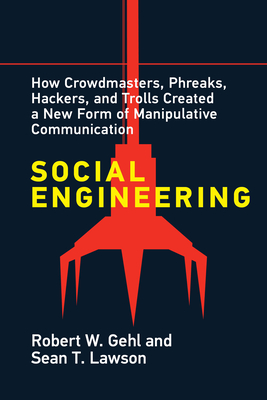
Social Engineering
Book Details
Format
Paperback / softback
ISBN-10
0262543451
ISBN-13
9780262543453
Publisher
MIT Press Ltd
Imprint
MIT Press
Country of Manufacture
GB
Country of Publication
GB
Publication Date
Mar 8th, 2022
Print length
304 Pages
Weight
424 grams
Dimensions
15.20 x 22.80 x 2.80 cms
Product Classification:
Technology: general issues
KSh 4,850.00
Werezi Extended Catalogue
Delivery in 4 days
1 copies in stock
Delivery Location
Delivery fee: Select location
Delivery in 4 days
Secure
Quality
Fast
Manipulative communication—from early twentieth-century propaganda to today’s online con artistry—examined through the lens of social engineering.
The United States is awash in manipulated information about everything from election results to the effectiveness of medical treatments. Corporate social media is an especially good channel for manipulative communication, with Facebook a particularly willing vehicle for it. In Social Engineering, Robert Gehl and Sean Lawson show that online misinformation has its roots in earlier techniques: mass social engineering of the early twentieth century and interpersonal hacker social engineering of the 1970s, converging today into what they call “masspersonal social engineering.” As Gehl and Lawson trace contemporary manipulative communication back to earlier forms of social engineering, possibilities for amelioration become clearer.
The authors show how specific manipulative communication practices are a mixture of information gathering, deception, and truth-indifferent statements, all with the instrumental goal of getting people to take actions the social engineer wants them to. Yet the term “fake news,” they claim, reduces everything to a true/false binary that fails to encompass the complexity of manipulative communication or to map onto many of its practices. They pay special attention to concepts and terms used by hacker social engineers, including the hacker concept of “bullshitting,” which the authors describe as a truth-indifferent mix of deception, accuracy, and sociability. They conclude with recommendations for how society can undermine masspersonal social engineering and move toward healthier democratic deliberation.
The United States is awash in manipulated information about everything from election results to the effectiveness of medical treatments. Corporate social media is an especially good channel for manipulative communication, with Facebook a particularly willing vehicle for it. In Social Engineering, Robert Gehl and Sean Lawson show that online misinformation has its roots in earlier techniques: mass social engineering of the early twentieth century and interpersonal hacker social engineering of the 1970s, converging today into what they call “masspersonal social engineering.” As Gehl and Lawson trace contemporary manipulative communication back to earlier forms of social engineering, possibilities for amelioration become clearer.
The authors show how specific manipulative communication practices are a mixture of information gathering, deception, and truth-indifferent statements, all with the instrumental goal of getting people to take actions the social engineer wants them to. Yet the term “fake news,” they claim, reduces everything to a true/false binary that fails to encompass the complexity of manipulative communication or to map onto many of its practices. They pay special attention to concepts and terms used by hacker social engineers, including the hacker concept of “bullshitting,” which the authors describe as a truth-indifferent mix of deception, accuracy, and sociability. They conclude with recommendations for how society can undermine masspersonal social engineering and move toward healthier democratic deliberation.
Get Social Engineering by Robert W. Gehl, Sean T. Lawson at the best price and quality guaranteed only at Werezi Africa's largest book ecommerce store. The book was published by MIT Press Ltd and it has 304 pages.
Customers Who Bought This Also Bought

Fourth Industrial Revolution
KSh 2,700.00

The Thinking Machine
KSh 2,350.00

The Thinking Machine
KSh 3,050.00
Power and Progress
KSh 2,700.00
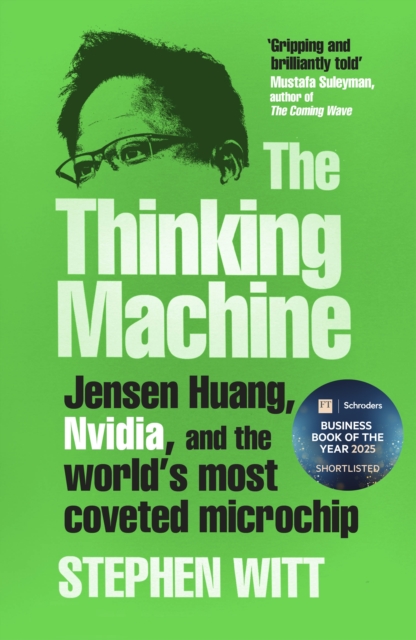
The Thinking Machine
KSh 4,500.00

Understanding Alzheimer's Disease
KSh 6,400.00

Crusading for Chemistry
KSh 6,750.00

Hack the signal
KSh 2,550.00

Understanding Diabetes
KSh 6,400.00

Daniel Lee, Agriculturist – His Life North and South
KSh 4,650.00
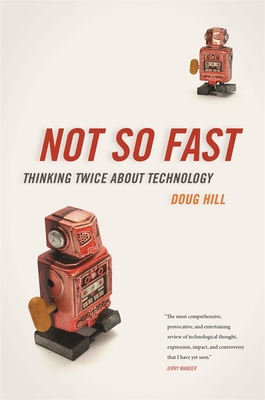
Not So Fast
KSh 4,600.00
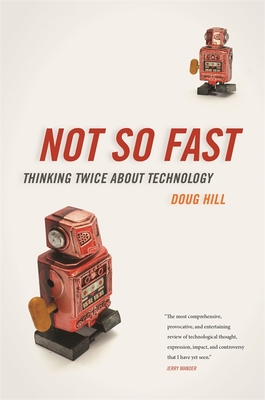
Not So Fast
KSh 6,900.00