
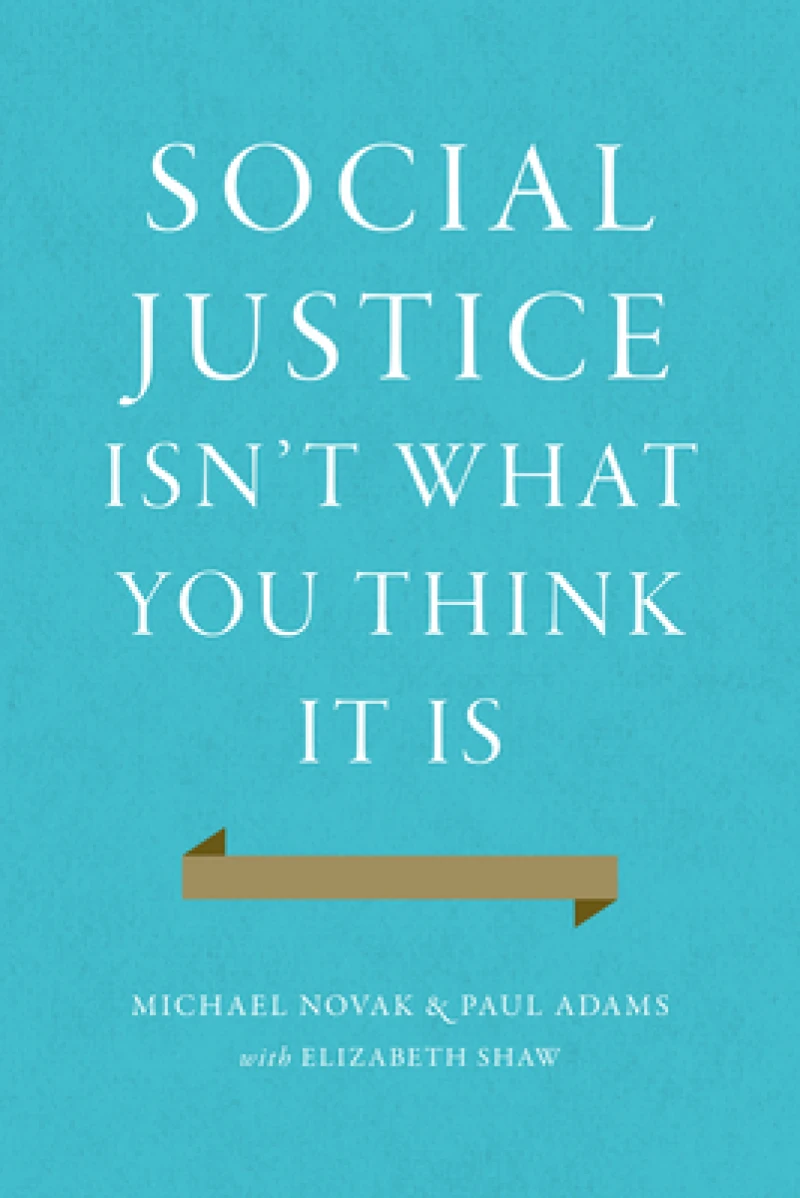
Social Justice Isn't What You Think It Is : Rescuing a Forgotten Virtue
Book Details
Format
Hardback or Cased Book
ISBN-10
1594038279
ISBN-13
9781594038273
Publisher
Encounter Books,USA
Imprint
Encounter Books,USA
Country of Manufacture
US
Country of Publication
GB
Publication Date
Dec 17th, 2015
Print length
336 Pages
Weight
650 grams
Dimensions
23.90 x 16.50 x 3.30 cms
Ksh 3,650.00
Re-Printing
0 in stock
Delivery Location
Delivery fee: Select location
Secure
Quality
Fast
What is social justice? For Friedrich Hayek, it was a mirage--a meaningless, ideological, incoherent, vacuous cliche. He believed the term should be avoided, abandoned, and allowed to die a natural death. For its proponents, social justice is a catchall term that can be used to justify any progressive-sounding government program. It endures because it venerates its champions and brands its opponents as supporters of social injustice, and thus as enemies of humankind. As an ideological marker, social justice always works best when it is not too sharply defined. In Social Justice Isn't What You Think It Is, Michael Novak and Paul Adams seek to clarify the true meaning of social justice and to rescue it from its ideological captors. In examining figures ranging from Antonio Rosmini, Abraham Lincoln, and Hayek, to Popes Leo XIII, John Paul II, and Francis, the authors reveal that social justice is not a synonym for "progressive" government as we have come to believe. Rather, it is a virtue rooted in Catholic social teaching and developed as an alternative to the unchecked power of the state. Almost all social workers see themselves as progressives, not conservatives. Yet many of their "best practices" aim to empower families and local communities. They stress not individual or state, but the vast social space between them. Left and right surprisingly meet. In this surprising reintroduction of its original intention, social justice represents an immensely powerful virtue for nurturing personal responsibility and building the human communities that can counter the widespread surrender to an ever-growing state.
What is social justice? For Friedrich Hayek, it was a mirage—a meaningless, ideological, incoherent, vacuous cliché. He believed the term should be avoided, abandoned, and allowed to die a natural death. For its proponents, social justice is a catchall term that can be used to justify any progressive-sounding government program. It endures because it venerates its champions and brands its opponents as supporters of social injustice, and thus as enemies of humankind. As an ideological marker, social justice always works best when it is not too sharply defined.
In Social Justice Isn’t What You Think It Is, Michael Novak and Paul Adams seek to clarify the true meaning of social justice and to rescue it from its ideological captors. In examining figures ranging from Antonio Rosmini, Abraham Lincoln, and Hayek, to Popes Leo XIII, John Paul II, and Francis, the authors reveal that social justice is not a synonym for “progressive” government as we have come to believe. Rather, it is a virtue rooted in Catholic social teaching and developed as an alternative to the unchecked power of the state. Almost all social workers see themselves as progressives, not conservatives. Yet many of their “best practices” aim to empower families and local communities. They stress not individual or state, but the vast social space between them. Left and right surprisingly meet.
In this surprising reintroduction of its original intention, social justice represents an immensely powerful virtue for nurturing personal responsibility and building the human communities that can counter the widespread surrender to an ever-growing state.
In Social Justice Isn’t What You Think It Is, Michael Novak and Paul Adams seek to clarify the true meaning of social justice and to rescue it from its ideological captors. In examining figures ranging from Antonio Rosmini, Abraham Lincoln, and Hayek, to Popes Leo XIII, John Paul II, and Francis, the authors reveal that social justice is not a synonym for “progressive” government as we have come to believe. Rather, it is a virtue rooted in Catholic social teaching and developed as an alternative to the unchecked power of the state. Almost all social workers see themselves as progressives, not conservatives. Yet many of their “best practices” aim to empower families and local communities. They stress not individual or state, but the vast social space between them. Left and right surprisingly meet.
In this surprising reintroduction of its original intention, social justice represents an immensely powerful virtue for nurturing personal responsibility and building the human communities that can counter the widespread surrender to an ever-growing state.
Get Social Justice Isn't What You Think It Is by at the best price and quality guaranteed only at Werezi Africa's largest book ecommerce store. The book was published by Encounter Books,USA and it has pages.

