

Soft Is Fast : Simone Forti in the 1960s and After
Book Details
Format
Paperback / softback
ISBN-10
0262548933
ISBN-13
9780262548939
Publisher
MIT Press Ltd
Imprint
MIT Press
Country of Manufacture
GB
Country of Publication
GB
Publication Date
Aug 15th, 2023
Print length
272 Pages
Weight
470 grams
Dimensions
17.70 x 22.90 x 1.90 cms
Product Classification:
Art & design styles: PostmodernismIndividual artists, art monographsChoreography
KSh 5,300.00
Werezi Extended Catalogue
Delivery in 12 days
1 copies in stock
Delivery Location
Delivery fee: Select location
Delivery in 12 days
Secure
Quality
Fast
An innovative analysis of Simone Forti''s interdisciplinary art, viewing her influential 1960s dance constructions as negotiating the aesthetic strategies of John Cage and Anna Halprin.
Simone Forti''s art developed within the overlapping circles of New York City''s advanced visual art, dance, and music of the early 1960s. Her dance constructions and related works of the 1960s were important for both visual art and dance of the era. Artists Robert Morris and Yvonne Rainer have both acknowledged her influence.
Forti seems to have kept one foot inside visual art''s frames of meaning and the other outside them. In Soft Is Fast, Meredith Morse adopts a new way to understand Forti''s work, based in art historical analysis but drawing upon dance history and cultural studies and the history of American social thought. Morse argues that Forti introduced a form of direct encounter that departed radically from the spectatorship proposed by Minimalism, and prefigured the participatory art of recent decades.
Morse shows that Forti''s work negotiated John Cage''s ideas of sound, score, and theater through the unique approach to movement, essentially improvisational and grounded in anatomical exploration, that she learned from performer and teacher Ann (later Anna) Halprin. Attentive to Robert Whitman''s and La Monte Young''s responses to Cage, Forti reshaped Cage''s concepts into models that could accommodate Halprin''s charged spaces and imagined, interpenetrative understanding of other bodies.
Morse considers Forti''s use of sound and her affective use of materials as central to her work; examines Forti''s text pieces, little discussed in art historical literature; analyzes Huddle, considered one of Forti''s signature works; and explicates Forti''s later improvisational practice.
Forti has been relatively overlooked by art historians, perhaps because of her work''s central concern with modes of feeling and embodiment, unlike other art of the 1960s, which was characterized by strategies of depersonalization and affectlessness. Soft Is Fast corrects this critical oversight.
Simone Forti''s art developed within the overlapping circles of New York City''s advanced visual art, dance, and music of the early 1960s. Her dance constructions and related works of the 1960s were important for both visual art and dance of the era. Artists Robert Morris and Yvonne Rainer have both acknowledged her influence.
Forti seems to have kept one foot inside visual art''s frames of meaning and the other outside them. In Soft Is Fast, Meredith Morse adopts a new way to understand Forti''s work, based in art historical analysis but drawing upon dance history and cultural studies and the history of American social thought. Morse argues that Forti introduced a form of direct encounter that departed radically from the spectatorship proposed by Minimalism, and prefigured the participatory art of recent decades.
Morse shows that Forti''s work negotiated John Cage''s ideas of sound, score, and theater through the unique approach to movement, essentially improvisational and grounded in anatomical exploration, that she learned from performer and teacher Ann (later Anna) Halprin. Attentive to Robert Whitman''s and La Monte Young''s responses to Cage, Forti reshaped Cage''s concepts into models that could accommodate Halprin''s charged spaces and imagined, interpenetrative understanding of other bodies.
Morse considers Forti''s use of sound and her affective use of materials as central to her work; examines Forti''s text pieces, little discussed in art historical literature; analyzes Huddle, considered one of Forti''s signature works; and explicates Forti''s later improvisational practice.
Forti has been relatively overlooked by art historians, perhaps because of her work''s central concern with modes of feeling and embodiment, unlike other art of the 1960s, which was characterized by strategies of depersonalization and affectlessness. Soft Is Fast corrects this critical oversight.
Get Soft Is Fast by Meredith Morse at the best price and quality guaranteed only at Werezi Africa's largest book ecommerce store. The book was published by MIT Press Ltd and it has 272 pages.
Customers Who Bought This Also Bought

The Art and Life of Clarence Major
KSh 9,250.00

The Art and Life of Clarence Major
KSh 6,300.00

Gee Vaucher
KSh 15,300.00

When Modern Became Contemporary Art
KSh 30,950.00
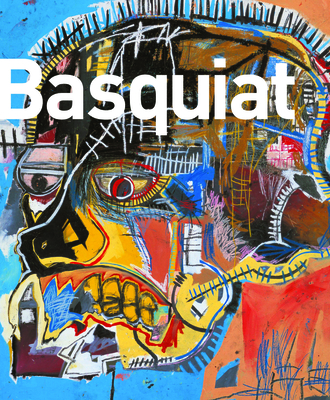
Basquiat
KSh 3,450.00

Douglas Coupland’s Literature and Art
KSh 15,800.00

When Modern Became Contemporary Art
KSh 8,800.00

Dialogues with Degas
KSh 18,800.00
Doubt
KSh 8,200.00

Svetlana Boym Reader
KSh 27,000.00
Art Education in a Postmodern World
KSh 5,200.00
Dada Magazines
KSh 16,200.00
