

Book Details
Format
Paperback / softback
Book Series
SpringerBriefs in Computer Science
ISBN-10
9811087148
ISBN-13
9789811087141
Edition
2018 ed.
Publisher
Springer Verlag, Singapore
Imprint
Springer Verlag, Singapore
Country of Manufacture
GB
Country of Publication
GB
Publication Date
Jun 18th, 2018
Print length
72 Pages
Weight
172 grams
Dimensions
15.50 x 23.50 x 0.70 cms
KSh 8,100.00
Temporarily out of stock, due soon
0 in stock
Delivery Location
Delivery fee: Select location
Secure
Quality
Fast
This book focuses on exploring the use of software fault prediction in building reliable and robust software systems. Chapter 4 describes the software fault datasets and diverse issues concerning fault datasets when building fault prediction models.
This book focuses on exploring the use of software fault prediction in building reliable and robust software systems. It is divided into the following chapters: Chapter 1 presents an introduction to the study and also introduces basic concepts of software fault prediction. Chapter 2 explains the generalized architecture of the software fault prediction process and discusses its various components. In turn, Chapter 3 provides detailed information on types of fault prediction models and discusses the latest literature on each model. Chapter 4 describes the software fault datasets and diverse issues concerning fault datasets when building fault prediction models. Chapter 5 presents a study evaluating different techniques on the basis of their performance for software fault prediction. Chapter 6 presents another study evaluating techniques for predicting the number of faults in the software modules. In closing, Chapter 7 provides a summary of the topics discussed. The book will beof immense benefit to all readers who are interested in starting research in this area. In addition, it offers experienced researchers a valuable overview of the latest work in this area.
Get Software Fault Prediction by Sandeep Kumar, Santosh Singh Rathore at the best price and quality guaranteed only at Werezi Africa's largest book ecommerce store. The book was published by Springer Verlag, Singapore and it has 72 pages.
Customers Who Bought This Also Bought

How To Do Nothing
KSh 2,700.00

Elon Musk
KSh 2,350.00

God AI
KSh 2,350.00

Coding Democracy
KSh 3,050.00

Redesigning AI
KSh 3,250.00

Intelligent Systems
KSh 30,950.00

Machine Learning with Python
KSh 14,750.00

Computer Vision and SLDV for Structural Dynamics, 2026
KSh 19,800.00

Octonion Sparse-Based Image Processing
KSh 26,200.00

AI in Modern Ophthalmology
KSh 18,700.00
![Band 1-3 [Set Grundlagen der Informatik, Vol 1-3]](https://book-images.us-southeast-1.linodeobjects.com/images/9783112246054.jpg)
Band 1-3 [Set Grundlagen der Informatik, Vol 1-3]
KSh 22,950.00

AI in Modern Ophthalmology
KSh 9,900.00
More by Sandeep Kumar, Santosh Singh Rathore

Agrivoltaic Microgrids
KSh 30,250.00

Soil Physical Environment and Plant Growth
KSh 10,800.00

Heterocyclic Compounds in Organic Chemistry
KSh 33,850.00

Chemistry of Discotic Liquid Crystals
KSh 46,800.00

Chemistry of Discotic Liquid Crystals
KSh 9,950.00

Sulfoximines
KSh 28,800.00

Liquid Crystal Dimers
KSh 23,050.00
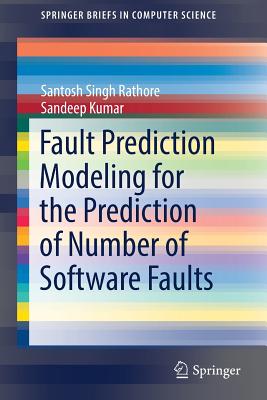
Fault Prediction Modeling for the Prediction of Number of Software Faults
KSh 8,100.00
