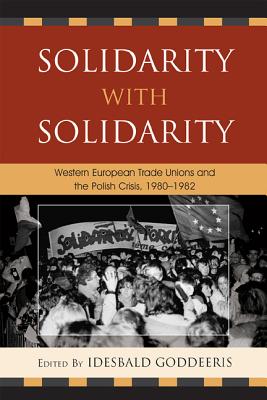
Solidarity with Solidarity : Western European Trade Unions and the Polish Crisis, 1980–1982
Book Details
Format
Paperback / Softback
Book Series
The Harvard Cold War Studies Book Series
ISBN-10
0739150715
ISBN-13
9780739150719
Publisher
Bloomsbury Publishing Plc
Imprint
Lexington Books
Country of Manufacture
GB
Country of Publication
GB
Publication Date
Nov 27th, 2012
Print length
322 Pages
Weight
464 grams
Dimensions
15.30 x 22.70 x 2.60 cms
Product Classification:
European historyPolitical science & theoryCentral government policiesIndustrial relations
Ksh 10,000.00
Manufactured on Demand
Delivery in 29 days
Delivery Location
Delivery fee: Select location
Delivery in 29 days
Secure
Quality
Fast
The Polish crisis in the early 1980s provoked a great deal of reaction in the West. Not only governments, but social movements were also touched by the establishment of the Independent Trade Union Solidarnosc in the summer of 1980, the proclamation of martial law in December 1981, and Solidarnosc's underground activity in the subsequent years. In many countries, campaigns were set up in order to spread information, raise funds, and provide the Polish opposition with humanitarian relief and technical assistance. Labor movements especially stepped into the limelight. A number of Western European unions were concerned about the new international tension following the Soviet invasion of Afghanistan and the new hard-line policy of the US and saw Solidarnosc as a political instrument of clerical and neo-conservative cold warriors. This book analyzes reaction to Solidarnosc in nine Western European countries and within the international trade union confederations. It argues that Western solidarity with Solidarnosc was highly determined by its instrumental value within the national context. Trade unions openly sided with Solidarnosc when they had an interest in doing so, namely when Solidarnosc could strengthen their own program or position. But this book also reveals that reaction in allegedly reluctant countries was massive, albeit discreet, pragmatic, and humanitarian, rather than vocal, emotional, and political.
The Polish crisis in the early 1980s provoked a great deal of reaction in the West. Not only governments, but social movements were also touched by the establishment of the Independent Trade Union Solidarnosc in the summer of 1980, the proclamation of martial law in December 1981, and Solidarnosc''s underground activity in the subsequent years. In many countries, campaigns were set up in order to spread information, raise funds, and provide the Polish opposition with humanitarian relief and technical assistance. Labor movements especially stepped into the limelight. A number of Western European unions were concerned about the new international tension following the Soviet invasion of Afghanistan and the new hard-line policy of the US and saw Solidarnosc as a political instrument of clerical and neo-conservative cold warriors. This book analyzes reaction to Solidarnosc in nine Western European countries and within the international trade union confederations. It argues that Western solidarity with Solidarnosc was highly determined by its instrumental value within the national context. Trade unions openly sided with Solidarnosc when they had an interest in doing so, namely when Solidarnosc could strengthen their own program or position. But this book also reveals that reaction in allegedly reluctant countries was massive, albeit discreet, pragmatic, and humanitarian, rather than vocal, emotional, and political.
Get Solidarity with Solidarity by at the best price and quality guaranteed only at Werezi Africa's largest book ecommerce store. The book was published by Bloomsbury Publishing Plc and it has pages.