
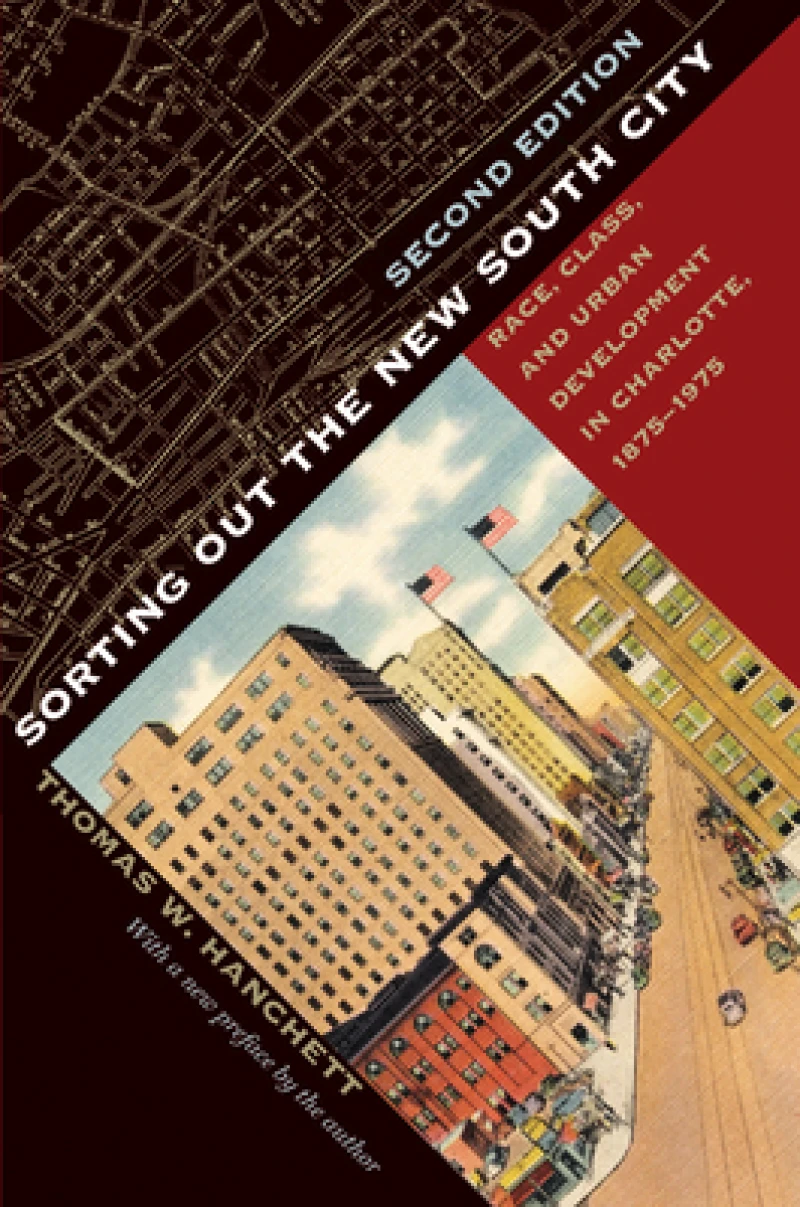
Sorting Out the New South City : Race, Class, and Urban Development in Charlotte, 1875–1975
Second Edition
Book Details
Format
Paperback / Softback
ISBN-10
1469656442
ISBN-13
9781469656441
Edition
Second Edition
Publisher
The University of North Carolina Press
Imprint
The University of North Carolina Press
Country of Manufacture
US
Country of Publication
GB
Publication Date
Feb 3rd, 2020
Print length
412 Pages
Weight
595 grams
Dimensions
23.10 x 15.70 x 2.50 cms
Ksh 3,650.00
Werezi Extended Catalogue
0 in stock
Delivery Location
Delivery fee: Select location
Secure
Quality
Fast
One of the largest and fastest-growing cities in the South, Charlotte, North Carolina, came of age in the New South decades of the late nineteenth and early twentieth centuries. Thomas Hanchett traces the city's spatial evolution, exploring the national trends and local forces that shaped Charlotte and, by extension, other New South urban centres.
One of the largest and fastest-growing cities in the South, Charlotte, North Carolina, came of age in the New South decades of the late nineteenth and early twentieth centuries, transforming itself from a rural courthouse village to the trading and financial hub of America's premier textile manufacturing region. In this book, Thomas W. Hanchett traces the city's spatial evolution over the course of a century, exploring the interplay of national trends and local forces that shaped Charlotte and, by extension, other New South urban centers.
Hanchett argues that racial and economic segregation are not age-old givens but products of a decades-long process. Well after the Civil War, Charlotte's whites and blacks, workers and business owners, all lived intermingled in a "salt-and-pepper" pattern. The rise of large manufacturing enterprises in the 1880s and 1890s brought social and political upheaval, however, and the city began to sort out into a "checkerboard" of distinct neighborhoods segregated by both race and class. When urban renewal and other federal funds became available in the mid-twentieth century, local leaders used the money to complete the sorting-out process, creating a "sector" pattern in which wealthy whites increasingly lived on one side of town and blacks on the other.
Hanchett argues that racial and economic segregation are not age-old givens but products of a decades-long process. Well after the Civil War, Charlotte's whites and blacks, workers and business owners, all lived intermingled in a "salt-and-pepper" pattern. The rise of large manufacturing enterprises in the 1880s and 1890s brought social and political upheaval, however, and the city began to sort out into a "checkerboard" of distinct neighborhoods segregated by both race and class. When urban renewal and other federal funds became available in the mid-twentieth century, local leaders used the money to complete the sorting-out process, creating a "sector" pattern in which wealthy whites increasingly lived on one side of town and blacks on the other.
Get Sorting Out the New South City by at the best price and quality guaranteed only at Werezi Africa's largest book ecommerce store. The book was published by The University of North Carolina Press and it has pages.

