
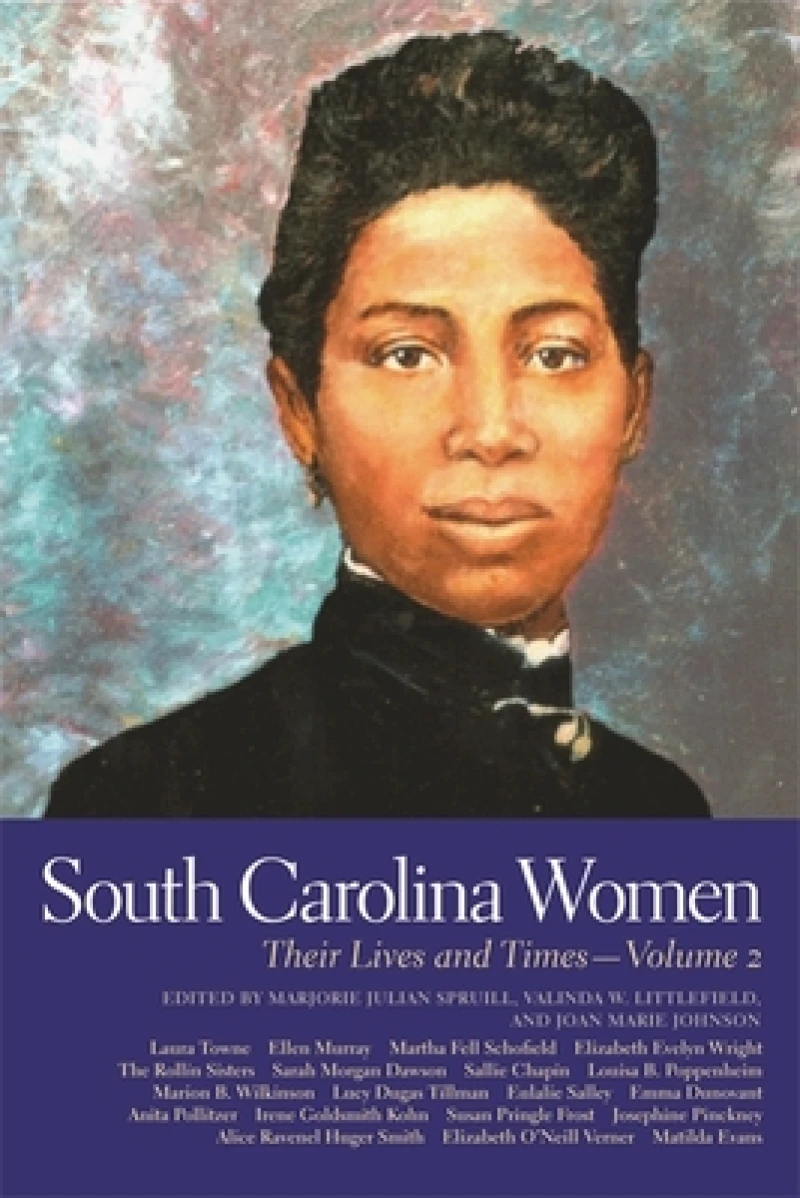
South Carolina Women : Their Lives and Times, Volume 2
Book Details
Format
Paperback / Softback
Book Series
Southern Women: Their Lives and Times
ISBN-10
082032938X
ISBN-13
9780820329383
Publisher
University of Georgia Press
Imprint
University of Georgia Press
Country of Manufacture
US
Country of Publication
GB
Publication Date
Jan 1st, 2010
Print length
336 Pages
Weight
431 grams
Dimensions
22.90 x 15.20 x 2.10 cms
Ksh 7,500.00
Temporarily out of stock, due soon
0 in stock
Delivery Location
Delivery fee: Select location
Secure
Quality
Fast
The biographical essays in this volume provide new insights into the various ways that South Carolina women asserted themselves in their state and illuminate the tension between tradition and change that defined the South from the Civil War through the Progressive Era.
The biographical essays in this volume provide new insights into the various ways that South Carolina women asserted themselves in their state and illuminate the tension between tradition and change that defined the South from the Civil War through the Progressive Era. As old rules—including gender conventions that severely constrained southern women—were dramatically bent if not broken, these women carved out new roles for themselves and others. The volume begins with a profile of Laura Towne and Ellen Murray, who founded the Penn School on St. Helena Island for former slaves. Subsequent essays look at such women as the five Rollin sisters, members of a prominent black family who became passionate advocates for women’s rights during Reconstruction; writer Josephine Pinckney, who helped preserve African American spirituals and explored conflicts between the New and Old South in her essays and novels; and Dr. Matilda Evans, the first African American woman licensed to practice medicine in the state. Intractable racial attitudes often caused women to follow separate but parallel paths, as with Louisa B. Poppenheim and Marion B. Wilkinson. Poppenheim, who was white, and Wilkinson, who was black, were both driving forces in the women’s club movement. Both saw clubs as a way not only to help women and children but also to showcase these positive changes to the wider nation. Yet the two women worked separately, as did the white and black state federations of women’s clubs. Often mixing deference with daring, these women helped shape their society through such avenues as education, religion, politics, community organizing, history, the arts, science, and medicine. Women in the mid- and late twentieth century would build on their accomplishments.
Get South Carolina Women by at the best price and quality guaranteed only at Werezi Africa's largest book ecommerce store. The book was published by University of Georgia Press and it has pages.

