
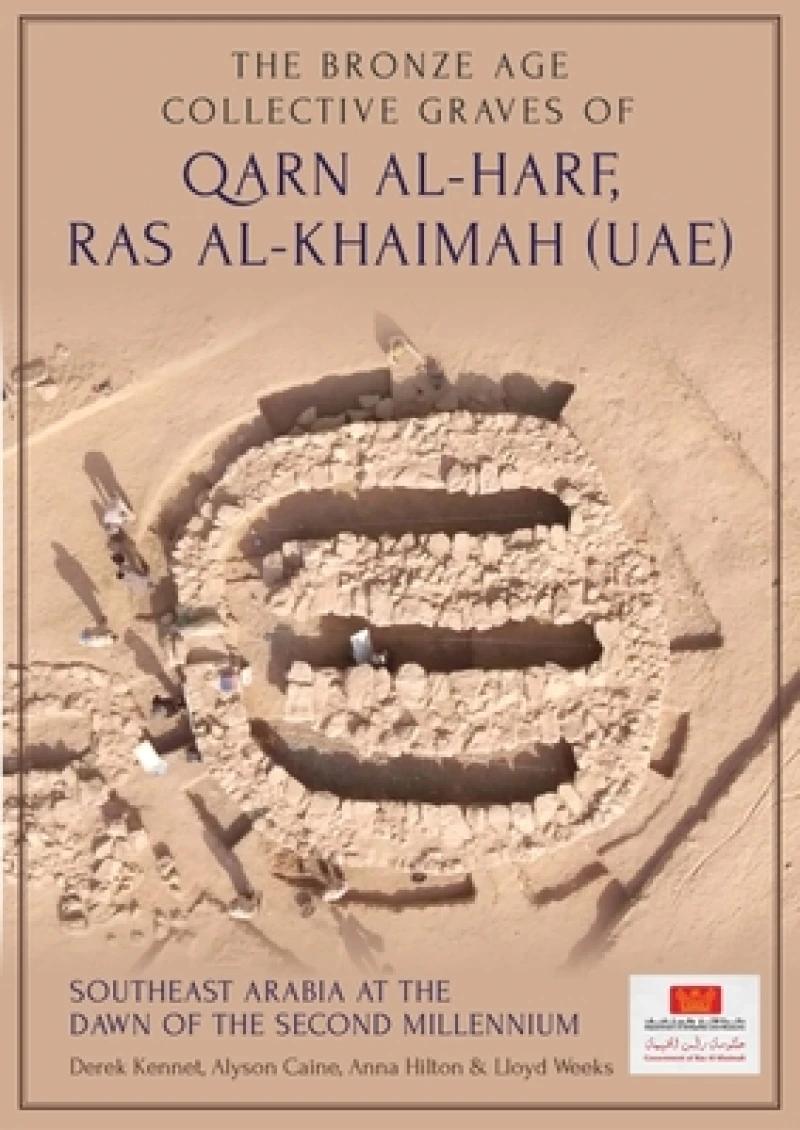
Southeast Arabia at the Dawn of the Second Millennium : The Bronze Age Collective Graves of Qarn al-Harf, Ras al-Khaimah (UAE)
Book Details
Format
Hardback or Cased Book
ISBN-10
1789257956
ISBN-13
9781789257953
Publisher
Oxbow Books
Imprint
Oxbow Books
Country of Manufacture
GB
Country of Publication
GB
Publication Date
Dec 15th, 2024
Print length
464 Pages
Weight
1,862 grams
Dimensions
28.90 x 22.40 x 3.10 cms
Product Classification:
Middle Eastern historyPrehistoric archaeologyMiddle & Near Eastern archaeology
Ksh 12,550.00
Werezi Extended Catalogue
Delivery in 14 days
2 copies in stock
Delivery Location
Delivery fee: Select location
Delivery in 14 days
Secure
Quality
Fast
Presents details of five richly furnished communal tombs of the Bronze Age Wadi-Suq period (2000–1650 BC), including some exceptional grave goods such as electrum animal pendants, metalwork, beads and softstone artefacts.
First full publication of a cemetery of the Bronze Age Wadi Suq period (2000-1650 BC) in the region of the UAE, a period marked by large scale cultural and economic changes.
The end of the 3rd millennium was a time of significant transformation in south-east Arabia (the United Arab Emirates and northern Oman). The cultural homogeneity of the preceding Early Bronze Age, Umm an-Nar period (c. 27002000 BC) came to an end and gave way to the Middle Bronze Age, Wadi Suq period (20001600 BC). Settlements changed, and possibly began to decline in size and number, the economy changed for many and the important trade in copper ore seems to have declined. In addition, there was a marked change in funerary practices as new types of tombs appeared both collective and individual burials.
All of this took place within the context of a climatic shift that led to a decline in rainfall across many parts of the region. Much of the countryside of south-eastern Iran was abandoned and the urban period of the Indus Valley was weakening. In the midst of this turmoil, the limited agricultural plains of northern Ras al-Khaimah appear to have developed into an island where there was greater continuity than elsewhere.
This book reports on the excavation of a number of monumental collective tombs that were built there and used through the early part of the 2nd millennium. The way that they were constructed and used as well as the burial goods that they contain throw light on the population of this area, and give some indication of how and why it was that life continued in this small pocket in a way that was different to surrounding regions.
The end of the 3rd millennium was a time of significant transformation in south-east Arabia (the United Arab Emirates and northern Oman). The cultural homogeneity of the preceding Early Bronze Age, Umm an-Nar period (c. 27002000 BC) came to an end and gave way to the Middle Bronze Age, Wadi Suq period (20001600 BC). Settlements changed, and possibly began to decline in size and number, the economy changed for many and the important trade in copper ore seems to have declined. In addition, there was a marked change in funerary practices as new types of tombs appeared both collective and individual burials.
All of this took place within the context of a climatic shift that led to a decline in rainfall across many parts of the region. Much of the countryside of south-eastern Iran was abandoned and the urban period of the Indus Valley was weakening. In the midst of this turmoil, the limited agricultural plains of northern Ras al-Khaimah appear to have developed into an island where there was greater continuity than elsewhere.
This book reports on the excavation of a number of monumental collective tombs that were built there and used through the early part of the 2nd millennium. The way that they were constructed and used as well as the burial goods that they contain throw light on the population of this area, and give some indication of how and why it was that life continued in this small pocket in a way that was different to surrounding regions.
Get Southeast Arabia at the Dawn of the Second Millennium by at the best price and quality guaranteed only at Werezi Africa's largest book ecommerce store. The book was published by Oxbow Books and it has pages.

