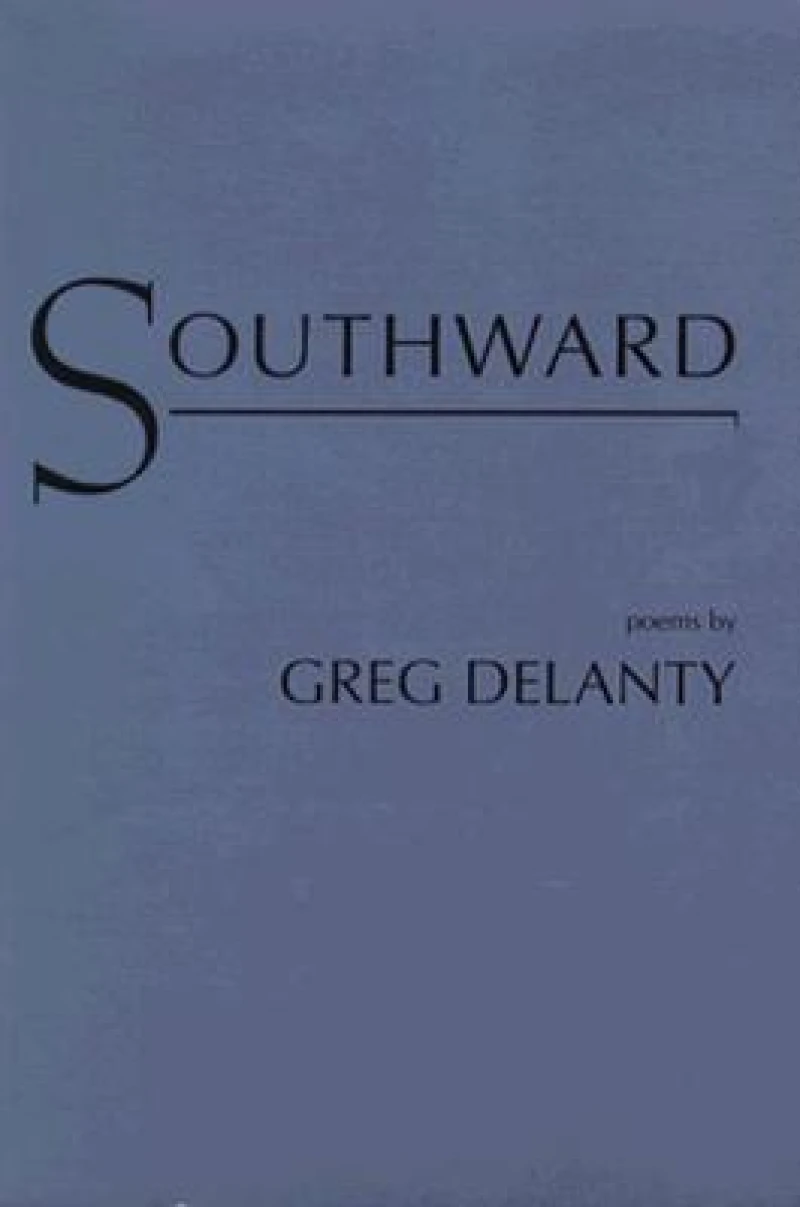
Southward : Poems
by
Greg Delanty
Book Details
Format
Paperback / Softback
ISBN-10
080711734X
ISBN-13
9780807117347
Publisher
Louisiana State University Press
Imprint
Louisiana State University Press
Country of Manufacture
US
Country of Publication
GB
Publication Date
Mar 1st, 1992
Print length
64 Pages
Weight
122 grams
Dimensions
22.80 x 15.30 x 0.50 cms
Ksh 2,700.00
Temporarily out of stock, due soon
0 in stock
Delivery Location
Delivery fee: Select location
Secure
Quality
Fast
A native of Ireland who now spends much of his time in the United States, Greg Delanty has assembled in Southward a collection of poems whose settings are predominantly Cork City and County Kerry, in the southernmost part of the Irish Republic.
In ""Home from Home,"" Greg Delanty encapsulates an immigrant's lament: ""I'm in a place, but it is not in me."" A native of Ireland who now spends much of his time in the United States, Delanty has assembled in Southward a collection of poems whose settings are predominantly Cork City and County Kerry, in the southernmost part of the Irish Republic, a region warmed by the Gulf Stream and by a people whose language is as vivid as the area's abundant wild fuchsia. In ""The Fuchsia Blaze,"" Delanty writes:
The purple petticoated
& crimson frocks
of the open flowers
are known as Dancers, blown by the fast & slow
airs of the wind;
one minute sean-nós melancholy,
the next jigging & reeling
like Irish character itself
& like these, my fuchsia verse,
struggling to escape
the English garden
& flourish
in a wilder landscape
In many of the poems Delanty evokes the Ireland that was and is, while in others he mourns the loss of a lover, the death of his father, separation from his mother. In ""The Emigrant's Apology,"" through a haunting image of a black-scarfed woman worshiping alone, he describes his mother, who, with the loss of her husband and the scattering of her family, is a symbol of the grief of separation from his mother. In ""The Emigrant's Apology,"" through a haunting image of a black-scarfed woman worshiping alone, he describes his mother, who, with the loss of her husband and the scattering of her family, is a symbol of the grief of separation.
Always home in the natural world, even in his adopted landscape, Delanty closes the book with a handful of poems set in the United States. The imagery of these latter poems ranges from a quiet pond in southern Florida to a military base on the border of Canada, and their concerns range from the personal to the political.
The purple petticoated
& crimson frocks
of the open flowers
are known as Dancers, blown by the fast & slow
airs of the wind;
one minute sean-nós melancholy,
the next jigging & reeling
like Irish character itself
& like these, my fuchsia verse,
struggling to escape
the English garden
& flourish
in a wilder landscape
In many of the poems Delanty evokes the Ireland that was and is, while in others he mourns the loss of a lover, the death of his father, separation from his mother. In ""The Emigrant's Apology,"" through a haunting image of a black-scarfed woman worshiping alone, he describes his mother, who, with the loss of her husband and the scattering of her family, is a symbol of the grief of separation from his mother. In ""The Emigrant's Apology,"" through a haunting image of a black-scarfed woman worshiping alone, he describes his mother, who, with the loss of her husband and the scattering of her family, is a symbol of the grief of separation.
Always home in the natural world, even in his adopted landscape, Delanty closes the book with a handful of poems set in the United States. The imagery of these latter poems ranges from a quiet pond in southern Florida to a military base on the border of Canada, and their concerns range from the personal to the political.
Get Southward by at the best price and quality guaranteed only at Werezi Africa's largest book ecommerce store. The book was published by Louisiana State University Press and it has pages.