
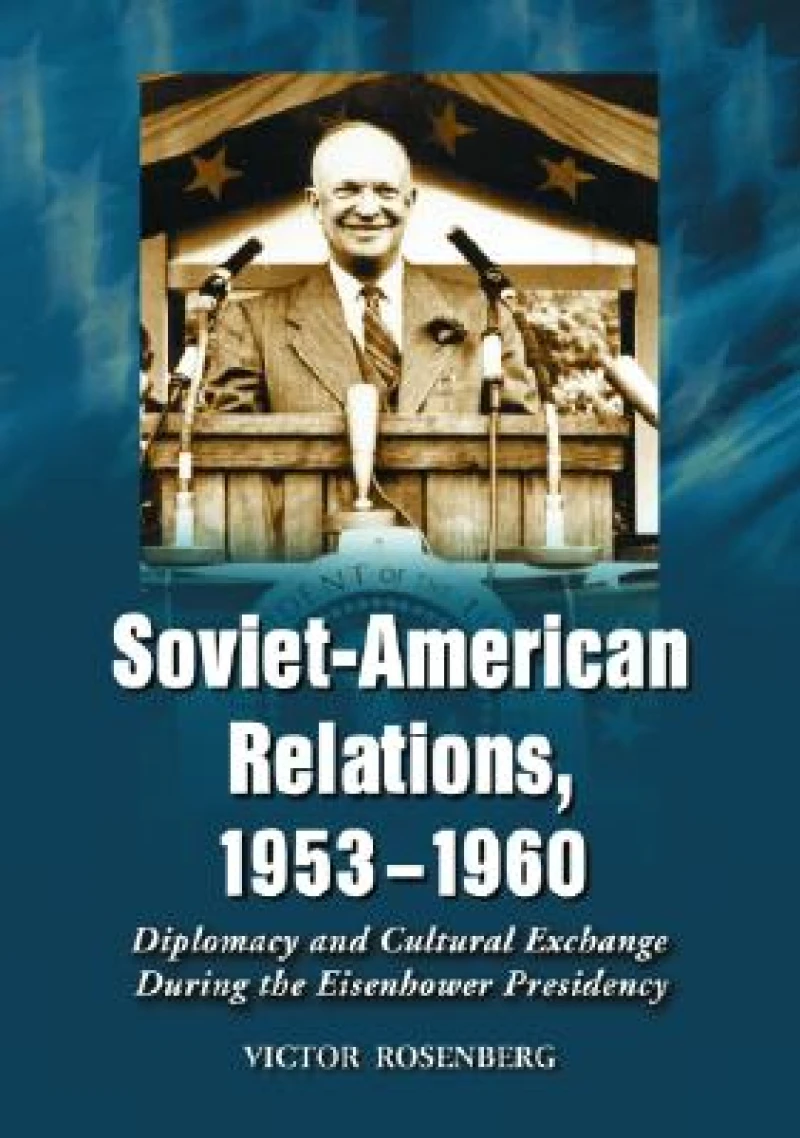
Soviet-American Relations, 1953-1960 : Diplomacy and Cultural Exchange During the Eisenhower Presidency
Book Details
Delivery Location
Delivery fee: Select location
Dwight D. Eisenhower and Nikita Khrushchev presided over a pivotal period in Soviet-American relations. The ongoing Korean War and the lack of an American ambassador in Moscow illustrate the strain in Soviet-American relations at the start of Eisenhower''s presidency, but things changed after Stalin died only 44 days later. Stalin''s successors began to liberalize both domestic and foreign policy in what became known as the Thaw. There was an increase in diplomatic exchanges, including the first modern summit conferences. Of even greater importance, the Soviet leaders began to reestablish the scientific, cultural, and tourist contacts that had been broken under Stalin. Because political and ideological tensions remained and there were still restrictions on contacts, the Soviet overtures can best be described as a half-offered hand of friendship, and perhaps it was less of a thaw than the end of a blizzard. Nevertheless, these contacts began a process which would help end the Cold War three decades later.
This history of relations between the Soviet Union and the United States during the Eisenhower and Khrushchev administrations explores political, social and cultural exchanges, and assesses their impact upon the two countries. Besides diplomatic documents, memoirs from Americans and Soviets, and works of history, it relies upon eyewitness accounts by journalists, tourists and others to paint a detailed picture of the era. Notes are included for each chapter, and there is a bibliography and an index.
Get Soviet-American Relations, 1953-1960 by at the best price and quality guaranteed only at Werezi Africa's largest book ecommerce store. The book was published by McFarland & Co Inc and it has pages.

