

Soviet Yiddish : Language-Planning and Linguistic Development
Book Details
Format
Hardback
ISBN-10
0198184794
ISBN-13
9780198184799
Publisher
Oxford University Press
Imprint
Oxford University Press
Country of Manufacture
GB
Country of Publication
GB
Publication Date
Feb 4th, 1999
Print length
227 Pages
Weight
416 grams
Dimensions
22.50 x 14.60 x 1.90 cms
KSh 33,150.00
Currently unavailable
0 in stock
Delivery Location
Delivery fee: Select location
Secure
Quality
Fast
A study of Yiddish in the former Soviet Union. A chronicle of orthographic and other reforms is created from contemporary publications and archive material from pre-Revolutionary Russia to the 1980s. Comparisons are drawn between Soviet Yiddish and Ukrainian, Belorussian, and German reforms.
This is the first comprehensive study of Yiddish in the former Soviet Union. A chronicle of orthographic and other reformsfrom the state of the language in pre-Revolutionary Russia, through active language-planning in the 1920s and 1930s, repression, and subsequent developments up to the 1980sis recreated from contemporary publications and archival materials. Later chapters draw on the author''s own experience as a Yiddish writer and lexicographer in Moscow. At a time when the Bolshevik party''s Jewish sections held an influential position, Yiddish attained a functional diversity without precedent in its history; but underlying contradictions between ideas expressed in the slogans `Proletarians of all countries, unite!'' and `The right of nations to self-determination'' led to extremes in language-planning. A golden mean was achieved after the 1934 Yiddish language conference in Kiev. Using contemporary literary works as a source of linguistic and sociolinguistic information, Gennady Estraikh charts the development of the resultant variety of the language, `Soviet Yiddish''; the effects of severe repression in the late 1930s and 1940s; and the subsequent decline in usage. Comparisons are drawn between Soviet Yiddish language-planning and concurrent reforms in Russian, Ukrainian, Belorussian, and German; and the features and types of Soviet Yiddish word-formation are analysed, notably univerbation, or compressing a phrase into one word.
Get Soviet Yiddish by Gennady Estraikh at the best price and quality guaranteed only at Werezi Africa's largest book ecommerce store. The book was published by Oxford University Press and it has 227 pages.
Customers Who Bought This Also Bought
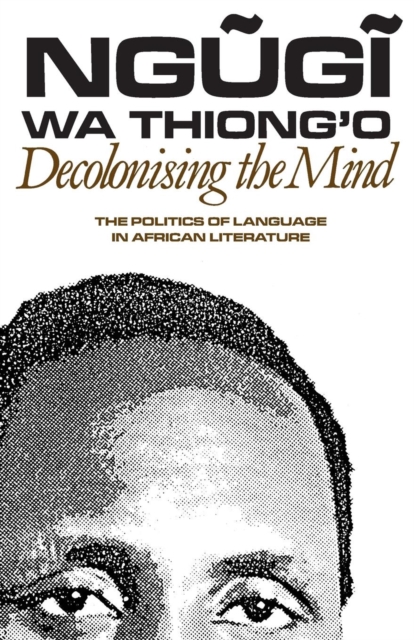
Decolonising the Mind
KSh 4,700.00
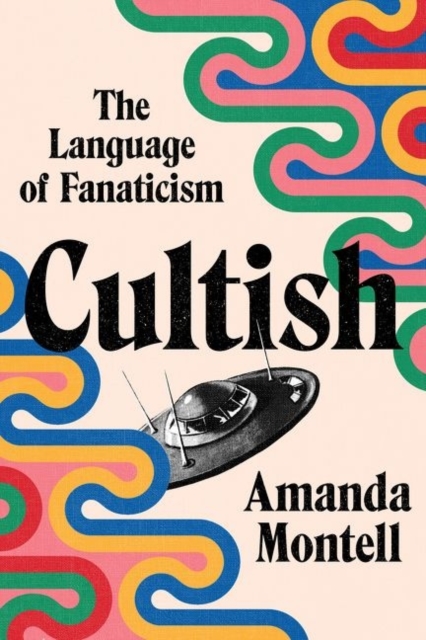
Cultish
KSh 2,350.00

Digital Plurilingual Pedagogies in Teacher Education
KSh 27,900.00

Linguistic Landscape Studies of Global Chinese
KSh 30,800.00
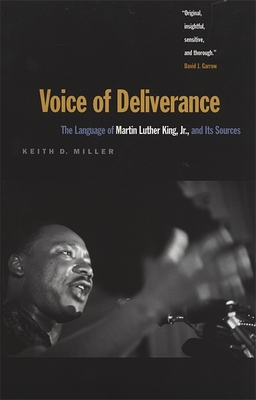
Voice of Deliverance
KSh 6,450.00

Romania Africana
KSh 32,750.00

Second Language Learning and the COVID-19 Pandemic
KSh 21,250.00

Literacy Mediation
KSh 30,950.00

That''s Not What I Meant!
KSh 1,850.00

Construction Grammar and Sociolinguistic Theory
KSh 20,450.00

The Climate Turn in Language Teaching
KSh 3,250.00
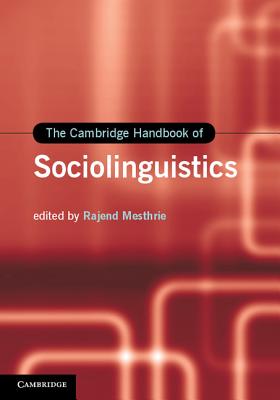
The Cambridge Handbook of Sociolinguistics
KSh 30,100.00
More by Gennady Estraikh

Children and Yiddish Literature from Early Modernity to Post-modernity
KSh 8,650.00
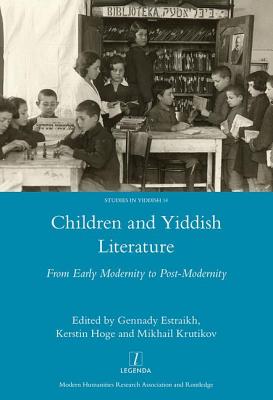
Children and Yiddish Literature
KSh 26,300.00

Yiddish in Weimar Berlin
KSh 8,750.00

Yiddish in the Cold War
KSh 8,650.00
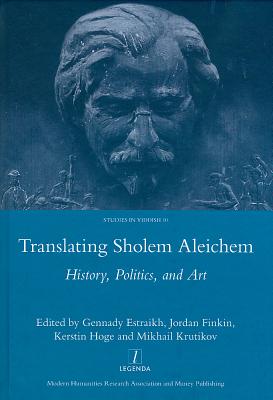
Translating Sholem Aleichem
KSh 18,700.00

Jews in the Soviet Union: a History
KSh 5,750.00

Uncovering the Hidden
KSh 18,700.00
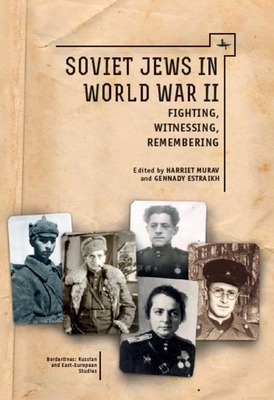
Soviet Jews in World War II
KSh 4,500.00

Jews in the Soviet Union: a History
KSh 5,800.00
Yiddish and the Left
KSh 9,000.00
Three Cities of Yiddish
KSh 15,300.00

Translating Sholem Aleichem
KSh 8,650.00
