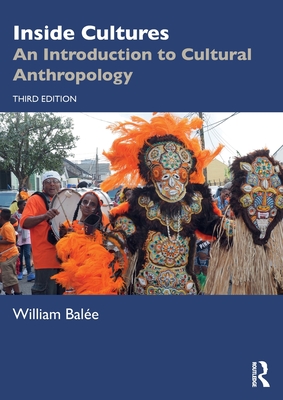
Sowing the Forest : A Historical Ecology of People and Their Landscapes
Book Details
Format
Hardback
ISBN-10
0817321578
ISBN-13
9780817321574
Publisher
The University of Alabama Press
Imprint
The University of Alabama Press
Country of Manufacture
GB
Country of Publication
GB
Publication Date
May 23rd, 2023
Print length
246 Pages
Weight
518 grams
Dimensions
16.00 x 23.70 x 2.60 cms
Product Classification:
Social & cultural anthropology, ethnographySocial and cultural anthropologyApplied ecology
KSh 7,400.00
Temporarily out of stock, due soon
0 in stock
Delivery Location
Delivery fee: Select location
Secure
Quality
Fast
William Balee is a world-renowned expert on the cultural and historical ecology of the Amazon basin. This collection engages in depth with how, over centuries, Amazonian people and their cultures have interacted with rainforests.
Explores how, over centuries, Amazonian people and their cultures have interacted with rainforests
William BalÉe is a world-renowned expert on the cultural and historical ecology of the Amazon basin. His new collection, Sowing the Forest, is a companion volume to the award-winning Cultural Forests of the Amazon, published in 2013. Sowing the Forest engages in depth with how, over centuries, Amazonian people and their cultures have interacted with rainforests, making the landscapes of palm forests and other kinds of forests, and how these and related forests have fed back into the vocabulary and behavior of current indigenous occupants of the remotest parts of the vast hinterlands.
The book is divided into two parts. Part 1, “Substrate of Intentionality,” comprises chapters on historical ecology, indigenous palm forests, plant names in Amazonia, the origins of the Amazonian plantain, and the unknown “Dark Earth people” of thousands of years ago and their landscaping. Together these chapters illustrate the phenomenon of feedback between culture and environment.
In part 2, “Scope of Transformation,” BalÉe lays out his theory of landscape transformation, which he divides into two rubrics—primary landscape transformation and secondary landscape transformation—and for which he provides examples and various specific effects. One chapter compares environmental and social interrelationships in an Orang Asli group in Malaysia and the Ka’apor people of eastern Amazonian Brazil, and another chapter covers loss of language and culture in the Bolivian Amazon. A final chapter addresses the controversial topic of monumentality in the rainforest. BalÉe concludes by emphasizing the common thread in Amazonian historical ecology: the long-term phenomenon of encouraging diversity for its own sake, not just for economic reasons.
William BalÉe is a world-renowned expert on the cultural and historical ecology of the Amazon basin. His new collection, Sowing the Forest, is a companion volume to the award-winning Cultural Forests of the Amazon, published in 2013. Sowing the Forest engages in depth with how, over centuries, Amazonian people and their cultures have interacted with rainforests, making the landscapes of palm forests and other kinds of forests, and how these and related forests have fed back into the vocabulary and behavior of current indigenous occupants of the remotest parts of the vast hinterlands.
The book is divided into two parts. Part 1, “Substrate of Intentionality,” comprises chapters on historical ecology, indigenous palm forests, plant names in Amazonia, the origins of the Amazonian plantain, and the unknown “Dark Earth people” of thousands of years ago and their landscaping. Together these chapters illustrate the phenomenon of feedback between culture and environment.
In part 2, “Scope of Transformation,” BalÉe lays out his theory of landscape transformation, which he divides into two rubrics—primary landscape transformation and secondary landscape transformation—and for which he provides examples and various specific effects. One chapter compares environmental and social interrelationships in an Orang Asli group in Malaysia and the Ka’apor people of eastern Amazonian Brazil, and another chapter covers loss of language and culture in the Bolivian Amazon. A final chapter addresses the controversial topic of monumentality in the rainforest. BalÉe concludes by emphasizing the common thread in Amazonian historical ecology: the long-term phenomenon of encouraging diversity for its own sake, not just for economic reasons.
Get Sowing the Forest by William Balée at the best price and quality guaranteed only at Werezi Africa's largest book ecommerce store. The book was published by The University of Alabama Press and it has 246 pages.
Customers Who Bought This Also Bought

Nexus
KSh 2,350.00

World According to Colour
KSh 2,700.00
Sapiens
KSh 2,350.00

Guns, Germs and Steel
KSh 2,400.00
Shifting Sands
KSh 4,500.00
21 Lessons for the 21st Century
KSh 2,350.00

Profits, Prophets, Coaches and Kings
KSh 4,500.00

Africa Is Not A Country
KSh 2,350.00
Myth and Meaning
KSh 2,150.00

Three Women
KSh 2,000.00
Half of It
KSh 2,000.00

Death and Life of Great American Cities
KSh 3,600.00