
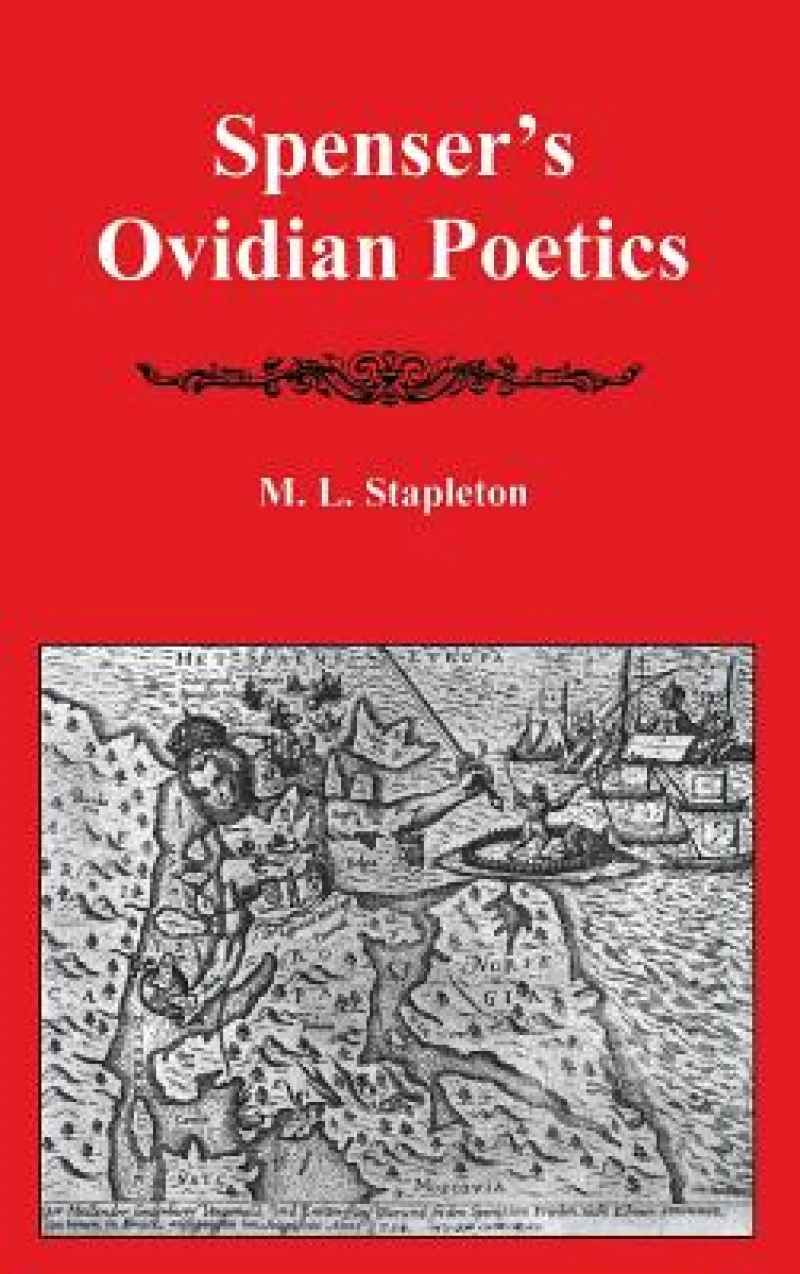
Spenser's Ovidian Poetics
Book Details
Format
Hardback or Cased Book
ISBN-10
1611491355
ISBN-13
9781611491357
Publisher
Bloomsbury Publishing Plc
Imprint
University of Delaware Press
Country of Manufacture
GB
Country of Publication
GB
Publication Date
Nov 1st, 2009
Print length
271 Pages
Weight
570 grams
Dimensions
16.10 x 23.60 x 2.70 cms
Ksh 18,500.00
Manufactured on Demand
0 in stock
Delivery Location
Delivery fee: Select location
Secure
Quality
Fast
No history of the longstanding critical tradition of exploring the Spenser-Ovid relationship has been written. In this book Professor Stapleton constructs such a critical history: the annotations of E. K. in The Shepheardes Calender (1579), the Enlightenment editions of The Faerie Queene, the philological mode of the Spenser Variorum (1932–57), and the recent, innovative work of Harry Berger and Colin Burrow. Aside from occasional articles, no truly comprehensive analysis of their kinship as love poets exists, either. The author explores Spenser’s emulation of Ovid’s amatory poetics. His humanist education trained him to find or construct analogues and etiological patterns in classical texts. Therefore, his early study of translation, intensive reading, and "versifying" as an interrelated process guaranteed a densely allusive, metamorphic Ovidian poetics as a natural result. The author's predecessors focus almost exclusively on the Metamorphoses as intertext, but do not often distinguish between early modern Latin editions of the poem and translations such as Arthur Golding's. Although Spenser read Ovid in his native language, during the quarter-century of his writing career, his countrymen such as Shakespeare, Donne, and Lodge imitate and recast the ancient author. During this English aetas Ovidiana, a translation industry arises simultaneously so that the entire corpus is rendered into English, from Golding's Metamorphoses (1567) to Wye Saltonstall's Ex Ponto (1638). Since the sixteenth century did not often read or hear a Roman poet in prose renditions, the author uses Renaissance poetical verse translations (with the Latin text) to explore Spenser's variegated use of Ovid: how he sounded as early modern English poetry. The introduction traces a history of the Spenser-Ovid site then accounts for the importance of imitatio and moralization to Spenser's developing poetics. The first four chapters analyze the influence of the Tristia, Heroides, and Metamorphoses on the 1590 Faerie Queene and The Shepheardes Calender. The concluding chapters demonstrate the presence of the Ars amatoria and Amores in Amoretti and Epithalamion and Fowre Hymnes. Spenser's Ovidian Poetics is intended to complement works such as Leonard Barkan's The Gods Made Flesh, Jonathan Bate's Shakespeare and Ovid, Raphael Lyne's Ovid's Changing Worlds: English Metamorphoses 1567–1632, and important essays by Colin Burrow. In the words of Paul Alpers, Professor Stapleton does not wish "to oppose the historical aesthetic" but to understand Spenser's "claim to relative autonomy" in his emulation and reconfiguration of his predecessors.
No history of the longstanding critical tradition of exploring the Spenser-Ovid relationship has been written. In this book Professor Stapleton constructs such a critical history: the annotations of E. K. in The Shepheardes Calender (1579), the Enlightenment editions of The Faerie Queene, the philological mode of the Spenser Variorum (1932–57), and the recent, innovative work of Harry Berger and Colin Burrow. Aside from occasional articles, no truly comprehensive analysis of their kinship as love poets exists, either. The author explores Spenser’s emulation of Ovid’s amatory poetics. His humanist education trained him to find or construct analogues and etiological patterns in classical texts. Therefore, his early study of translation, intensive reading, and "versifying" as an interrelated process guaranteed a densely allusive, metamorphic Ovidian poetics as a natural result.The author''s predecessors focus almost exclusively on the Metamorphoses as intertext, but do not often distinguish between early modern Latin editions of the poem and translations such as Arthur Golding''s. Although Spenser read Ovid in his native language, during the quarter-century of his writing career, his countrymen such as Shakespeare, Donne, and Lodge imitate and recast the ancient author. During this English aetas Ovidiana, a translation industry arises simultaneously so that the entire corpus is rendered into English, from Golding''s Metamorphoses (1567) to Wye Saltonstall''s Ex Ponto (1638). Since the sixteenth century did not often read or hear a Roman poet in prose renditions, the author uses Renaissance poetical verse translations (with the Latin text) to explore Spenser''s variegated use of Ovid: how he sounded as early modern English poetry.The introduction traces a history of the Spenser-Ovid site then accounts for the importance of imitatio and moralization to Spenser''s developing poetics. The first four chapters analyze the influence of the Tristia, Heroides, and Metamorphoses on the 1590 Faerie Queene and The Shepheardes Calender. The concluding chapters demonstrate the presence of the Ars amatoria and Amores in Amoretti and Epithalamion and Fowre Hymnes.Spenser''s Ovidian Poetics is intended to complement works such as Leonard Barkan''s The Gods Made Flesh, Jonathan Bate''s Shakespeare and Ovid, Raphael Lyne''s Ovid''s Changing Worlds: English Metamorphoses 1567–1632, and important essays by Colin Burrow. In the words of Paul Alpers, Professor Stapleton does not wish "to oppose the historical aesthetic" but to understand Spenser''s "claim to relative autonomy" in his emulation and reconfiguration of his predecessors.
Get Spenser's Ovidian Poetics by at the best price and quality guaranteed only at Werezi Africa's largest book ecommerce store. The book was published by Bloomsbury Publishing Plc and it has pages.

