
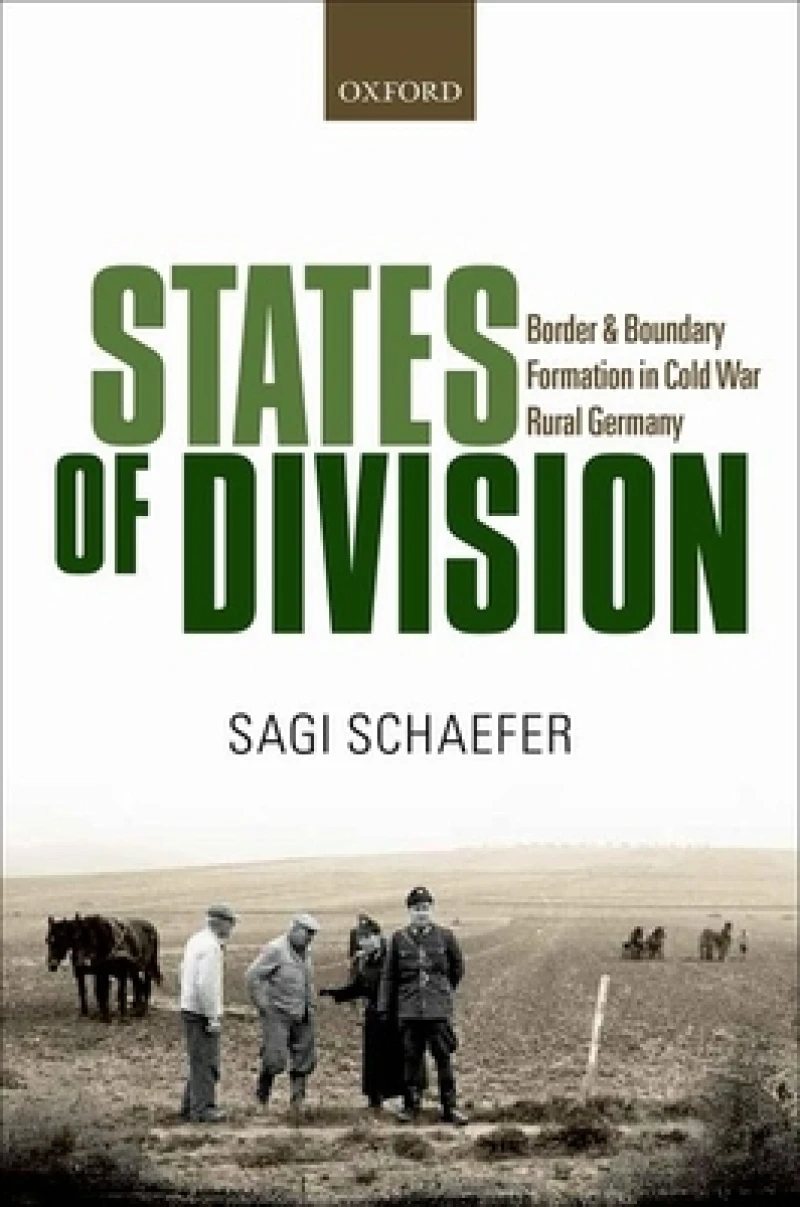
States of Division : Border and Boundary Formation in Cold War Rural Germany
Book Details
Format
Hardback or Cased Book
Book Series
Oxford Studies in Modern European History
ISBN-10
0199672385
ISBN-13
9780199672387
Publisher
Oxford University Press
Imprint
Oxford University Press
Country of Manufacture
GB
Country of Publication
GB
Publication Date
Oct 9th, 2014
Print length
236 Pages
Weight
518 grams
Dimensions
24.10 x 15.70 x 1.80 cms
Ksh 22,550.00
Manufactured on Demand
0 in stock
Delivery Location
Delivery fee: Select location
Secure
Quality
Fast
Integrating local, regional, and national perspectives, this volume employs multiple historical and social frameworks to analyse the division of Germany and the development of the Iron Curtain during the Cold War. Schaefer explains how and why the border evolved and how it impacted regional and national culture, identity, and sense of community.
States of Division analyses the division of Germany and the development of the Iron Curtain during the four and a half decades of the Cold War. The centerpiece of this global fault-line was the thousand-mile-long border dividing Germany into West and East. This long border traversed primarily rural peripheries and the development of division along it entailed protracted processes of social and cultural demarcation. Unlike the Berlin Wall, which sprang up overnight in the urban enclave under watchful eyes of Soviet and Western armies, the inter-German border evolved slowly through interactions between frontier residents and various state agencies. The division of Germany and of the world emerged through conflicts between everyday practices, economic necessities, policies of German and foreign governments, and their ability to push these policies through.The division of Germany was a multi-faceted process, which progressed slowly and unevenly. States of Division demonstrates that along with the crucial context of the Cold War, multiple historical and social frameworks are required to decipher division and explain how and where it took place. Dividing a modern integrated society along a thousand-mile border was not planned or intended by the allies and at no stage was agreed upon by East and West German authorities. It gave rise to contradictions and conflicts with practice and tradition, undermining economy and culture in the borderlands, and required protracted negotiations and considerable resources. It was not a fait accompli of Yalta or Potsdam, nor was it completed with the construction of the Berlin Wall in 1961. German division only stabilized as a sociopolitical fact through the inter-German compromise of the 1970s, which also planted the seeds of its undoing. Integrating local, regional and national perspectives, this volume tells a complex story, showing how diplomacy and policy affected daily practices and were affected by them.
Get States of Division by at the best price and quality guaranteed only at Werezi Africa's largest book ecommerce store. The book was published by Oxford University Press and it has pages.

