
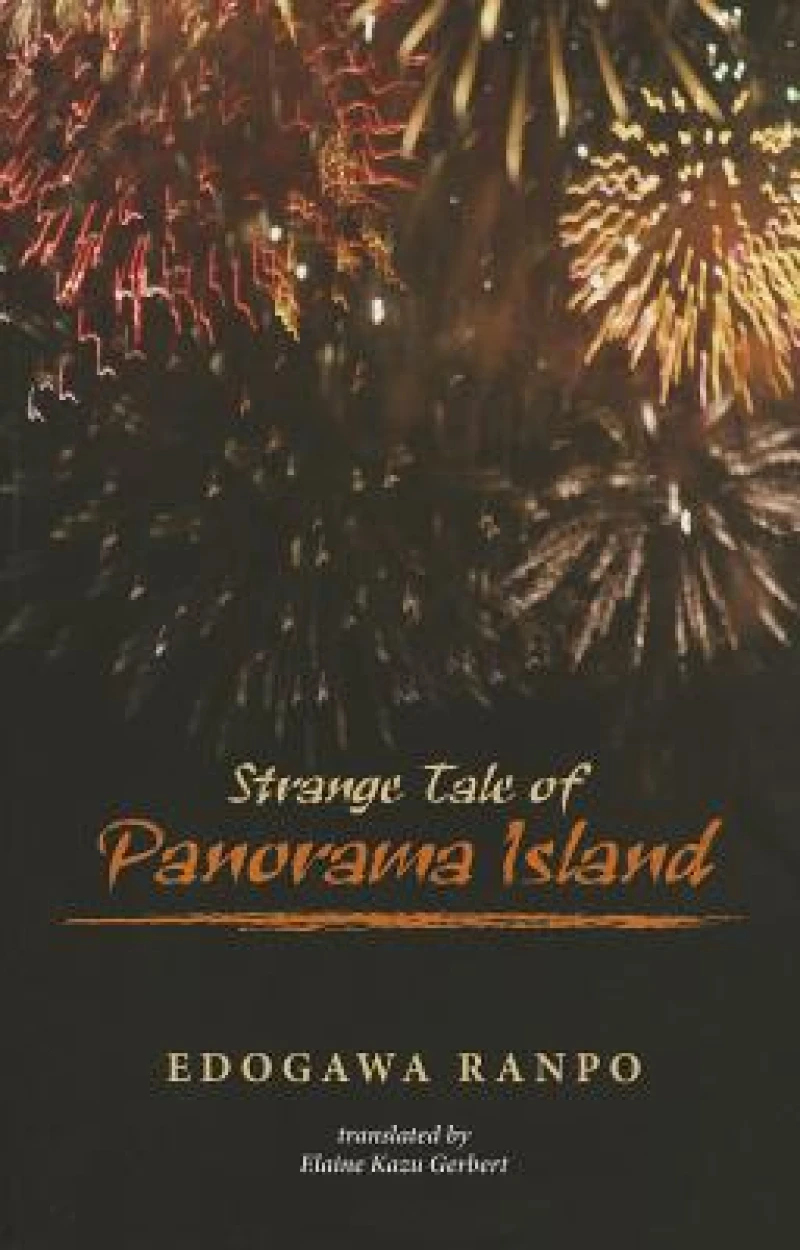
Strange Tale of Panorama Island
Book Details
Format
Paperback / Softback
ISBN-10
0824837037
ISBN-13
9780824837037
Publisher
University of Hawai'i Press
Imprint
University of Hawai'i Press
Country of Manufacture
US
Country of Publication
GB
Publication Date
Dec 31st, 2012
Print length
160 Pages
Weight
210 grams
Dimensions
14.10 x 21.50 x 1.30 cms
Product Classification:
Crime & mysteryCrime and / or mystery fiction
Ksh 2,350.00
Werezi Extended Catalogue
0 in stock
Delivery Location
Delivery fee: Select location
Secure
Quality
Fast
Edogawa Ranpo (1894-1965) was a great admirer of Edgar Allan Poe and like Poe drew on his penchant for the grotesque and the bizarre to explore the boundaries of conventional thought. Best known as the founder of the modern Japanese detective novel, Ranpo wrote for a youthful audience, and a taste for playacting and theatre animates his stories. His writing is often associated with the era of ero guro nansense (erotic grotesque nonsense), which accompanied the rise of mass culture and mass media in urban Japan in the 1920s. Characterised by an almost lurid fascination with simulacra and illusion, the era’s sensibility permeates Ranpo''s first major work and one of his finest achievements, Strange Tale of Panorama Island (Panoramato kidan),published in 1926.
Ranpo’s panorama island is filled with cleverly designed optical illusions: a staircase rises into the sky; white feathered “birds” speak in women’s voices and offer to serve as vehicles; clusters of naked men and women romp on slopes carpeted with rainbow-colored flowers. His fantastical utopia is filled with entrancing music and strange sweet odours, and nothing is ordinary, predictable, or boring. The novella reflected the new culture of mechanically produced simulated realities (movies, photographs, advertisements, stereoscopic and panoramic images) and focused on themes of the doppelganger and appropriated identities: its main character steals the identity of an acquaintance. The novella’s utopian vision, argues translator Elaine Gerbert, mirrors the expansionist dreams that fed Japan''s colonisation of the Asian continent, its ending an eerie harbinger of the collapse of those dreams.
Today just as a new generation of technologies is transforming the way we think—and becoming ever more invasive and pervasive—Ranpo''s work is attracting a new generation of readers. In the past few decades his writing has inspired films, anime, plays, and manga, and many translations of his stories, essays, and novels have appeared, but to date no English-language translation of Panoramato kidan has been available. This volume, which includes a critical introduction and notes, fills that gap and uncovers for English-language readers an important new dimension of an ever stimulating, provocative talent.
Ranpo’s panorama island is filled with cleverly designed optical illusions: a staircase rises into the sky; white feathered “birds” speak in women’s voices and offer to serve as vehicles; clusters of naked men and women romp on slopes carpeted with rainbow-colored flowers. His fantastical utopia is filled with entrancing music and strange sweet odours, and nothing is ordinary, predictable, or boring. The novella reflected the new culture of mechanically produced simulated realities (movies, photographs, advertisements, stereoscopic and panoramic images) and focused on themes of the doppelganger and appropriated identities: its main character steals the identity of an acquaintance. The novella’s utopian vision, argues translator Elaine Gerbert, mirrors the expansionist dreams that fed Japan''s colonisation of the Asian continent, its ending an eerie harbinger of the collapse of those dreams.
Today just as a new generation of technologies is transforming the way we think—and becoming ever more invasive and pervasive—Ranpo''s work is attracting a new generation of readers. In the past few decades his writing has inspired films, anime, plays, and manga, and many translations of his stories, essays, and novels have appeared, but to date no English-language translation of Panoramato kidan has been available. This volume, which includes a critical introduction and notes, fills that gap and uncovers for English-language readers an important new dimension of an ever stimulating, provocative talent.
Get Strange Tale of Panorama Island by at the best price and quality guaranteed only at Werezi Africa's largest book ecommerce store. The book was published by University of Hawai'i Press and it has pages.

