
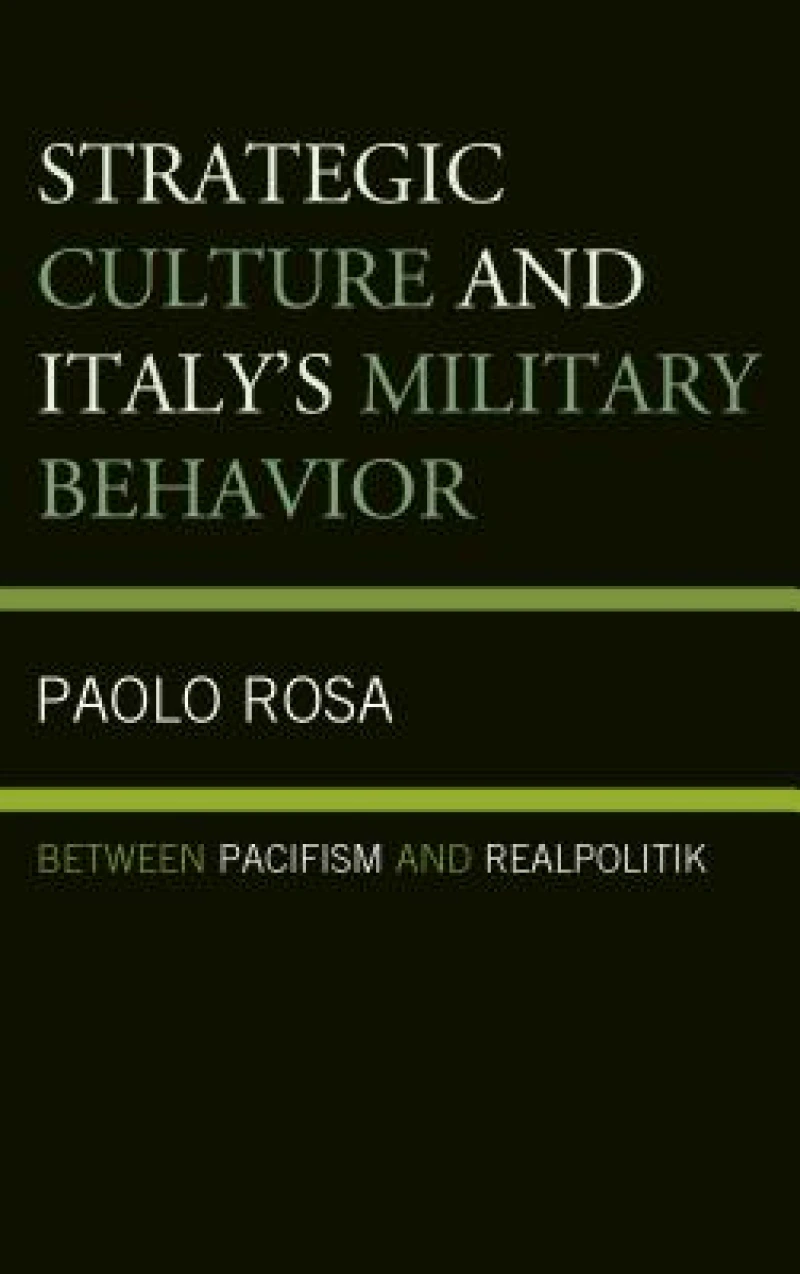
Strategic Culture and Italy's Military Behavior : Between Pacifism and Realpolitik
by
Paolo Rosa
Book Details
Format
Hardback or Cased Book
ISBN-10
1498522815
ISBN-13
9781498522816
Publisher
Bloomsbury Publishing Plc
Imprint
Lexington Books
Country of Manufacture
GB
Country of Publication
GB
Publication Date
Apr 21st, 2016
Print length
158 Pages
Weight
398 grams
Dimensions
23.80 x 16.00 x 2.20 cms
Product Classification:
Politics & governmentCentral government policiesInternational relations
Ksh 16,400.00
Manufactured on Demand
0 in stock
Delivery Location
Delivery fee: Select location
Secure
Quality
Fast
Italy, although it considers itself to be a middle-sized power on par with France, the United Kingdom, and Germany, has been incapable of playing an international role comparable to theirs, instead keeping a low-profile foreign policy. This has not been due to any material constraints—Italy’s profile has remained consistently low, through economic times both good and bad—but rather to the country’s strategic culture, a mixture of realpolitik and pacifist tendencies. This book sets out to analyze the influence of Italy’s strategic culture on its foreign policy. It conducts an exploratory case study to show if hypotheses generated by the strategic culture approach can shed some light on the puzzling Italian behavior in the international arena (puzzling because Italy shows a less assertive foreign policy vis-à-vis other middle powers in the same rank). The first chapter considers the main interpretations of Italian foreign policy and their limitations. The second and third chapters review the literature on strategic culture, stressing its utility for the Italian case. The fourth chapter describes the country’s strategic culture through the Liberal, Fascist, and Republican periods, and the fifth chapter analyzes the influence of ideational factors on Italy’s behavior abroad. Conclusions sum up the various emerging evidences. Scholars of political science, international relations, strategic studies, and comparative politics will find this work to be of interest.
Italy, although it considers itself to be a middle-sized power on par with France, the United Kingdom, and Germany, has been incapable of playing an international role comparable to theirs, instead keeping a low-profile foreign policy. This has not been due to any material constraints—Italy’s profile has remained consistently low, through economic times both good and bad—but rather to the country’s strategic culture, a mixture of realpolitik and pacifist tendencies. This book sets out to analyze the influence of Italy’s strategic culture on its foreign policy. It conducts an exploratory case study to show if hypotheses generated by the strategic culture approach can shed some light on the puzzling Italian behavior in the international arena (puzzling because Italy shows a less assertive foreign policy vis-à-vis other middle powers in the same rank). The first chapter considers the main interpretations of Italian foreign policy and their limitations. The second and third chapters review the literature on strategic culture, stressing its utility for the Italian case. The fourth chapter describes the country’s strategic culture through the Liberal, Fascist, and Republican periods, and the fifth chapter analyzes the influence of ideational factors on Italy’s behavior abroad. Conclusions sum up the various emerging evidences. Scholars of political science, international relations, strategic studies, and comparative politics will find this work to be of interest.
Get Strategic Culture and Italy's Military Behavior by at the best price and quality guaranteed only at Werezi Africa's largest book ecommerce store. The book was published by Bloomsbury Publishing Plc and it has pages.

