
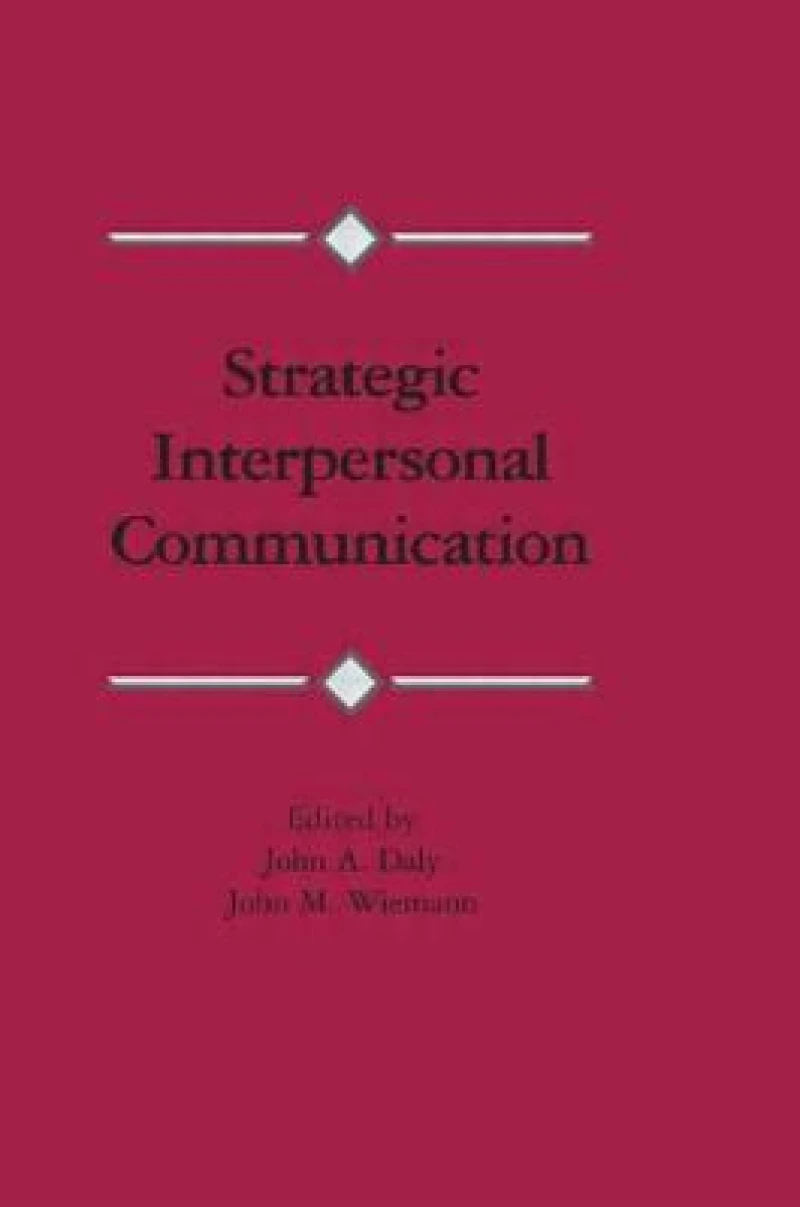
Strategic Interpersonal Communication
Book Details
Format
Paperback / Softback
Book Series
Routledge Communication Series
ISBN-10
0415516358
ISBN-13
9780415516358
Publisher
Taylor & Francis Ltd
Imprint
Routledge
Country of Manufacture
GB
Country of Publication
GB
Publication Date
Nov 18th, 2013
Print length
326 Pages
Weight
486 grams
Dimensions
23.00 x 15.30 x 1.80 cms
Ksh 11,350.00
Werezi Extended Catalogue
0 in stock
Delivery Location
Delivery fee: Select location
Secure
Quality
Fast
This book discusses how people go about achieving their social goals through human symbolic interaction. The editors'' collective presumption is that there are more or less typical ways that people attempt to obtain desired outcomes -- be they persuasive, informative, conflictive, or the like -- through communication. Representing a first summary of research done by scholars, primarily in the communication discipline, this volume seeks to identify and understand how it is that people achieve what they want through social interaction. Under the very broad label of strategies, this research has sought to:
* identify critical social goals such as gaining compliance, generating affinity, resolving social conflict, and offering information;
* specify, for each goal, the ways, or strategies, by which people can go about achieving these goals;
* determine predictors of strategy selection -- that is, why does a person opt for one strategy over others to obtain the desired end?
The research also reflects the attention the field of communication has given to strategy issues in the past 15 years.
The chapters describe research on the ways in which people achieve different goals, and summarize existing research and theory on the attainment of social goals. Readers will gain insight into many of the issues that exist regardless of the strategy being discussed. Thus, this volume may not include chapters on topics such as ways people elicit or offer disclosure, ways people demonstrate anger, or ways people create guilt, but the issues that appear consistently throughout the various chapters should apply equally to these. Finally, the essays in this volume provide not only a summary of what has been accomplished to date, but also an initial theoretic map for future research concerning strategic interpersonal communication.
* identify critical social goals such as gaining compliance, generating affinity, resolving social conflict, and offering information;
* specify, for each goal, the ways, or strategies, by which people can go about achieving these goals;
* determine predictors of strategy selection -- that is, why does a person opt for one strategy over others to obtain the desired end?
The research also reflects the attention the field of communication has given to strategy issues in the past 15 years.
The chapters describe research on the ways in which people achieve different goals, and summarize existing research and theory on the attainment of social goals. Readers will gain insight into many of the issues that exist regardless of the strategy being discussed. Thus, this volume may not include chapters on topics such as ways people elicit or offer disclosure, ways people demonstrate anger, or ways people create guilt, but the issues that appear consistently throughout the various chapters should apply equally to these. Finally, the essays in this volume provide not only a summary of what has been accomplished to date, but also an initial theoretic map for future research concerning strategic interpersonal communication.
Get Strategic Interpersonal Communication by at the best price and quality guaranteed only at Werezi Africa's largest book ecommerce store. The book was published by Taylor & Francis Ltd and it has pages.

