
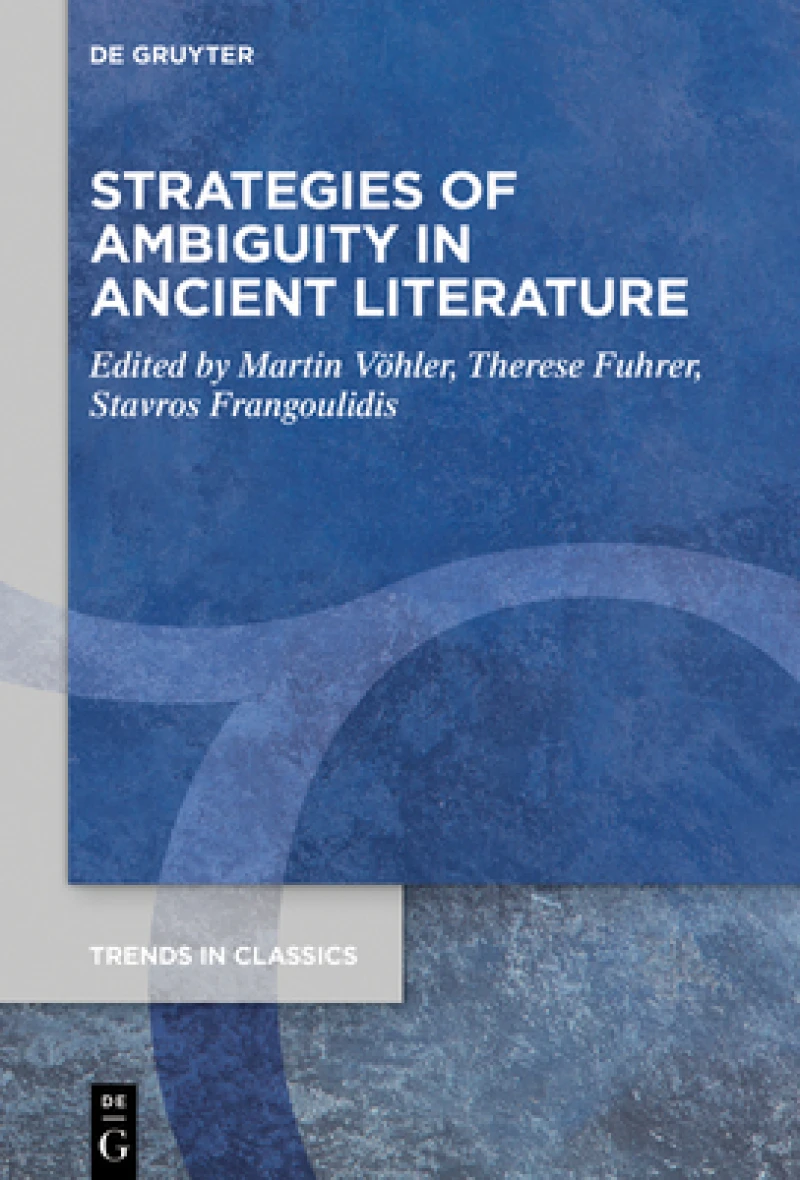
Strategies of Ambiguity in Ancient Literature
Book Details
Format
Hardback or Cased Book
Book Series
Trends in Classics - Supplementary Volumes
ISBN-10
3110715414
ISBN-13
9783110715415
Publisher
De Gruyter
Imprint
De Gruyter
Country of Manufacture
GB
Country of Publication
GB
Publication Date
Feb 22nd, 2021
Print length
431 Pages
Weight
745 grams
Product Classification:
Literary studies: ancient, classical and medievalLiterary studies: classical, early & medieval
Ksh 26,800.00
Werezi Extended Catalogue
0 in stock
Delivery Location
Delivery fee: Select location
Secure
Quality
Fast
Ambiguity in the sense of two or more possible meanings is considered to be a distinctive feature of modern art and literature. It characterizes the "open artwork" (Eco) and is generated by "disruptive tactics" (Wellershoff) and strategies to engender uncertainty. While ambiguity is seen as a "paradigm of modernity" (Bode), there is skepticism regarding its use in the pre-modern era. Older studies were dominated by the conviction that there was a lack of ambiguity in pre-modernity because, according to the rules of the "old rhetoric", ambiguity was seen as an avoidable error (vitium) and a violation of the dictate of clarity (perspicuitas). The aim of the volume is to re-examine the putative "absence of ambiguity" in the pre-modern era. Is it not possible to find clear examples of deliberately employed (intended) ambiguity in antiquity? Are the oracles and riddles, the Palinode of Stesichoros and Socrates (Phaedrus), the dissoi logoi of rhetoric, the ambiguities of the tragedies all exceptions or do they not indicate a distinct interest in the artistic use of ambiguity? The presentations of the conference, which will include scholars from various philologies, will combine a recourse to theoretical concepts of intended ambiguity with exemplary analyses from the field of pre-modern art and literature.
Get Strategies of Ambiguity in Ancient Literature by at the best price and quality guaranteed only at Werezi Africa's largest book ecommerce store. The book was published by De Gruyter and it has pages.

