
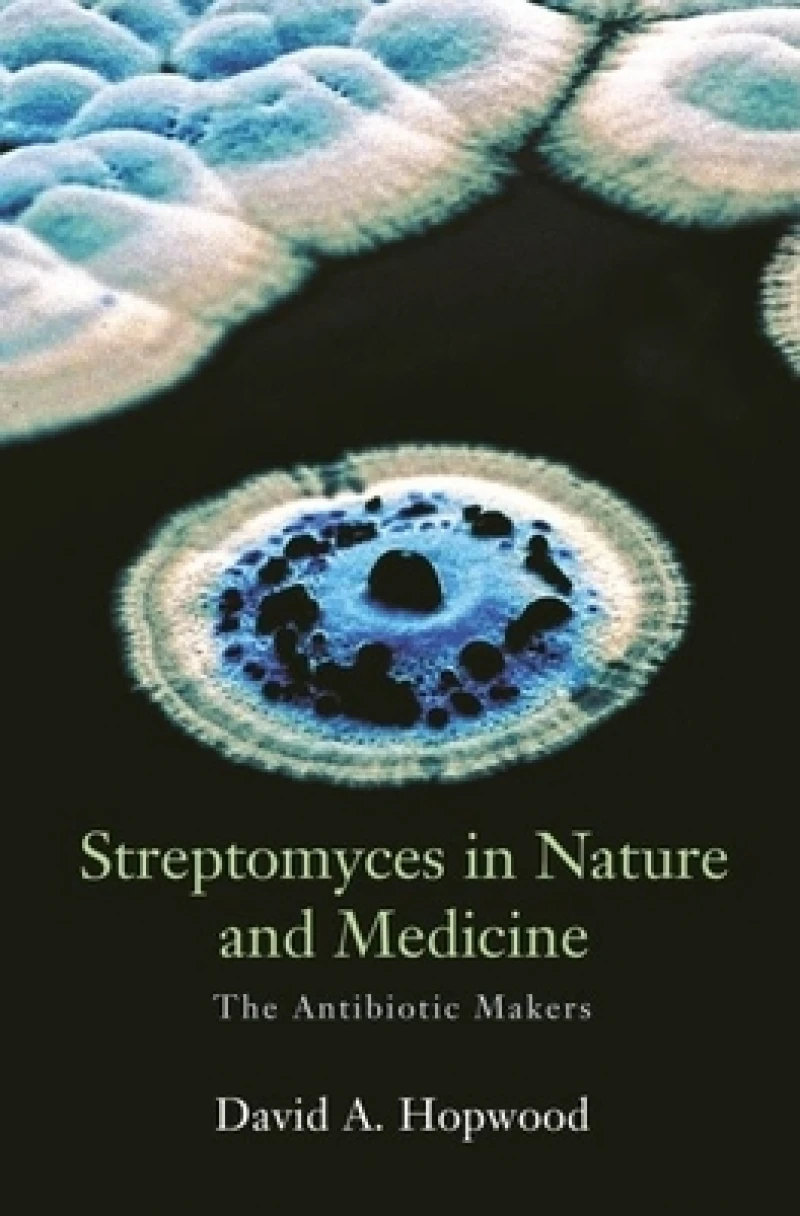
Streptomyces in Nature and Medicine : The Antibiotic Makers
Book Details
Format
Hardback or Cased Book
ISBN-10
019515066X
ISBN-13
9780195150667
Publisher
Oxford University Press Inc
Imprint
Oxford University Press Inc
Country of Manufacture
US
Country of Publication
GB
Publication Date
Feb 22nd, 2007
Print length
272 Pages
Weight
520 grams
Dimensions
24.40 x 16.50 x 2.00 cms
Product Classification:
History of medicineMedical geneticsMedical microbiology & virology
Ksh 15,500.00
Manufactured on Demand
0 in stock
Delivery Location
Delivery fee: Select location
Secure
Quality
Fast
This book highlights the lives of a group of soil microbes that make most of the antibiotics used in medicine today. Written by an insider, it describes how genetics tells us how these microscopic chemists compete in the soil and how their genes can be rearranged to make new antibiotics to fight re-emerging diseases.
This is an insider''s account of 50 years of genetic studies of the soil-inhabiting microbes that produce most of the antibiotics used to treat infections, as well as anti-cancer, anti-parasitic and immunosuppressant drugs. The book begins by describing how these microbes - the actinomycetes - were discovered in the latter part of the nineteenth century, but remained a ''Cinderella'' group until, in the 1940s, they shot to prominence with the discovery of streptomycin, the first effective treatment for tuberculosis and only the second antibiotic after penicillin to become a medical marvel. There followed a massive effort over several decades to find further treatments for infectious diseases and cancer, tempered by the rise of antibiotic resistance consequent on antibiotic misuse and over-use. The book goes on to describe the discovery of gene exchange in the actinomycetes in the context of the rise of microbial genetics in the mid-20th century, leading to determination of the complete DNA sequence of a model member of the group at the turn of the millennium. There follow chapters in which the intricate molecular machinery that adapts the organisms'' metabolism and development to life in the soil, including antibiotic production, is illuminated by the DNA blueprint. Then comes an up-to-the minute account of the use of genetic engineering to make novel, hybrid antibiotics and a topical description of techniques to learn the roles of the thousands of genes in a genome sequence, throwing a powerful light on the biology of the organisms and their harnessing for increasing antibiotic prductivity. In the final chapter we return to the mycobacteria that cause tuberculosis and leprosy, the first actinomycetes to be discovered, and how methodology, in part derived from the study of the streptomycetes, is being applied to understand and control these still deadly pathogens.
Get Streptomyces in Nature and Medicine by at the best price and quality guaranteed only at Werezi Africa's largest book ecommerce store. The book was published by Oxford University Press Inc and it has pages.

