
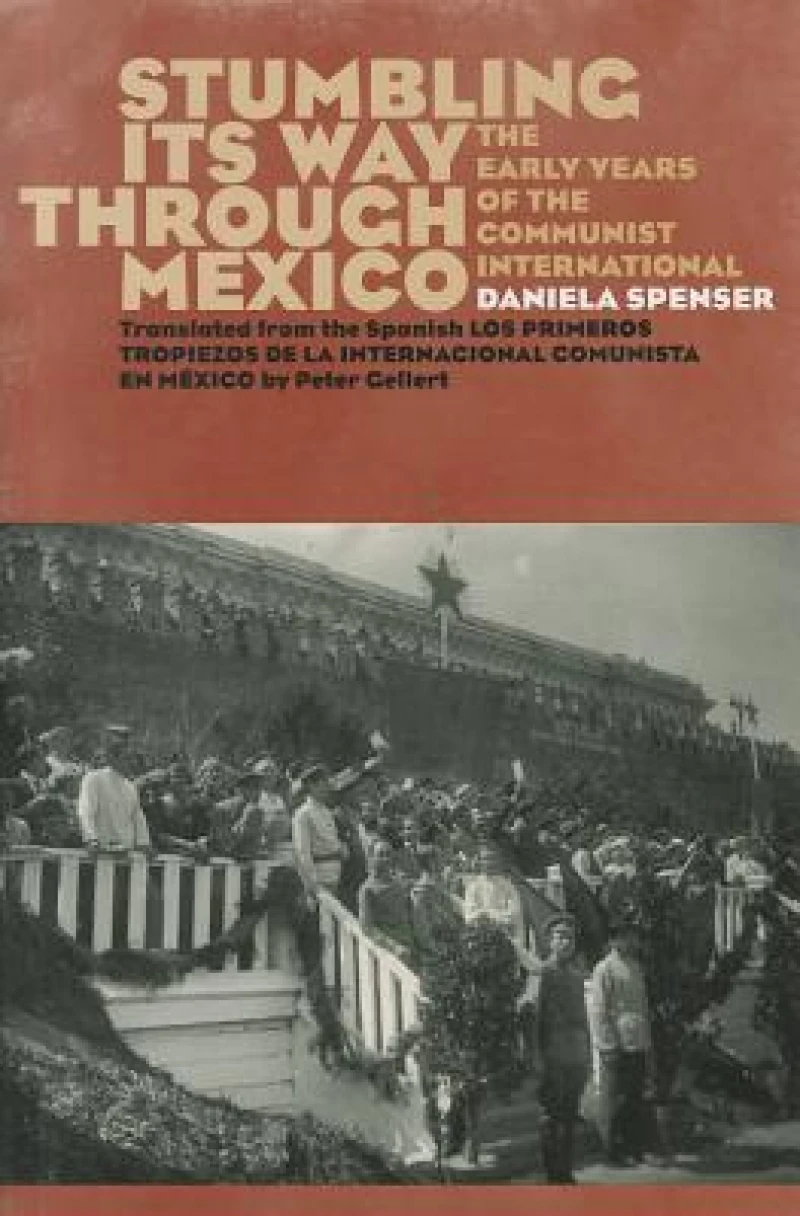
Stumbling Its Way Through Mexico : The Early Years of the Communist International
Book Details
Format
Hardback or Cased Book
ISBN-10
0817317368
ISBN-13
9780817317362
Publisher
The University of Alabama Press
Imprint
The University of Alabama Press
Country of Manufacture
US
Country of Publication
GB
Publication Date
Jul 15th, 2011
Print length
224 Pages
Weight
529 grams
Dimensions
23.60 x 15.70 x 2.20 cms
Ksh 5,450.00
Temporarily out of stock, due soon
0 in stock
Delivery Location
Delivery fee: Select location
Secure
Quality
Fast
Explores the early attempts by the Moscow-based Communist International to organize and direct a revolutionary movement in Mexico. Based on documents found principally in the Soviet archives recently opened to the public, this is an invitation to rethink the history of Communism in Mexico and Latin America.
Stumbling Its Way through Mexico records the early attempts by the Moscow-based Communist International to organize and direct a revolutionary movement in Mexico. The period studied, from 1919 to 1929, was characterized at the beginning by a wave of revolutions in Europe that the Bolsheviks expected to grow into an international phenomenon. However, contrary to their expectations, the revolutionary tide ebbed, and the new age they had expected receded into an uncertain future. In response, Moscow sent agents and recruited local leaders worldwide to sustain and train local revolutionary movements and to foment what they saw as an inevitable seizure of power by Communist-led workers.
Unlike the Soviet seizure of power in Russia, the Mexican Revolution of 1910–1920 had not changed the fundamental character of the nation-state. However, it did represent a sea change in the relationship between the state and society. When the Bolshevik Revolution broke out in Russia in 1917, Mexican workers already had generations of experience in the struggle against oppression, in forming class solidarity, in organizing strikes, and had tasted both success and failure. For decades in their workplaces, Mexicans had debated how to end the exploitation of labor and practice international solidarity. Mexico had an indigenous labor movement acting with some success to establish a place in a new Mexico. The agents that Moscow chose to lead the Communist movement in Mexico lacked an understanding of the local situation and presumed a lack of indigenous confidence and experience that doomed to failure their efforts to impose external control over the labor movement.
Based on documents found principally in the Soviet archives recently opened to the public, Stumbling Its Way through Mexico is an invitation to rethink the history of Communism in Mexico and Latin America.
Unlike the Soviet seizure of power in Russia, the Mexican Revolution of 1910–1920 had not changed the fundamental character of the nation-state. However, it did represent a sea change in the relationship between the state and society. When the Bolshevik Revolution broke out in Russia in 1917, Mexican workers already had generations of experience in the struggle against oppression, in forming class solidarity, in organizing strikes, and had tasted both success and failure. For decades in their workplaces, Mexicans had debated how to end the exploitation of labor and practice international solidarity. Mexico had an indigenous labor movement acting with some success to establish a place in a new Mexico. The agents that Moscow chose to lead the Communist movement in Mexico lacked an understanding of the local situation and presumed a lack of indigenous confidence and experience that doomed to failure their efforts to impose external control over the labor movement.
Based on documents found principally in the Soviet archives recently opened to the public, Stumbling Its Way through Mexico is an invitation to rethink the history of Communism in Mexico and Latin America.
Get Stumbling Its Way Through Mexico by at the best price and quality guaranteed only at Werezi Africa's largest book ecommerce store. The book was published by The University of Alabama Press and it has pages.

