
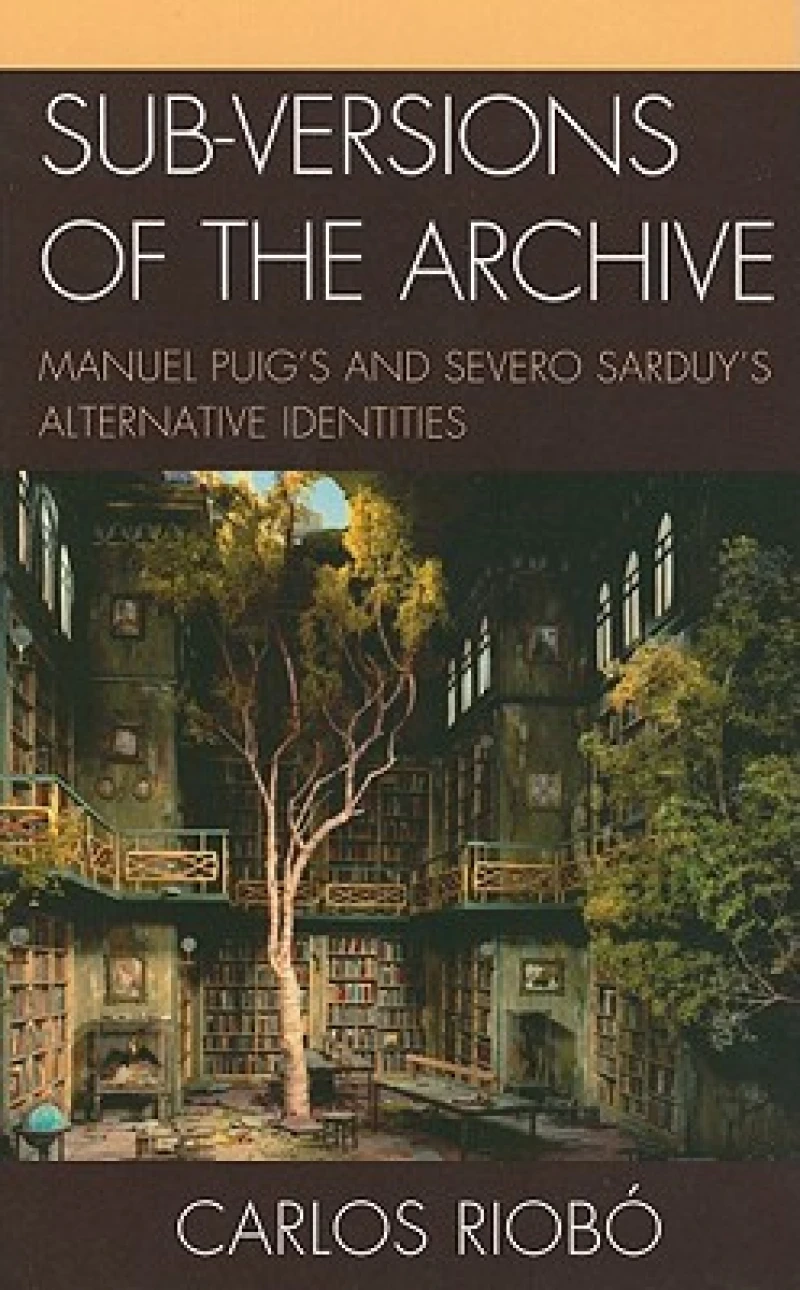
Sub-versions of the Archive : Manuel Puig's and Severo Sarduy's Alternative Identities
by
Carlos Riobo
Book Details
Format
Hardback or Cased Book
ISBN-10
1611480361
ISBN-13
9781611480368
Publisher
Bucknell University Press
Imprint
Bucknell University Press
Country of Manufacture
GB
Country of Publication
GB
Publication Date
Dec 29th, 2010
Print length
236 Pages
Weight
526 grams
Dimensions
24.00 x 16.30 x 2.10 cms
Product Classification:
Literary studies: general
Ksh 17,550.00
Manufactured on Demand
Delivery in 29 days
Delivery Location
Delivery fee: Select location
Delivery in 29 days
Secure
Quality
Fast
Sub-Versions of the Archive: Manuel Puig's and Severo Sarduy's Alternative Identities analyzes recent theories of the archive to examine how Manuel Puig and Severo Sarduy reformulate the Latin American literary tradition. This study focuses on eclectic theories of the archive as both repository and danger, drawing from an array of sources both within and outside the Hispanic literary tradition: from Borges, Foucault, Arrom, Derrida, Gonzalez Echevarria, and Guillory to digital media and biotechnology. This book also applies theories of cultural contamination (Maria Lugones) and symbolic capital (Pierre Bourdieu) to the novels of Puig and Sarduy to explore the representation of marginal cultures within a body of literature that previously altered or elided these subaltern cultures from the tradition. Through close readings and critical theoretical applications, this book demonstrates how archival fiction continues to be one of the most popular strategies among Latin American novelists and, most importantly, how they have successfully managed to find new ways to inscribe their alternative fictions within this tradition. Puig's and Sarduy's novels reproduce discourses-popular culture and the mass media-that lack prestige within the traditional archive. These discourses mirror realities of marginal groups-gay people, children, the poor, the illiterate, women, and racial minorities. Their cultural variants, sub-versions of hegemonic masterstories, are endowed with truth-bearing power for them, but were previously left out of the archive as legitimate novelistic models. To date, this is the only study of contemporary Latin American fiction that puts current theories of the archive-especially that of Roberto Gonzalez Echevarria-to practice in such a systematic way. Riobo's analysis of how Puig and Sarduy reformulate the Latin American canon is both a necessary complement of Gonzalez Echevarria's work and an intelligent answer to the first of his projected masterstories. Riobo's multidisciplinary approach
Sub-Versions of the Archive: Manuel Puig''s and Severo Sarduy''s Alternative Identities analyzes recent theories of the archive to examine how Manuel Puig and Severo Sarduy reformulate the Latin American literary tradition. This study focuses on eclectic theories of the archive as both repository and danger, drawing from an array of sources both within and outside the Hispanic literary tradition: from Borges, Foucault, Arrom, Derrida, González Echevarría, and Guillory to digital media and biotechnology. This book also applies theories of cultural contamination (Maria Lugones) and symbolic capital (Pierre Bourdieu) to the novels of Puig and Sarduy to explore the representation of marginal cultures within a body of literature that previously altered or elided these subaltern cultures from the tradition. Through close readings and critical theoretical applications, this book demonstrates how archival fiction continues to be one of the most popular strategies among Latin American novelists and, most importantly, how they have successfully managed to find new ways to inscribe their alternative fictions within this tradition. Puig''s and Sarduy''s novels reproduce discourses-popular culture and the mass media-that lack prestige within the traditional archive. These discourses mirror realities of marginal groups-gay people, children, the poor, the illiterate, women, and racial minorities. Their cultural variants, sub-versions of hegemonic masterstories, are endowed with truth-bearing power for them, but were previously left out of the archive as legitimate novelistic models. To date, this is the only study of contemporary Latin American fiction that puts current theories of the archive-especially that of Roberto González Echevarría-to practice in such a systematic way. Riobó''s analysis of how Puig and Sarduy reformulate the Latin American canon is both a necessary complement of González Echevarría''s work and an intelligent answer to the first of his projected masterstories. Riobó''s multidisciplinary approach
Get Sub-versions of the Archive by at the best price and quality guaranteed only at Werezi Africa's largest book ecommerce store. The book was published by Bucknell University Press and it has pages.

