
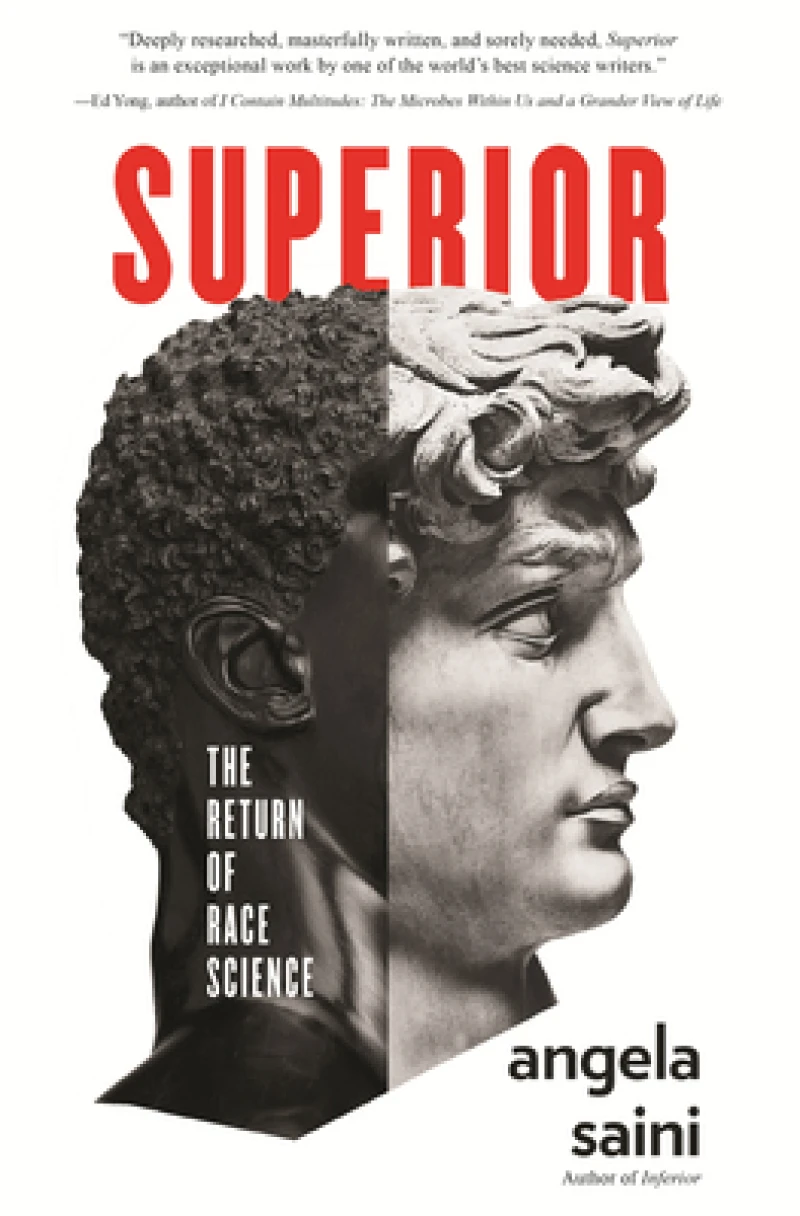
Superior : The Return of Race Science
Book Details
Format
Paperback / Softback
ISBN-10
0807028428
ISBN-13
9780807028421
Publisher
Not Stated
Country of Manufacture
US
Country of Publication
GB
Publication Date
Jan 1st, 1900
Weight
388 grams
Dimensions
15.10 x 22.80 x 2.20 cms
Ksh 2,900.00
Temporarily out of stock, due soon
0 in stock
Delivery Location
Delivery fee: Select location
Secure
Quality
Fast
This fascinating critique of race science, from the Enlightenment to the 21st century, is an “easy-to-read blend of science reporting, cultural criticism, and personal reflection” (Slate).
“An important and timely reminder that race is ‘a social construct’ with ‘no basis in biology.’” —Kirkus Reviews
After the horrors of the Nazi regime in World War II, the mainstream scientific world turned its back on eugenics and the study of racial difference. But a worldwide network of intellectual racists and segregationists quietly founded journals and funded research, providing the kind of shoddy studies that were ultimately cited in Richard Herrnstein and Charles Murray’s 1994 title The Bell Curve, which purported to show differences in intelligence among races.
If the vast majority of scientists and scholars disavowed these ideas and considered race a social construct, it was an idea that still managed to somehow survive in the way scientists thought about human variation and genetics. Dissecting the statements and work of contemporary scientists studying human biodiversity, most of whom claim to be just following the data, Angela Saini shows us how, again and again, even mainstream scientists cling to the idea that race is biologically real. As our understanding of complex traits like intelligence, and the effects of environmental and cultural influences on human beings, from the molecular level on up, grows, the hope of finding simple genetic differences between “races”—to explain differing rates of disease, to explain poverty or test scores, or to justify cultural assumptions—stubbornly persists.
At a time when racialized nationalisms are a resurgent threat throughout the world, Superior is a rigorous, much-needed examination of the insidious and destructive nature of race science—and a powerful reminder that, biologically, we are all far more alike than different.
“An important and timely reminder that race is ‘a social construct’ with ‘no basis in biology.’” —Kirkus Reviews
After the horrors of the Nazi regime in World War II, the mainstream scientific world turned its back on eugenics and the study of racial difference. But a worldwide network of intellectual racists and segregationists quietly founded journals and funded research, providing the kind of shoddy studies that were ultimately cited in Richard Herrnstein and Charles Murray’s 1994 title The Bell Curve, which purported to show differences in intelligence among races.
If the vast majority of scientists and scholars disavowed these ideas and considered race a social construct, it was an idea that still managed to somehow survive in the way scientists thought about human variation and genetics. Dissecting the statements and work of contemporary scientists studying human biodiversity, most of whom claim to be just following the data, Angela Saini shows us how, again and again, even mainstream scientists cling to the idea that race is biologically real. As our understanding of complex traits like intelligence, and the effects of environmental and cultural influences on human beings, from the molecular level on up, grows, the hope of finding simple genetic differences between “races”—to explain differing rates of disease, to explain poverty or test scores, or to justify cultural assumptions—stubbornly persists.
At a time when racialized nationalisms are a resurgent threat throughout the world, Superior is a rigorous, much-needed examination of the insidious and destructive nature of race science—and a powerful reminder that, biologically, we are all far more alike than different.
Get Superior by at the best price and quality guaranteed only at Werezi Africa's largest book ecommerce store. The book was published by Not Stated and it has pages.

