
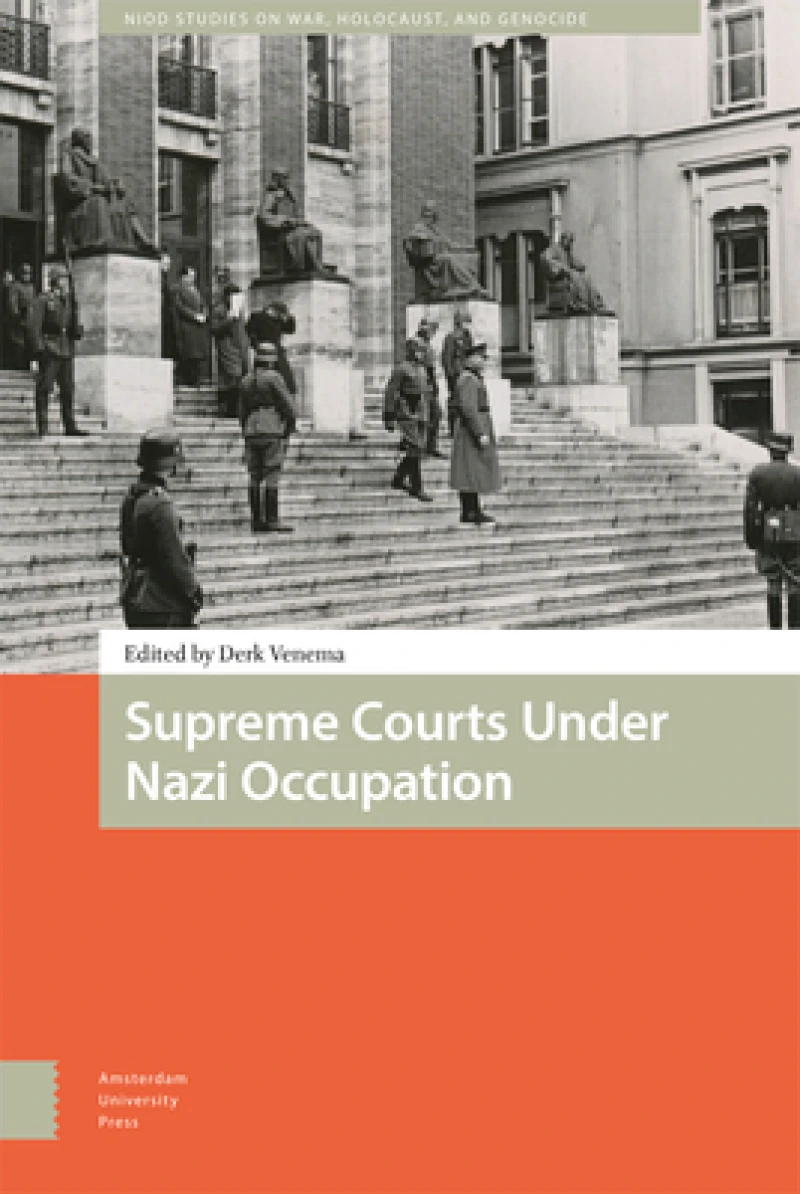
Supreme Courts Under Nazi Occupation
Book Details
Format
Hardback or Cased Book
Book Series
War, Conflict and Genocide Studies
ISBN-10
9463720499
ISBN-13
9789463720496
Publisher
Amsterdam University Press
Imprint
Amsterdam University Press
Country of Manufacture
GB
Country of Publication
GB
Publication Date
Dec 9th, 2022
Print length
340 Pages
Weight
620 grams
Dimensions
16.30 x 24.30 x 2.60 cms
Product Classification:
20th century history: c 1900 to c 2000Military historySecond World WarLegal history
Ksh 26,300.00
Temporarily out of stock, due soon
0 in stock
Delivery Location
Delivery fee: Select location
Secure
Quality
Fast
This is the first extensive treatment of leading judicial institutions under Nazi rule in WWII. It focusses on all democratic countries under German occupation, and provides the details for answering questions like: how can law serve as an instrument of defence against an oppressive regime? Are the courts always the guardians of democracy and rule of law? What role was there for international law? How did the courts deal with dismissals, new appointees, new courts, forced German ordinances versus national law? How did judges justify their actions, help citizens, appease the enemy, protest against injustice? Experts from all democracies that were occupied by the Nazis paint vivid pictures of oppression, collaboration, and resistance. The results are interpreted in a socio-legal framework introducing the concept of ‘moral hygiene’ to explain the clash between normative and descriptive approaches in public opinion and scholarship concerning officials’ behaviour in war-time.
This is the first extensive treatment of leading judicial institutions under Nazi rule in WWII. It focusses on all democratic countries under German occupation, and provides the details for answering questions like: how can law serve as an instrument of defence against an oppressive regime? Are the courts always the guardians of democracy and rule of law? What role was there for international law? How did the courts deal with dismissals, new appointees, new courts, forced German ordinances versus national law? How did judges justify their actions, help citizens, appease the enemy, protest against injustice? Experts from all democracies that were occupied by the Nazis paint vivid pictures of oppression, collaboration, and resistance. The results are interpreted in a socio-legal framework introducing the concept of ‘moral hygiene’ to explain the clash between normative and descriptive approaches in public opinion and scholarship concerning officials’ behaviour in war-time.
Get Supreme Courts Under Nazi Occupation by at the best price and quality guaranteed only at Werezi Africa's largest book ecommerce store. The book was published by Amsterdam University Press and it has pages.

