
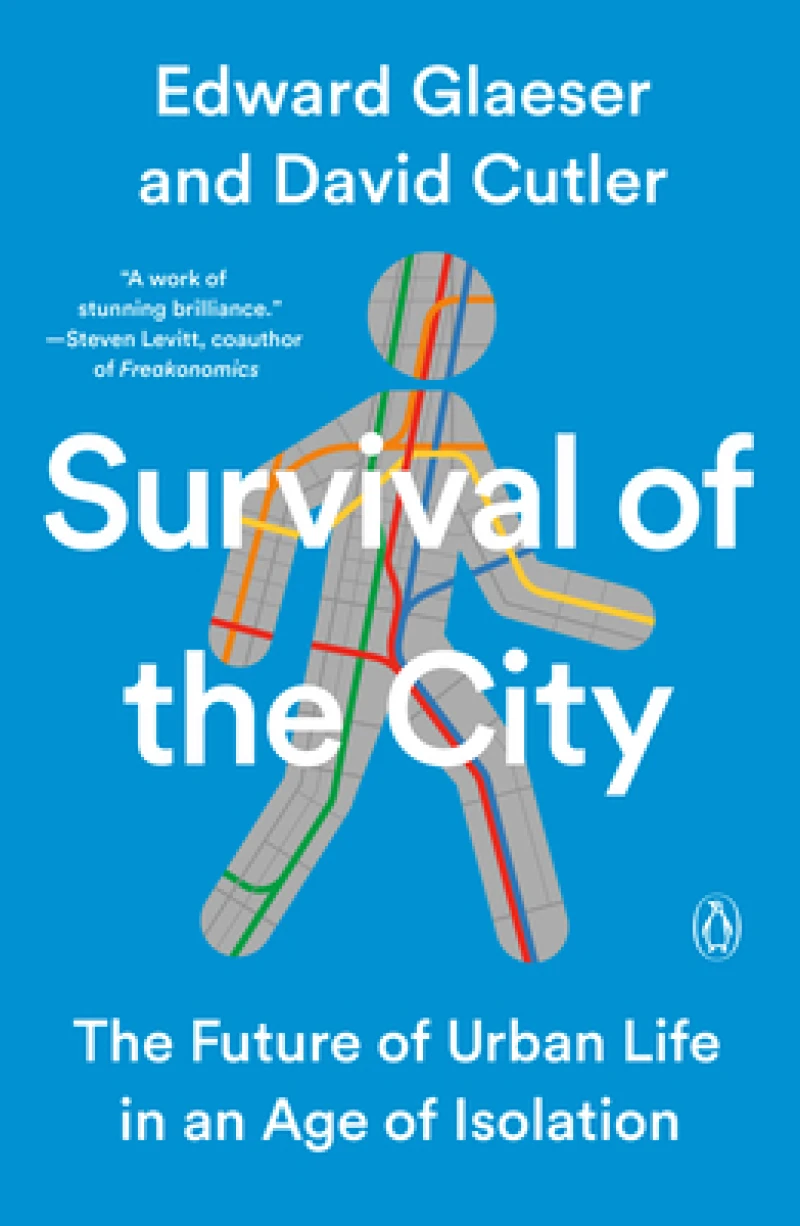
Survival of the City
Book Details
Format
Paperback / Softback
ISBN-10
0593297709
ISBN-13
9780593297704
Publisher
Penguin Publishing Group
Imprint
Penguin Books
Country of Manufacture
GB
Country of Publication
GB
Publication Date
Sep 6th, 2022
Weight
416 grams
Dimensions
14.10 x 21.40 x 2.90 cms
Ksh 2,350.00
Publisher Out of Stock
0 in stock
Delivery Location
Delivery fee: Select location
Secure
Quality
Fast
“Expansive and entertaining. . . . [A] fast-paced and highly readable journey . . . the book serves as a useful tool in the effort to redefine the role of the city in an age of increasingly polarized politics, and reminds us that urban health is—as Fiorello La Guardia once remarked about cleaning the streets—not a Democratic or Republican issue.” —New York Times Book Review
One of our great urbanists and one of our great public health experts join forces to reckon with how cities are changing in the face of existential threats the pandemic has only accelerated
Cities can make us sick. That’s always been true—diseases spread more easily when more people are close to one another. And cities have been demonized as breeding grounds for vice and crime from Sodom and Gomorrah on. But cities have flourished nonetheless because they are humanity’s greatest invention, indispensable engines for creativity, innovation, wealth, and civilization itself.
But cities now stand at a crossroads. During the global COVID crisis, cities grew silent; the normal forms of socializing ground to a halt. How permanent are these changes? Advances in technology mean that many people can opt out of city life as never before. Will they? Are we on the brink of a post-urban world?
City life will survive, but individual cities face terrible risks, argue Edward Glaeser and David Cutler, and a wave of urban failure would be absolutely disastrous. In terms of intimacy and inspiration, nothing can replace what cities offer. But great cities have always demanded great management, and our current crisis has exposed fearful gaps in our capacity for good governance. In America, Glaeser and Cutler argue, deep inequities in health care and education are a particular blight on the future of our cities; solving them will be the difference between our collective good health and a downward spiral to a much darker place.
One of our great urbanists and one of our great public health experts join forces to reckon with how cities are changing in the face of existential threats the pandemic has only accelerated
Cities can make us sick. That’s always been true—diseases spread more easily when more people are close to one another. And cities have been demonized as breeding grounds for vice and crime from Sodom and Gomorrah on. But cities have flourished nonetheless because they are humanity’s greatest invention, indispensable engines for creativity, innovation, wealth, and civilization itself.
But cities now stand at a crossroads. During the global COVID crisis, cities grew silent; the normal forms of socializing ground to a halt. How permanent are these changes? Advances in technology mean that many people can opt out of city life as never before. Will they? Are we on the brink of a post-urban world?
City life will survive, but individual cities face terrible risks, argue Edward Glaeser and David Cutler, and a wave of urban failure would be absolutely disastrous. In terms of intimacy and inspiration, nothing can replace what cities offer. But great cities have always demanded great management, and our current crisis has exposed fearful gaps in our capacity for good governance. In America, Glaeser and Cutler argue, deep inequities in health care and education are a particular blight on the future of our cities; solving them will be the difference between our collective good health and a downward spiral to a much darker place.
Get Survival of the City by at the best price and quality guaranteed only at Werezi Africa's largest book ecommerce store. The book was published by Penguin Publishing Group and it has pages.

