
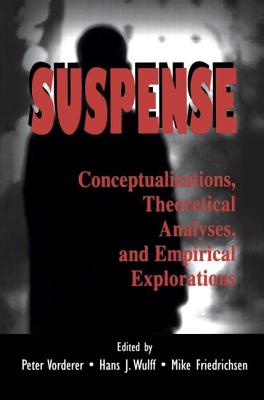
Suspense : Conceptualizations, Theoretical Analyses, and Empirical Explorations
Book Details
Format
Paperback / softback
Book Series
Routledge Communication Series
ISBN-10
0805819665
ISBN-13
9780805819663
Publisher
Taylor & Francis Inc
Imprint
Routledge
Country of Manufacture
GB
Country of Publication
GB
Publication Date
Apr 1st, 1996
Print length
372 Pages
Weight
554 grams
Dimensions
15.50 x 23.00 x 2.50 cms
KSh 11,250.00
Currently unavailable
0 in stock
Delivery Location
Delivery fee: Select location
Secure
Quality
Fast
Beginning with the general assumption that suspense is a major criterion for both an audience's selection and evaluation of entertaining media offerings, this text goes on to explore how, why, and which elements of the text cause effects that are experienced as suspense.
This volume begins with the general assumption that suspense is a major criterion for both an audience''s selection and evaluation of entertaining media offerings. This assumption is supported not only by the popularity of suspenseful narratives, but also by the reasons users give for their actual choice of media contents. Despite this, there is no satisfying theory to describe and explain what suspense actually is, how exactly it is caused by films or books, and what kind of effect it has on audiences. This book''s main objective is to provide that theory by bringing together scholars from different disciplines who are working on the issue. The editors'' goal is to reflect the "state of the art" as much as it is to highlight and encourage further developments in this area.
There are two ways of approaching the problem of describing and explaining suspense: an analysis of suspenseful texts or the reception process. Researchers who follow the more text-oriented approach identify the uncertainty of the narrative outcome, the threat or danger for the protagonist, the play with time delay, or other factors as important and necessary for the production of suspense. The more reception-oriented scholar focuses on the cognitive activities of audiences, readers'' expectations, the curiosity of onlookers, their emotions, and their relationships with the protagonists. A correspondence between the two seems to be quite difficult, though necessary to determine.
Both perspectives are important in order to describe and explain suspense. Thus, the editors utilize the thesis that suspense is an activity of the audience (reader, onlooker, etc.) that is related to specific features and characteristics of the text (books, films, etc.). Their question is: What kind of relation? The answer comes from finding out how, why, and which elements of the text cause effects that are experienced as suspense.
Scholars from semiotics, literary criticism, cultural studies, and film theory assess the problem from a text-oriented point of view, dealing primarily with the how and which. Other scholars present the psychological perspective by focusing on the cognitive and emotional processes that underlie viewers'' experience of suspense; that is, the reception theory tries to answer the question of why suspenseful texts may be experienced as they are.
There are two ways of approaching the problem of describing and explaining suspense: an analysis of suspenseful texts or the reception process. Researchers who follow the more text-oriented approach identify the uncertainty of the narrative outcome, the threat or danger for the protagonist, the play with time delay, or other factors as important and necessary for the production of suspense. The more reception-oriented scholar focuses on the cognitive activities of audiences, readers'' expectations, the curiosity of onlookers, their emotions, and their relationships with the protagonists. A correspondence between the two seems to be quite difficult, though necessary to determine.
Both perspectives are important in order to describe and explain suspense. Thus, the editors utilize the thesis that suspense is an activity of the audience (reader, onlooker, etc.) that is related to specific features and characteristics of the text (books, films, etc.). Their question is: What kind of relation? The answer comes from finding out how, why, and which elements of the text cause effects that are experienced as suspense.
Scholars from semiotics, literary criticism, cultural studies, and film theory assess the problem from a text-oriented point of view, dealing primarily with the how and which. Other scholars present the psychological perspective by focusing on the cognitive and emotional processes that underlie viewers'' experience of suspense; that is, the reception theory tries to answer the question of why suspenseful texts may be experienced as they are.
Get Suspense by Hans Jurgen Wulff at the best price and quality guaranteed only at Werezi Africa's largest book ecommerce store. The book was published by Taylor & Francis Inc and it has 372 pages.
Customers Who Bought This Also Bought

Worthy
KSh 3,500.00

Angels And Demons
KSh 1,900.00

Thinking in Pictures
KSh 6,100.00

Reel to Real
KSh 4,500.00

Duke in His Domain
KSh 550.00

The Lord of the Rings Tarot and Guidebook
KSh 4,150.00
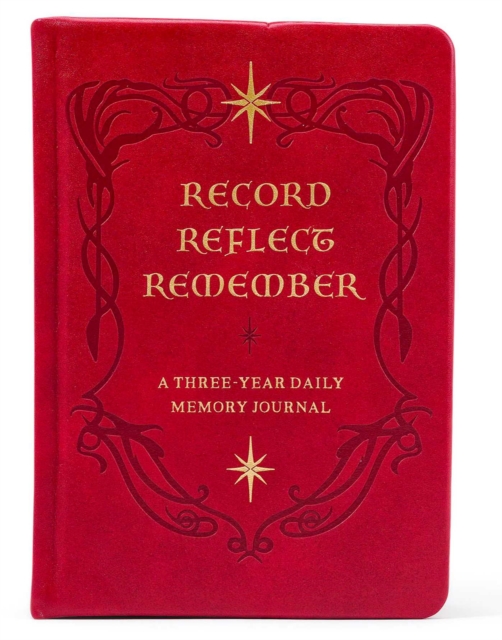
The Lord of the Rings Memory Journal
KSh 2,200.00

With Nails
KSh 2,000.00
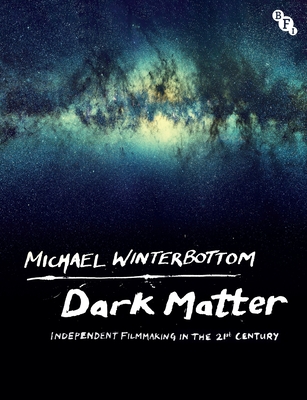
Dark Matter
KSh 3,600.00

Marvel''s Black Panther - Script To Page
KSh 3,250.00
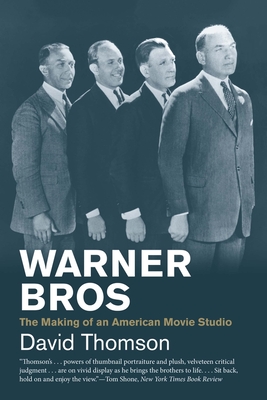
Warner Bros – The Making of an American Movie Studio
KSh 2,750.00

A Deadly Episode
KSh 3,950.00
