
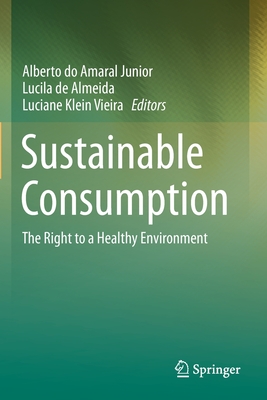
Sustainable Consumption : The Right to a Healthy Environment
2020 ed.
Book Details
Format
Paperback / softback
ISBN-10
3030169871
ISBN-13
9783030169879
Edition
2020 ed.
Publisher
Springer Nature Switzerland AG
Imprint
Springer Nature Switzerland AG
Country of Manufacture
GB
Country of Publication
GB
Publication Date
Nov 1st, 2020
Print length
500 Pages
Product Classification:
Environmental economicsEnvironmental economicsBusiness & the environment, ‘Green’ approaches to businessBusiness and the environment; sustainable approaches to businessInternational economic & trade lawPublic international law: economic and tradeInternational environmental lawPublic international law: environmentSustainability
KSh 16,200.00
Currently unavailable
0 in stock
Delivery Location
Delivery fee: Select location
Secure
Quality
Fast
This book provides a broad understanding of whether law plays a role in influencing patterns of sustainable consumption and, if so, how. Bringing together legal scholars from the Global South and the Global North, it examines these questions in the context of national, transnational and international law, within single and plural legal systems, and across a range of sector-specific issue areas.
The chapters identify how traditional legal disciplines (e.g. constitutional law, consumer law, public procurement, international public law), sector-related regulation (e.g. energy, water, waste), and legal rules in specific areas (e.g. eco-labelling and packing) engage with the concept of sustainable consumption. A number of the contributions describe this relationship by isolating a national legal system, while others approach it from the vantage point of legal pluralism, exploring the conflicts and convergences of rules between multiple international treaties (or guidelines) and those between the rules of international and transnational law (or both) vis-à-vis national legal systems.
While sustainable consumption is recognised as an important field of interdisciplinary research linking virtually all social science disciplines, legal scholarship, in contrast, has neglected the importance of the field of sustainable consumption to the law. This book fills the gap.
Get Sustainable Consumption by Alberto do Amaral Junior at the best price and quality guaranteed only at Werezi Africa's largest book ecommerce store. The book was published by Springer Nature Switzerland AG and it has 500 pages.
Customers Who Bought This Also Bought
Winner Take All
KSh 2,350.00
Hot Money
KSh 1,450.00
Quest
KSh 3,600.00

Thank You for Being Late
KSh 2,700.00
The Localization Reader
KSh 5,950.00
The Poverty of Growth
KSh 2,900.00

The Global Geography of Long-Term Projected Macroeconomic Damages from Chronic Physical Risk
KSh 9,900.00

Landscapes of Conflict – The Oregon Story, 1940–2000
KSh 6,300.00
Environmental Ethics and the Global Marketplace
KSh 16,000.00
Ethnoecology
KSh 5,900.00

From Swamp to Wetland
KSh 6,300.00

Why Money Is Killing Us ...
KSh 2,050.00