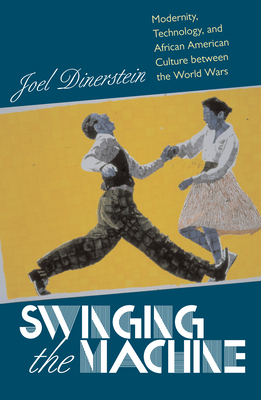
Swinging the Machine : Modernity, Technology and African American Culture Between the World Wars
Book Details
Format
Paperback / softback
ISBN-10
1558493832
ISBN-13
9781558493834
Publisher
University of Massachusetts Press
Imprint
University of Massachusetts Press
Country of Manufacture
US
Country of Publication
GB
Publication Date
Apr 4th, 2003
Print length
384 Pages
Weight
630 grams
Dimensions
22.90 x 16.20 x 2.70 cms
KSh 5,600.00
Temporarily out of stock, due soon
0 in stock
Delivery Location
Delivery fee: Select location
Secure
Quality
Fast
During the interwar period in 20th century America, innovative forms of music and dance helped a newly urbanized population cope with the increased mechanization of modern life. This work argues that it was African American culture that ultimately provided the means of this social adaptation.
An innovative study of the influence of black popular culture on modern American life; In any age and any given society, cultural practices reflect the material circumstances of people''s everyday lives. According to Joel Dinerstein, it was no different in America between the two World Wars - an era sometimes known as the ""machine age"" - when innovative forms of music and dance helped a newly urbanized population cope with the increased mechanization of modern life. Grand spectacles such as the Ziegfield Follies and the movies of Busby Berkeley captured the American ethos of mass production, with chorus girls as the cogs of these fast, flowing pleasure vehicles. Yet it was African American culture, Dinerstein argues, that ultimately provided the means of aesthetic adaptation to the accelerated tempo of modernity. Drawing on a legacy of engagement with and resistance to technological change, with deep roots in West African dance and music, black artists developed new cultural forms that sought to humanize machines. In ""The Ballad of John Henry,"" the epic toast ""Shine,"" and countless blues songs, African Americans first addressed the challenge of industrialization. Jazz musicians drew on the symbol of the train within this tradition to create a set of train-derived aural motifs and rhythms, harnessing mechanical power to cultural forms. Tap dance and the lindy hop brought machine aesthetics to the human body, while the new rhythm section of big band swing mimicked the industrial soundscape of northern cities. In Dinerstein''s view, the capacity of these artistic innovations to replicate the inherent qualities of the machine - speed, power, repetition, flow, precision - helps explain both their enormous popularity and social function in American life.
Get Swinging the Machine by Joel Dinerstein at the best price and quality guaranteed only at Werezi Africa's largest book ecommerce store. The book was published by University of Massachusetts Press and it has 384 pages.
Customers Who Bought This Also Bought
Orientalism
KSh 2,350.00
The Collected Essays of Ralph Ellison
KSh 3,600.00

Jorge Amado
KSh 8,850.00

The Guatemala Reader
KSh 4,950.00

Jorge Amado
KSh 30,950.00

Demoralization of Teachers
KSh 15,450.00

Except for Palestine
KSh 3,400.00

A Grammar of Mangghuer
KSh 10,050.00

Grammar of Mangghuer
KSh 30,950.00

Routledge Handbook on China-Middle East Relations
KSh 9,250.00

Except for Palestine
KSh 3,400.00

The Israeli-Palestinian Conflict
KSh 9,200.00