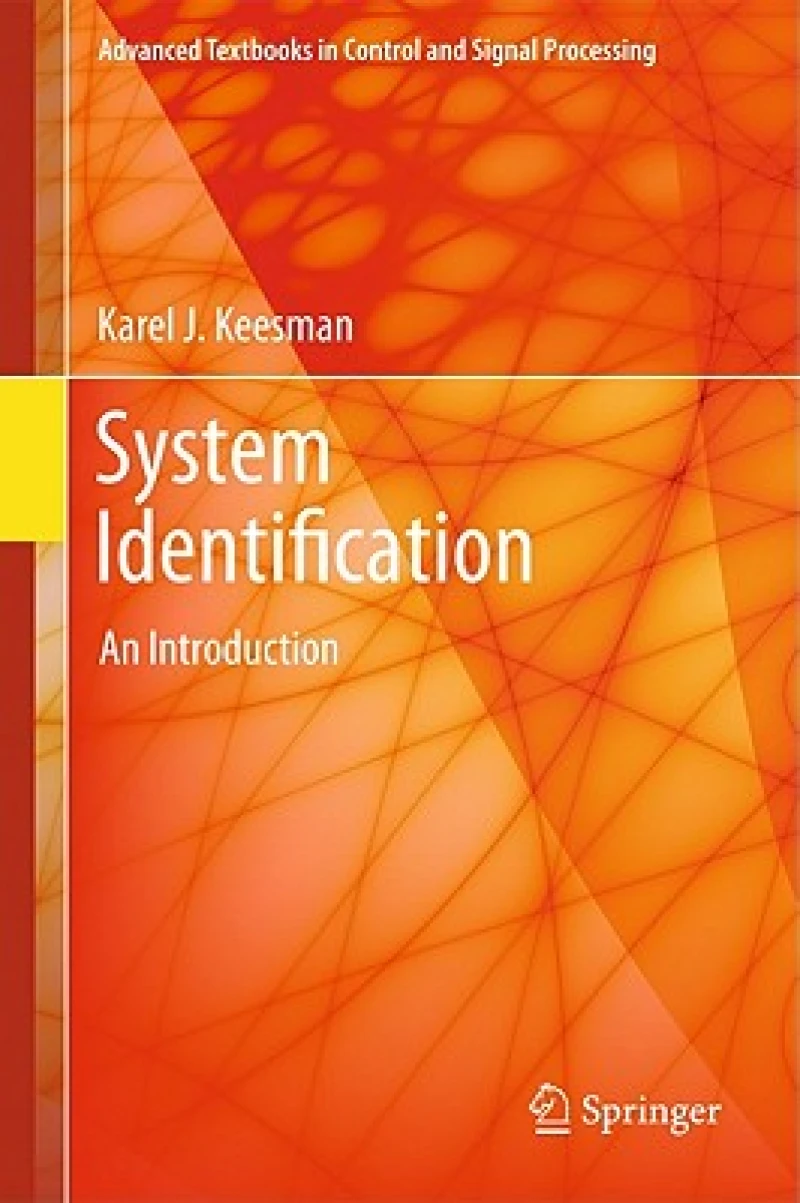
System Identification : An Introduction
Book Details
Format
Paperback / Softback
ISBN-10
0857295217
ISBN-13
9780857295217
Publisher
Springer London Ltd
Imprint
Springer London Ltd
Country of Manufacture
GB
Country of Publication
GB
Publication Date
May 18th, 2011
Print length
323 Pages
Weight
528 grams
Dimensions
15.70 x 23.60 x 1.40 cms
Product Classification:
Applied mathematicsAutomatic control engineering
Ksh 11,700.00
Werezi Extended Catalogue
0 in stock
Delivery Location
Delivery fee: Select location
Secure
Quality
Fast
Following an introduction on system theory, this book shows the reader how to approach the system identification problem in a systematic fashion. It aims to teach students the fundamentals of systems identification without unduly complicated mathematics.
System Identification shows the student reader how to approach the system identification problem in a systematic fashion. The process is divided into three basic steps: experimental design and data collection; model structure selection and parameter estimation; and model validation, each of which is the subject of one or more parts of the text. Following an introduction on system theory, particularly in relation to model representation and model properties, the book contains four parts covering:• data-based identification – non-parametric methods for use when prior system knowledge is very limited;• time-invariant identification for systems with constant parameters;• time-varying systems identification, primarily with recursive estimation techniques; and• model validation methods. A fifth part, composed of appendices, covers the various aspects of the underlying mathematics needed to begin using the text. The book uses essentially semi-physical or gray-box modeling methods although data-based, transfer-function system descriptions are also introduced. The approach is problem-based rather than rigorously mathematical. The use of finite input–output data is demonstrated for frequency- and time-domain identification in static, dynamic, linear, nonlinear, time-invariant and time-varying systems. Simple examples are used to show readers how to perform and emulate the identification steps involved in various control design methods with more complex illustrations derived from real physical, chemical and biological applications being used to demonstrate the practical applicability of the methods described. End-of-chapter exercises (for which a downloadable instructors’ Solutions Manual is available from fill in URL here) will both help students to assimilate what they have learned and make the book suitable forself-tuition by practitioners looking to brush up on modern techniques. Graduate and final-year undergraduate students will find this text to be a practical and realistic course in system identification that can be used for assessing the processes of a variety of engineering disciplines. System Identification will help academic instructors teaching control-related to give their students a good understanding of identification methods that can be used in the real world without the encumbrance of undue mathematical detail.
Get System Identification by at the best price and quality guaranteed only at Werezi Africa's largest book ecommerce store. The book was published by Springer London Ltd and it has pages.