
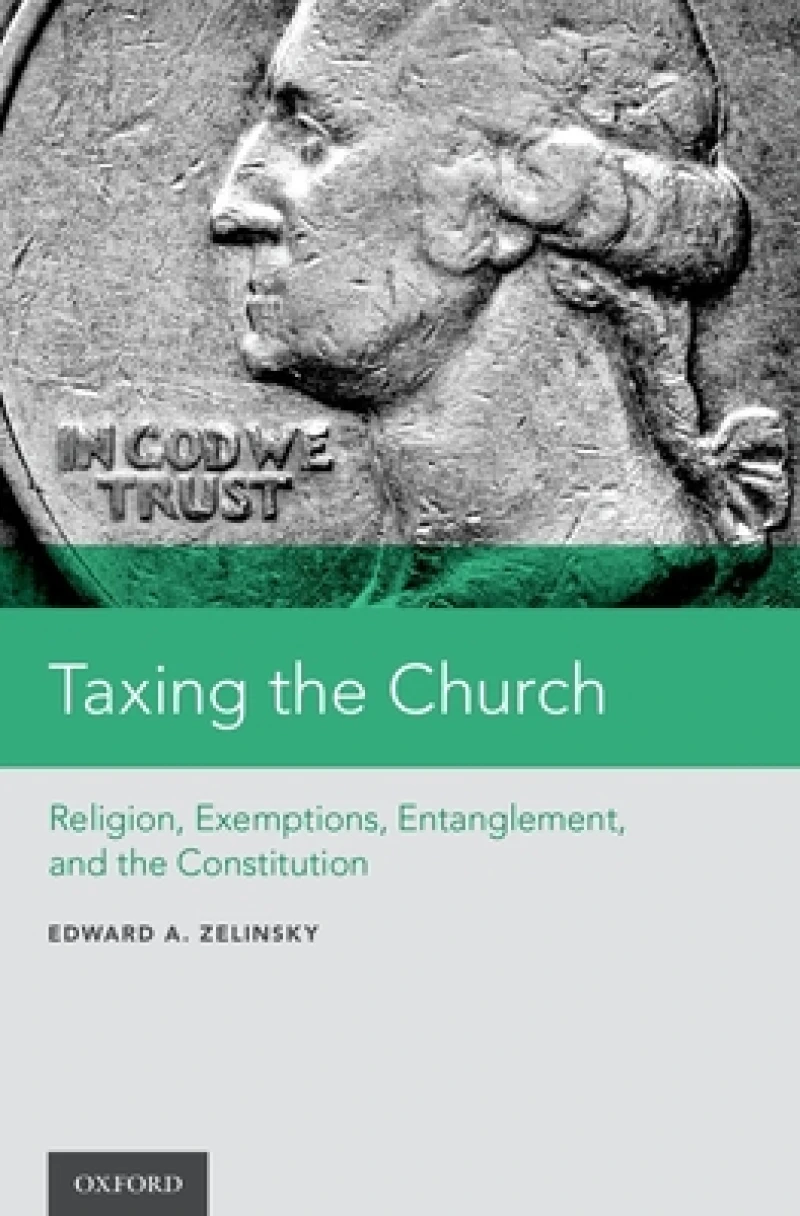
Taxing the Church : Religion, Exemptions, Entanglement, and the Constitution
Book Details
Format
Hardback or Cased Book
ISBN-10
0190853956
ISBN-13
9780190853952
Publisher
Oxford University Press Inc
Imprint
Oxford University Press Inc
Country of Manufacture
US
Country of Publication
GB
Publication Date
Nov 9th, 2017
Print length
278 Pages
Weight
522 grams
Dimensions
15.50 x 23.90 x 2.30 cms
Ksh 14,650.00
Manufactured on Demand
0 in stock
Delivery Location
Delivery fee: Select location
Secure
Quality
Fast
This book explores the taxation and exemption of churches and other religious institutions revealing that they are treated diversely by the federal and state tax systems. Either taxing or exempting churches and other sectarian entities entangles church and state. The taxes to which churches are more frequently subject - federal Social Security and Medicare taxes, sales taxes, real estate conveyance taxes - fall on the less entangling end of the spectrum. The taxes from which religious institutions are exempt - general income taxes, value-based property taxes, unemployment taxes - are typically taxes with the greatest enforcement potential for church-state entanglement.
This book explores the taxation and exemption of churches and other religious institutions, both empirically and normatively. This exploration reveals that churches and other religious institutions are treated diversely by the federal and state tax systems. Sectarian institutions pay more tax than many believe. In important respects, the states differ among themselves in their respective approaches to the taxation of sectarian entities. Either taxing or exempting churches and other sectarian entities entangles church and state. The taxes to which churches are more frequently subject - federal Social Security and Medicare taxes, sales taxes, real estate conveyance taxes - fall on the less entangling end of the spectrum. The taxes from which religious institutions are exempt - general income taxes, value-based property taxes, unemployment taxes - are typically taxes with the greatest potential for church-state enforcement entanglement. It is unpersuasive to reflexively denounce the tax exemption of religious actors and institutions as a subsidy. Tax exemption can implement the secular, non-subsidizing goal of minimizing church-state enforcement entanglement and thus be regarded as part of a normative tax base. Taxing the church or exempting the church involves often difficult trade-offs among competing and legitimate values. On balance, our federal system of decentralized legislation reasonably make these legal and tax policy trade-offs, though there is room for improvement in particular settings such as the protection of internal church communications and the expansion of the churches'' sales tax liabilities.
Get Taxing the Church by at the best price and quality guaranteed only at Werezi Africa's largest book ecommerce store. The book was published by Oxford University Press Inc and it has pages.

