
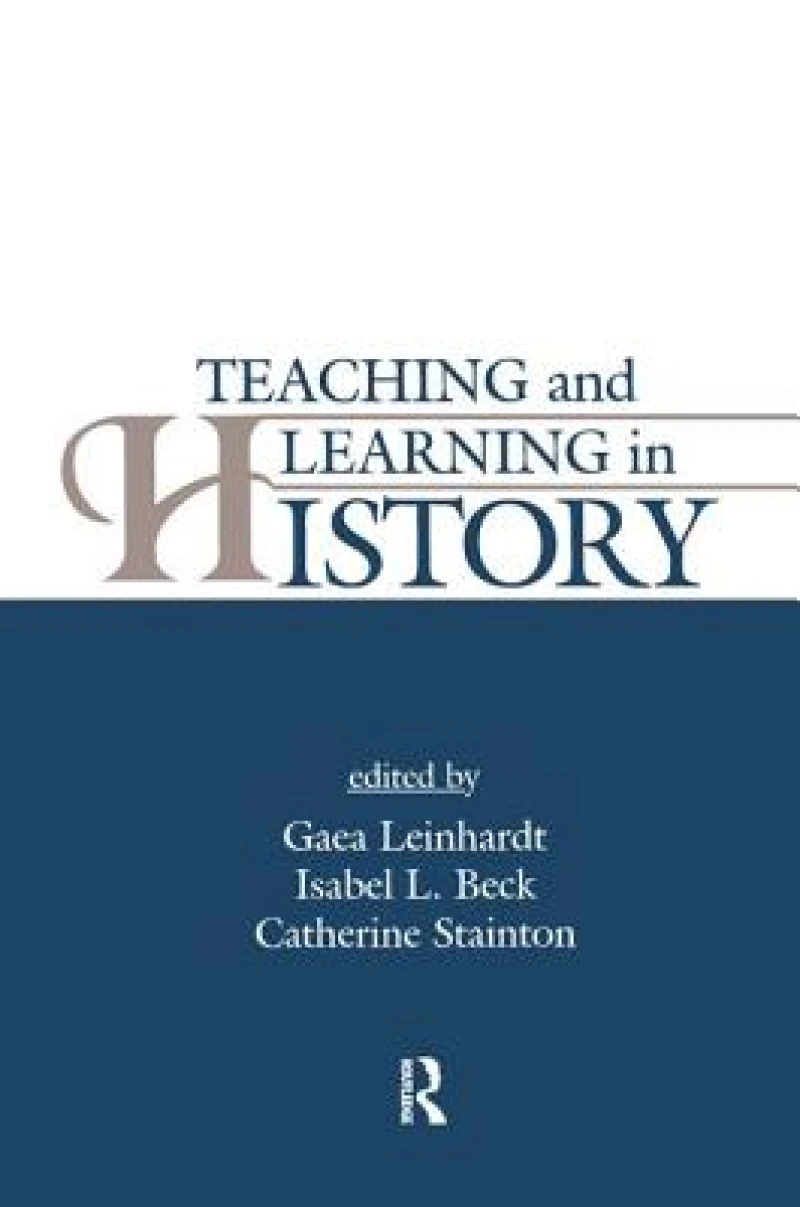
Teaching and Learning in History
Book Details
Format
Paperback / Softback
ISBN-10
1138983659
ISBN-13
9781138983656
Publisher
Taylor & Francis Ltd
Imprint
Routledge
Country of Manufacture
GB
Country of Publication
GB
Publication Date
Jan 20th, 2016
Print length
278 Pages
Weight
416 grams
Dimensions
15.40 x 22.90 x 2.00 cms
Ksh 9,900.00
Werezi Extended Catalogue
0 in stock
Delivery Location
Delivery fee: Select location
Secure
Quality
Fast
Research on history instruction and learning is emerging as an exciting new field of inquiry. The editors prepared this volume because the field is at an important moment in its development -- a stage where there is research of sufficient depth and breadth to warrant a collection of representative pieces.
The field of research on history teaching and learning connects with both traditional research on social studies and with recent cognitive analyses of domains such as mathematics and physics. However, the newer research goes beyond these activities as well. Where traditional research approaches to social studies instruction and learning have focused on curriculum, they have avoided the study of purely disciplinary features, the textual components of history and the concomitant demands, as well as the nature of various learners. Where recent cognitive analyses of mathematics and physics have dealt with misconceptions and knowledge construction, they have avoided topics such as perspective-taking, interpretation, and rhetorical layerings. The new work, by contrast, has been concerned with these issues as well as the careful analyses of the nature of historical tasks and the nature of disciplinary and instructional explanations.
The lines of research presented in these chapters are both compelling and diverse and include a range of topical questions such as:
* What affects the quality of teaching?
* How are historical documents interpreted in the writing of history?
* How is history explained?
* What are the classroom demands on an elementary school social studies teacher?
* What does text accomplish or fail to accomplish in educational settings?
* How do teachers think about particular topics for history teaching?
Although much of the research reflects a grounding in, or the influence of, cognitive psychology, not all of it derives from that tradition. Traditions of rhetoric, curriculum analysis, and developmental psychology are also woven throughout the chapters. The editors envision this volume as a contribution to educational research in a subject matter, and as a tool for practitioners concerned with the improvement of instruction in history. They also anticipate that it will contribute to cognitive science.
The field of research on history teaching and learning connects with both traditional research on social studies and with recent cognitive analyses of domains such as mathematics and physics. However, the newer research goes beyond these activities as well. Where traditional research approaches to social studies instruction and learning have focused on curriculum, they have avoided the study of purely disciplinary features, the textual components of history and the concomitant demands, as well as the nature of various learners. Where recent cognitive analyses of mathematics and physics have dealt with misconceptions and knowledge construction, they have avoided topics such as perspective-taking, interpretation, and rhetorical layerings. The new work, by contrast, has been concerned with these issues as well as the careful analyses of the nature of historical tasks and the nature of disciplinary and instructional explanations.
The lines of research presented in these chapters are both compelling and diverse and include a range of topical questions such as:
* What affects the quality of teaching?
* How are historical documents interpreted in the writing of history?
* How is history explained?
* What are the classroom demands on an elementary school social studies teacher?
* What does text accomplish or fail to accomplish in educational settings?
* How do teachers think about particular topics for history teaching?
Although much of the research reflects a grounding in, or the influence of, cognitive psychology, not all of it derives from that tradition. Traditions of rhetoric, curriculum analysis, and developmental psychology are also woven throughout the chapters. The editors envision this volume as a contribution to educational research in a subject matter, and as a tool for practitioners concerned with the improvement of instruction in history. They also anticipate that it will contribute to cognitive science.
Get Teaching and Learning in History by at the best price and quality guaranteed only at Werezi Africa's largest book ecommerce store. The book was published by Taylor & Francis Ltd and it has pages.

